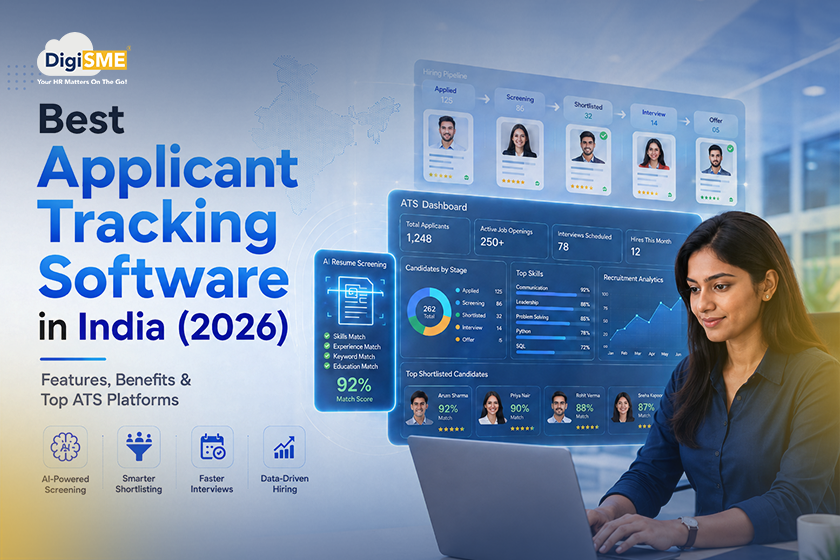
Hiring the right talent has become one of the biggest challenges for businesses in 2026. With hundreds of applications for every job opening, HR teams often struggle to review resumes, coordinate interviews, communicate with candidates, and track hiring progress efficiently. Managing recruitment through spreadsheets, emails, and multiple tools not only slows down the hiring process but also increases the risk of missing qualified candidates and creating a poor candidate experience. According to recent industry reports, 93% of recruiters plan to increase their use of AI in recruitment, while 66% say finding qualified talent is more difficult than ever, making recruitment automation a business priority.
An Applicant Tracking Software (ATS) helps businesses streamline every stage of recruitment—from posting jobs and screening resumes to scheduling interviews, collaborating with hiring managers, and onboarding successful candidates. Whether you’re a startup, SME, or large enterprise, the right Applicant Tracking Software in India can reduce manual work, improve hiring efficiency, and help you make faster, data-driven hiring decisions. In this comprehensive guide, you’ll learn what an Applicant Tracking System is, how it works, its key features and benefits, how it compares with manual recruitment, and the best ATS platforms in India for 2026. By the end, you’ll have the insights needed to choose the right recruitment software for your business and build a smarter, more efficient hiring process.
What Is Applicant Tracking Software and Why Do Businesses Need It?
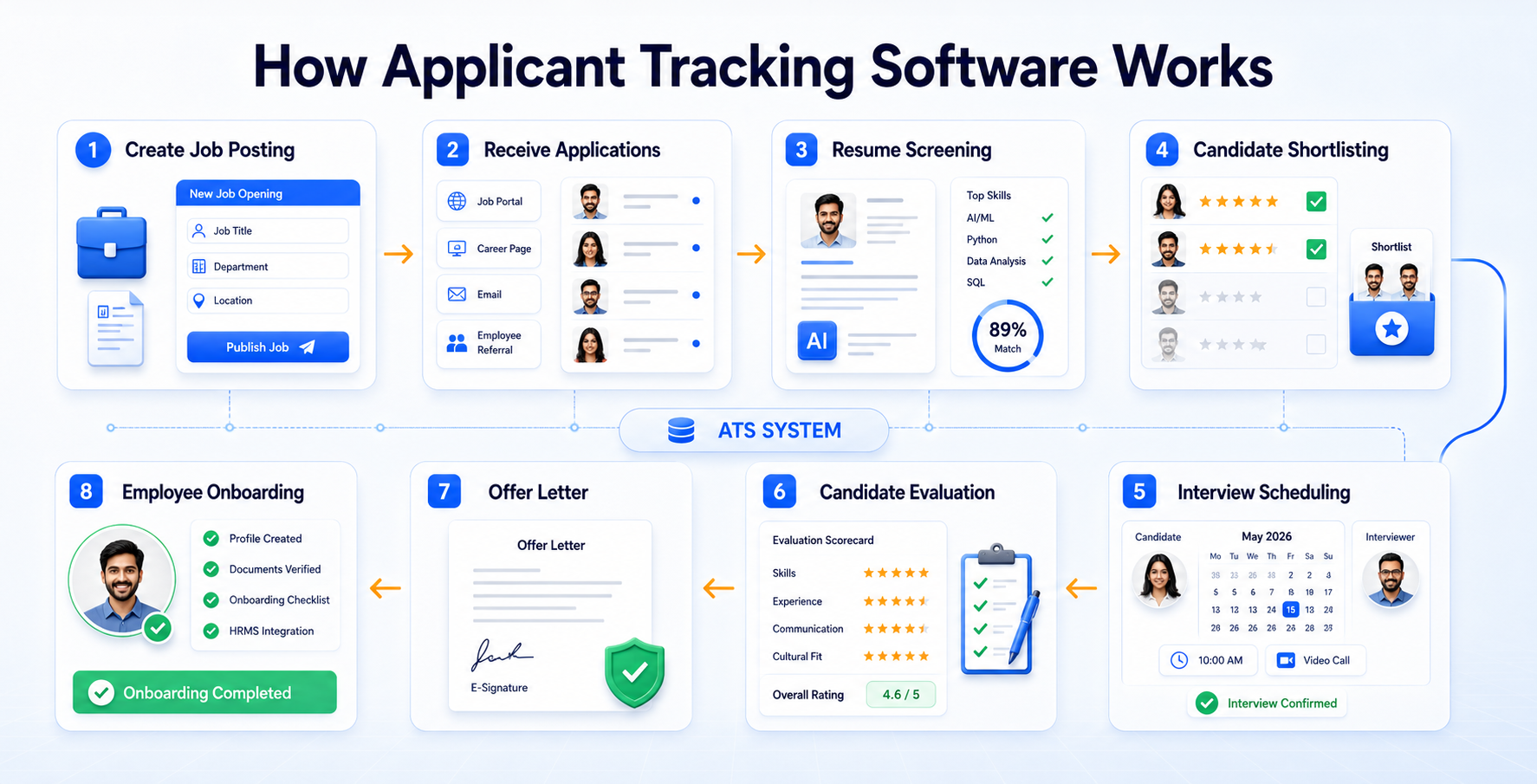
Applicant Tracking Software (ATS) is a recruitment software that helps businesses manage the entire hiring process from one centralized platform. Instead of managing recruitment through spreadsheets, emails, and disconnected systems, an Applicant Tracking Software (ATS) streamlines the entire hiring process from one platform. It enables recruiters to publish job openings, receive and organize applications, evaluate resumes, track candidate progress, schedule interviews, and onboard new employees with greater speed and accuracy. This allows HR teams to hire faster, reduce manual work, and deliver a better candidate experience.
As recruitment becomes more competitive, businesses need a structured way to attract, evaluate, and hire the right talent. An Applicant Tracking System simplifies every stage of recruitment, helping organizations improve hiring efficiency while making informed hiring decisions.
The Challenges of Manual Recruitment
Traditional hiring methods often rely on spread sheets, emails, and manual follow-ups to manage recruitment. While this approach may work for small hiring volumes, it quickly becomes difficult as businesses grow. Recruiters spend valuable time reviewing resumes, updating candidate records, coordinating inter views, and communicating with applicants across multiple platforms. These manual processes can lead to:
- Longer hiring cycles
- Missed or overlooked qualified candidates
- Delayed communication with applicants
- Duplicate candidate records
- Increased administrative workload
- Inconsistent hiring decisions
Without a centralized recruitment process, hiring becomes slower, less organized, and more difficult to scale.
How Applicant Tracking Software Solves These Challenges
An Applicant Tracking Software brings every recruitment activity into one connected system. From publishing job openings to onboarding successful candidates, recruiters can manage the entire hiring journey without switching between different tools. A modern ATS helps businesses:
- Automatically collect and organize candidate applications
- Screen resumes based on skills, qualifications, and experience
- Track candidates through every stage of the hiring pipeline
- Schedule interviews and send automated notifications
- Collaborate with hiring managers using shared feedback
- Monitor recruitment performance through real-time reports and analytics
As businesses continue to modernize their recruitment processes, investing in the right HR technology has become essential. According to Gartner Human Resources research, organizations continue to prioritize digital HR solutions that streamline recruitment, improve workforce planning, and enhance the employee experience. Choosing an Applicant Tracking Software with the right features and integrations helps businesses build a more efficient, scalable, and future-ready hiring process.
| Manual Recruitment | Applicant Tracking Software |
| Resume reviews done manually | Automated resume screening |
| Candidate data stored in spreadsheets | Centralized candidate database |
| Manual interview scheduling | Automated interview scheduling |
| Email follow-ups handled manually | Automated candidate communication |
| Limited collaboration between recruiters | Shared feedback and hiring workflows |
| Time-consuming hiring process | Faster time-to-hire |
| Higher risk of human errors | Improved accuracy and consistency |
| Limited recruitment insights | Real-time analytics and reports |
Top Applicant Tracking Software in India (2026)
The demand for Applicant Tracking Software in India continues to grow as businesses look for faster, more efficient ways to hire. However, not every ATS platform offers the same capabilities. Some focus on recruitment alone, while others combine hiring with HRMS, payroll, onboarding , and employee management.
Therefore, the right choice depends on your hiring volume, company size, budget, and long-term HR goals. If you want a platform that supports recruitment as well as employee lifecycle management, choosing an integrated ATS can reduce manual work and eliminate the need for multiple software solutions. Below are some of the best Applicant Tracking Software platforms in India for 2026.
1. DigiSME ATS
DigiSME Applicant Tracking Software helps businesses manage the complete recruitment lifecycle from job posting to onboarding within a single platform. Unlike standalone ATS solutions, DigiSME integrates recruitment with HRMS, payroll, attendance, leave management, employee records, and onboarding, enabling HR teams to manage the entire employee journey without switching between systems.
Key Features
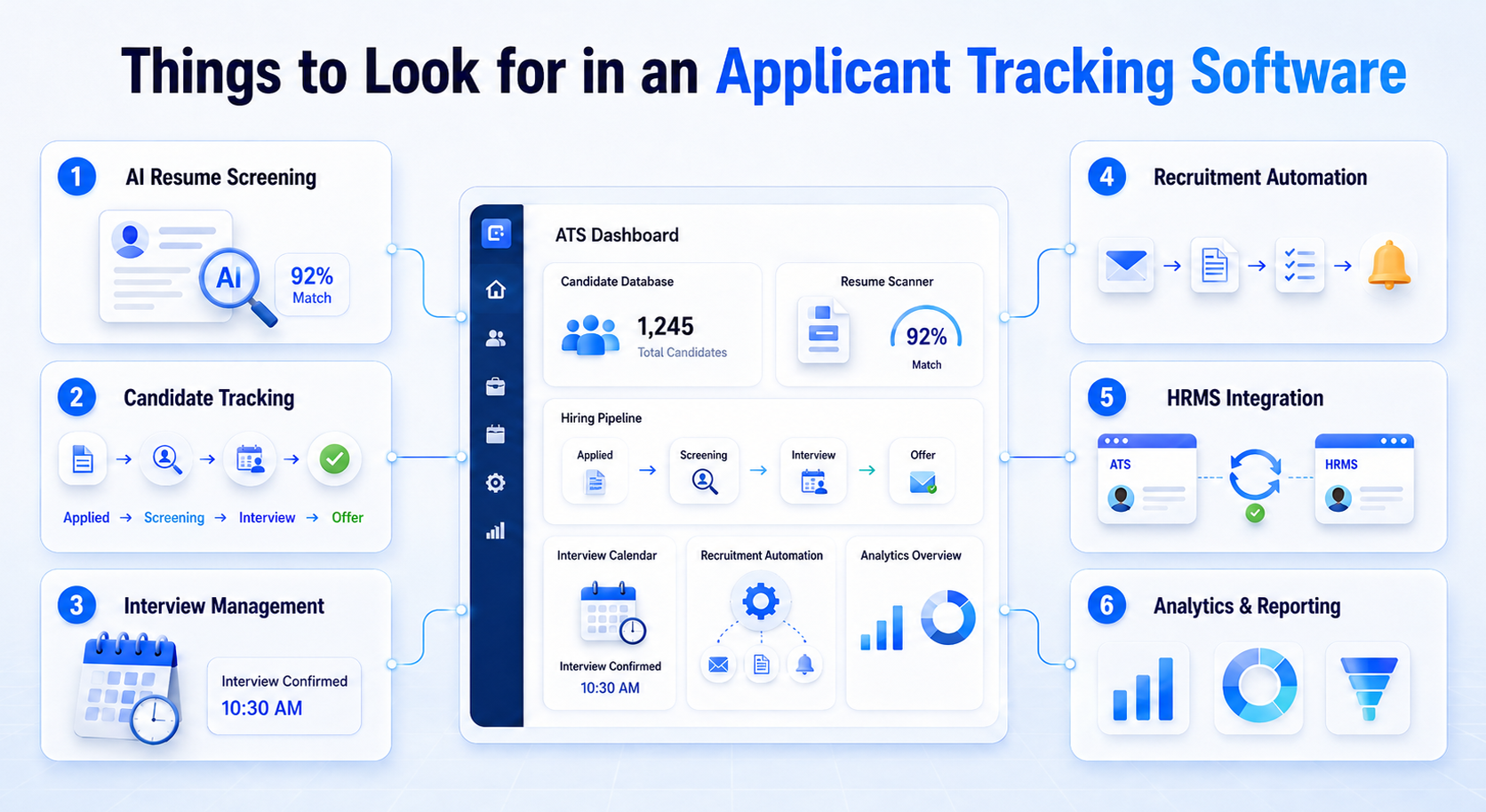
- Centralized candidate database
- Resume screening and candidate tracking
- Custom hiring pipelines
- Interview scheduling and feedback management
- Offer letter generation
- Recruitment analytics and reports
- Employee onboarding workflow
- Seamless HRMS and payroll integration
Pros
- Complete HRMS and ATS in one platform
- Eliminates duplicate data entry
- Suitable for startups, SMEs, and enterprises
- Scalable as hiring requirements grow
- Reduces manual HR administration
2. Zoho Recruit
Zoho Recruit is a dedicated recruitment software known for workflow automation, resume parsing, and integrations with popular job boards. It is particularly suitable for organizations that already use other Zoho applications and want a connected recruitment process.
Key Features
- AI-assisted resume parsing
- Job board integrations
- Candidate pipeline management
- Recruitment automation
- Custom workflows
Pros
- Strong third-party integrations
- Flexible workflow customization
- Suitable for recruitment agencies
3. Keka
Keka combines recruitment with payroll, attendance, leave management, and employee onboarding. It is popular among small and mid-sized organizations looking for a single HR platform instead of purchasing separate recruitment software.
Key Features
- Recruitment workflows
- Interview scheduling
- Employee onboarding
- Payroll integration
- HR analytics
Pros
- Easy-to-use interface
- Strong HR and payroll capabilities
- Suitable for growing companies
4. Darwinbox
Darwinbox offers enterprise-grade recruitment capabilities with configurable approval workflows , AI-enabled hiring features, workforce planning, and advanced analytics. It is widely adopted by large organizations managing high-volume recruitment across multiple business units.
Key Features
- Enterprise recruitment workflows
- AI-assisted hiring
- Multi-level approvals
- Recruitment analytics
Pros
- Highly configurable
- Enterprise scalability
- Advanced reporting capabilities
5. greytHR
greytHR provides recruitment, onboarding, payroll, attendance, leave management, and compliance in a single platform. It is commonly chosen by SMEs that want to simplify HR operations while digitizing recruitment.
Key Features
- Recruitment management
- Resume tracking
- Employee onboarding
- Payroll processing
- Statutory compliance
Pros
- Easy HR administration
- Strong payroll compliance
- Suitable for SMEs
Conclusion
Choosing the right Applicant Tracking Software in India can significantly improve the way your business attracts, evaluates, and hires talent. As recruitment becomes more competitive, relying on manual hiring processes can slow down growth and impact the candidate experience. Therefore, investing in a modern Applicant Tracking System (ATS) helps auto mate recruitment, improve collaboration, reduce time-to-hire, and make smarter hiring decisions.
While several ATS platforms offer valuable recruitment features, businesses looking for a complete HR solution should consider an integrated platform. DigiSME Applicant Tracking Software combines recruitment, onboarding, HRMS, payroll, attendance, and employee management in one unified system. As a result, HR teams can manage the entire employee lifecycle from hiring to retirement without switching between multiple tools. If you’re planning to modernize your hiring process in 2026, DigiSME provides a scalable solution that grows with your business.
Frequently Asked Questions
What is the primary purpose of an Applicant Tracking Software (ATS)?
An Applicant Tracking Software helps businesses streamline recruitment by managing applications, tracking candidates, and automating hiring workflows from one platform.
Can an ATS integrate with HR and payroll software?
Many modern ATS platforms integrate with HRMS, payroll, onboarding, and attendance systems, enabling a seamless transition from hiring to employee management.
Which Applicant Tracking Software is best in India?
The best ATS depends on your business requirements. Compare features, integrations, scalability, and overall value to choose a solution that aligns with your recruitment goals.
What should businesses consider before choosing an ATS?
Key factors include company size, hiring volume, automation features, integrations, ease of use, scalability, reporting capabilities, and customer support.
