When “₹3,000 per device” Turns Into a ₹3 Lakh Decision
It usually starts with a simple conversation in the HR cabin.
“Our vendor says the biometric attendance system is cheap. One-time cost. No complications.”
Three months later, payroll disputes rise. Employees complain about failed punches. IT tickets spike. Compliance questions surface during an audit. And suddenly, what looked like an affordable attendance upgrade becomes a recurring operational headache.
Across India in 2025, this story is playing out in startups, factories, hospitals, and corporate offices alike. As organisations push for tighter compliance, workforce transparency, and payroll accuracy, biometric attendance systems are being adopted rapidly. But very few decision-makers pause to calculate the real cost—not just the invoice value, but everything that comes with it.
This article breaks down those hidden, often ignored expenses behind a biometric attendance system in India, using real-world HR realities, regulatory context, and market trends—so you can make an informed decision before your next upgrade.
Why Biometric Attendance Systems Are Booming in India
India’s workforce landscape in 2025 is shaped by hybrid work, stricter labour compliance, wage digitisation, and increased scrutiny on attendance-linked payroll calculations. Biometric attendance systems gained traction because they promised three things: accuracy, accountability, and automation.
From manufacturing units tracking shift workers to IT companies controlling access, biometrics became the default solution. Government initiatives promoting digital attendance, along with compliance expectations under labour laws, further accelerated adoption.
Yet, what the market rarely discusses is that buying a biometric attendance system is not the same as running one efficiently.
1. The First Cost Everyone Sees: Hardware & Installation
The visible expense is straightforward. Fingerprint or facial recognition devices, wall mounting, wiring, and basic setup. Vendors often quote this as a one-time investment, making it look deceptively economical.
What’s not always highlighted is that hardware quality varies significantly. Lower-cost devices often struggle with Indian conditions—dust, humidity, power fluctuations, and high daily usage. Within a year, many organisations face device failures or accuracy issues, leading to replacements or repairs that weren’t budgeted for.
| A biometric attendance system’s real cost extends far beyond device pricing into payroll accuracy, compliance risk, and HR efficiency. |
2. The Software Layer: Where Hidden Costs Begin
A biometric attendance system is only as good as the software that interprets its data. Many organisations discover too late that their device comes with limited or outdated software.
Advanced features—shift rules, overtime logic, leave sync, payroll integration, or audit-ready reports—are frequently charged as add-ons. Over time, subscription fees quietly accumulate, turning a “one-time purchase” into a recurring operational expense.
This is where modern HR teams begin exploring cloud-based HRMS platforms like DigiSME that unify attendance, payroll, and compliance instead of running fragmented systems.
3. Payroll Errors: The Cost That Hits Trust, Not Just Numbers
Attendance data feeds directly into payroll. When a biometric attendance system fails to capture punches correctly—due to device lag, network downtime, or biometric mismatch—payroll discrepancies follow.
Correcting these errors consumes HR bandwidth, delays salary processing, and erodes employee trust. In India, where wage disputes can escalate quickly and labour inspections demand clean records, even minor inaccuracies can create compliance exposure.
What looks like a technical issue soon becomes a reputational and financial risk.
| Hidden expenses often emerge through software add-ons, maintenance downtime, and manual payroll corrections. |
4. Compliance & Data Privacy: A Growing Liability
Biometric data is sensitive personal data. In India, regulatory expectations around data protection have tightened, particularly after the Digital Personal Data Protection Act.
Many standalone biometric attendance systems lack encryption standards, access controls, or proper data retention policies. If employee biometric data is stored insecurely or without clear consent, organisations may face legal and ethical challenges.
Unlike modern HRMS platforms designed with privacy-by-design principles, legacy biometric setups often shift this risk entirely onto the employer.
5. Maintenance, Downtime & IT Dependency
Every biometric attendance system needs ongoing maintenance. Firmware updates, sensor calibration, server syncing, and troubleshooting are recurring realities.
In many organisations, HR becomes dependent on IT or external vendors for even minor fixes. During downtime, attendance is marked manually, creating reconciliation work later. Over time, the cost of lost productivity and administrative effort far outweighs the initial savings promised by low-cost hardware.
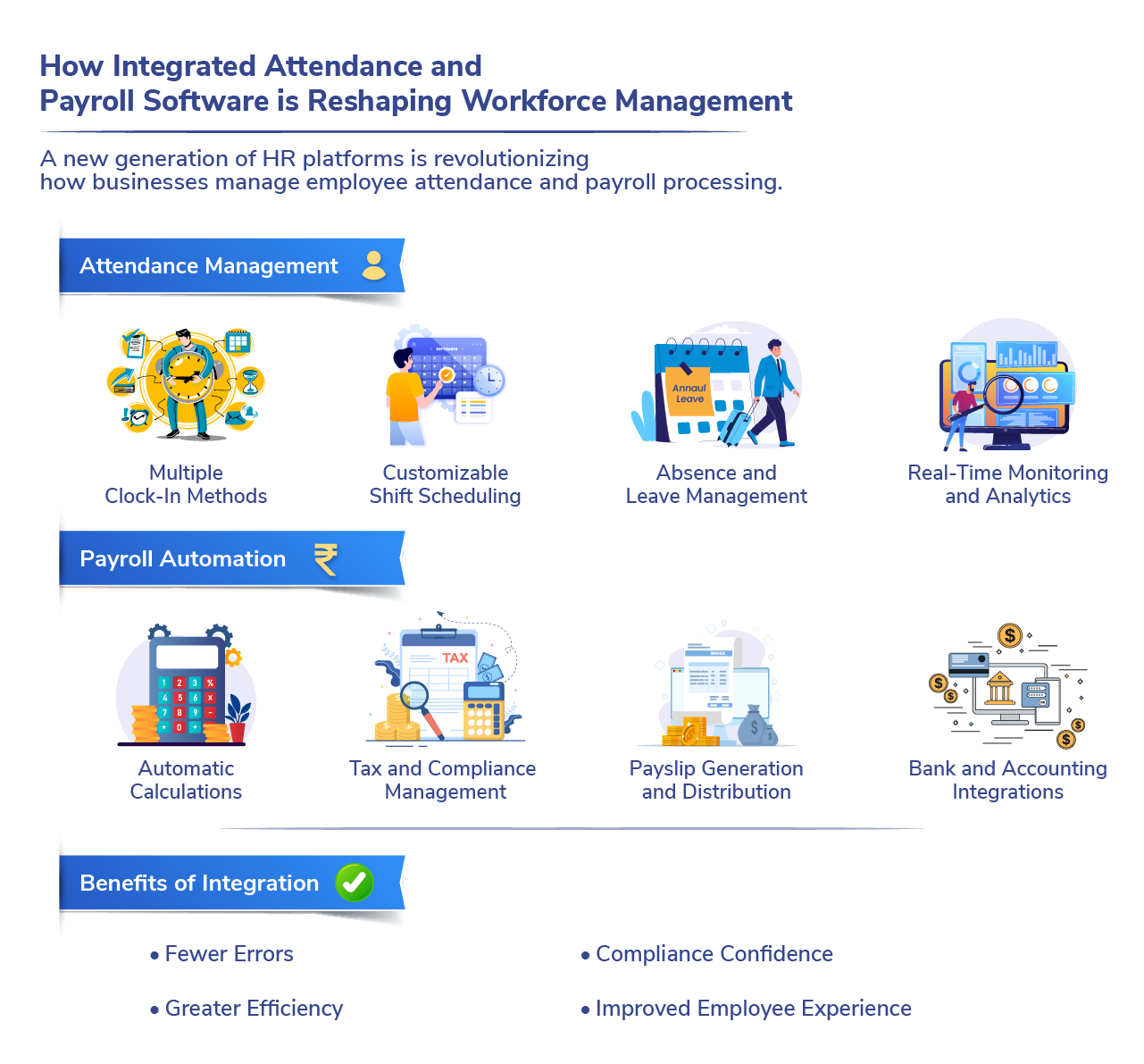
| Integrated HRMS platforms reduce long-term costs by aligning attendance, payroll, and compliance in one system. |
6. The Employee Experience Cost No One Budgets For
Ask any HR manager and they’ll confirm: attendance frustration impacts morale.
Employees with worn fingerprints, field workers, healthcare staff wearing gloves, or workers commuting between locations often face punch failures. Repeated mismatches feel intrusive and inefficient, particularly when compared to newer, contactless alternatives.
This friction may not appear on financial statements, but it reflects directly in engagement scores and HR workload.
Market Shift in 2025: From Devices to Ecosystems
One of the most significant trends in the Indian HR tech market is the shift away from isolated biometric attendance systems toward integrated attendance ecosystems.
Organisations are realising that attendance is not a standalone function—it connects to payroll, compliance, leave management, audits, and workforce analytics. Platforms like DigiSME HRMS address this by embedding biometric data into a broader, compliant, cloud-native system.
Making Attendance Work With Your Business
The question HR leaders must ask in 2025 isn’t “How cheap is this biometric attendance system?” but “How well does it support payroll accuracy, compliance, and growth?”
DigiSME HRMS is built for Indian organisations navigating exactly these challenges—combining attendance tracking, payroll automation, and compliance alignment in one secure platform. Instead of hidden costs, you gain visibility. Instead of fragmented tools, you gain control.
Conclusion: The True Price Tag Comes Later
A biometric attendance system rarely fails on day one. The real costs surface gradually—in payroll cycles, audit seasons, IT tickets, and employee complaints.
By understanding these hidden expenses upfront, HR and business leaders can avoid costly missteps and invest in systems that truly support operational efficiency.
Because in the long run, the most expensive system isn’t the one with the highest price—it’s the one that keeps costing you time, trust, and control.
Contact us for a FREE Demo!!
Frequently Asked Questions
1. Is a biometric attendance system mandatory in India?
No. Indian labour laws do not mandate biometric attendance systems, but accurate attendance records are required for wage, overtime, and compliance calculations.
2. What are the biggest hidden costs of biometric attendance systems?
Hidden costs include software subscriptions, maintenance downtime, payroll error correction, compliance risks, and employee dissatisfaction.
3. Are biometric attendance systems safe for employee data?
Safety depends on encryption, access controls, and consent management. Many legacy systems lack adequate data protection safeguards.
4. Do biometric attendance systems integrate with payroll?
Some do, but many require paid integrations or manual exports, increasing operational complexity and error risk.
5. Is cloud-based attendance better than biometric devices?
Cloud-based systems with biometric integration offer better scalability, compliance readiness, and lower long-term costs.
