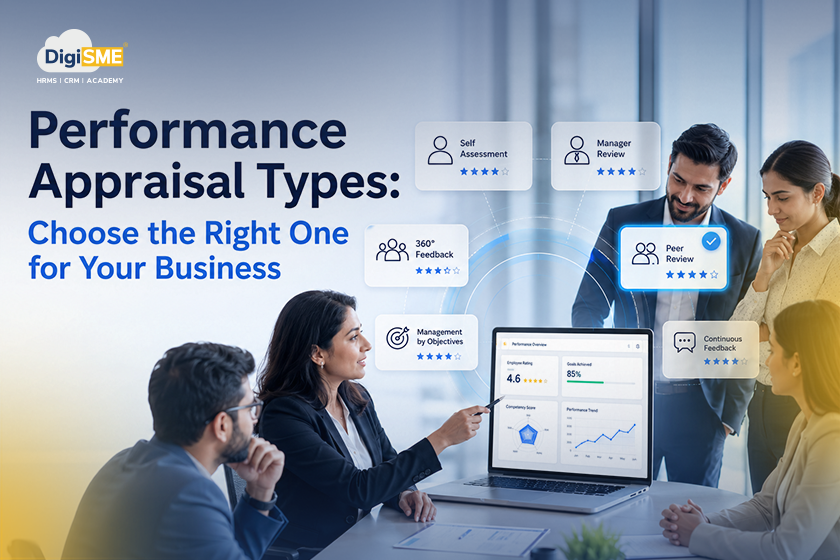
Outdated reviews, delayed feedback, unclear goals, and biased evaluations still make performance management frustrating for many businesses. Employees often feel disconnected from the appraisal process, while HR teams struggle with manual tracking and inconsistent reviews. In fact, only 2 in 10 employees strongly agree that their performance is managed in a way that motivates them to do outstanding work, according to Gallup. That’s why modern businesses are moving toward smarter and more structured performance appraisal methods that improve employee performance, engagement, and accountability. Choosing the right Appraisal Management System can help businesses create a more transparent and growth-focused workplace. In this blog, we’ll explore the different performance appraisal types and how to choose the right one for your business.
What Is Performance Appraisal and Why Does It Matter?
A performance appraisal is a structured process used to evaluate an employee’s work, goals, skills, and overall contribution to the business. It helps managers under stand how employees are performing and where they need support or improvement.
Without a proper performance appraisal system, businesses often face unclear expectations, low productivity, poor employee engagement, and unfair evaluation practices. Employees may not know how their performance is measured, leading to confusion and dissatisfaction.
A well-planned employee performance appraisal creates transparency, improves communication, and helps employees stay aligned with business goals. According to Gallup, employees who receive meaningful feedback are more likely to be engaged at work. Modern businesses now use smarter performance appraisal methods to make feedback more continuous , goal-driven, and employee-focused.
Different Types of Performance Appraisal Methods
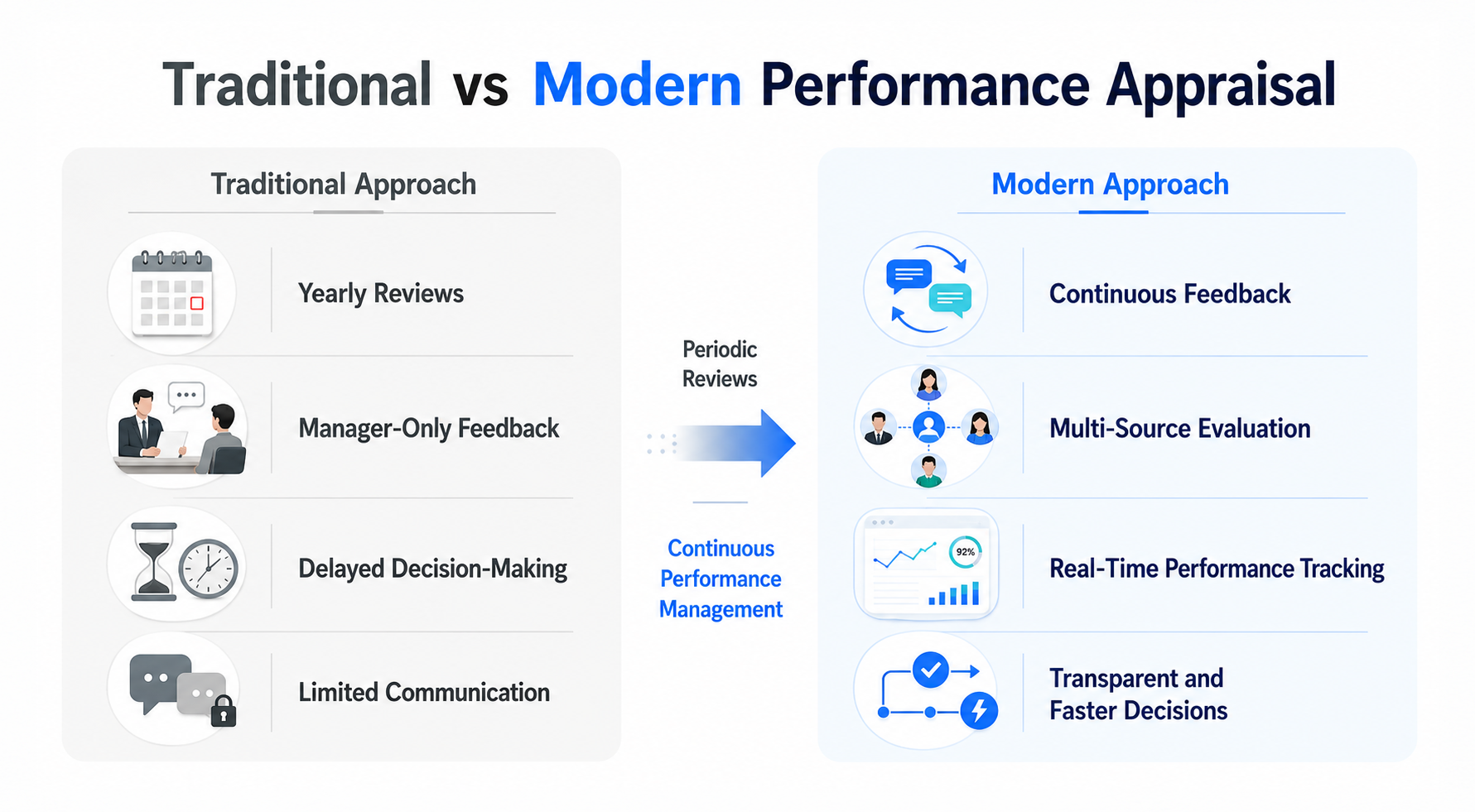
Performance appraisal methods are different ways organizations evaluate employee performance. Each method follows a structured process to measure work quality, behavior, and goal achievement. Instead of focusing only on yearly ratings, modern systems emphasize continuous evaluation and multiple feedback sources.
1. Traditional Annual Performance Appraisal
This method evaluates employees once a year based on their overall performance during the full cycle. Managers review achievements, behavior, and contribution against predefined expectations. The final discussion usually happens in a formal review meeting, which also influences salary hikes and promotions.
How it works:
The manager collects performance data throughout the year, compares it with set standards, and assigns a final rating during the annual review discussion. Feedback is shared in one structured session at the end of the year.
Advantages
- Simple and easy to manage
- Useful for structured annual decisions like promotions and increments
2. 360-Degree Performance Appraisal
This method collects feedback from multiple sources instead of relying only on the manager. Inputs are taken from peers, subordinates, self-assessment, and sometimes clients to get a complete picture of performance.
How it works:
Feedback is collected through surveys or evaluation forms from different stak eholders. All responses are compiled into a report, which is reviewed to identify strengths, weaknesses, and behavioral patterns before sharing feedback with the employee.
Advantages
- Provides a more balanced and complete evaluation
- Reduces single-manager bias in assessment
3. Self-Appraisal Method
In this method , employees evaluate their own performance before the official review. They reflect on their achievements, challenges, completed tasks, and areas where they need improvement.
How it works:
Employees fill out a self-evaluation form where they assess their own work based on goals and responsibilities. The manager then compares this self-review with actual performance and discusses gaps during the final appraisal meeting.
Advantages
- Encourages self-reflection and ownership
- Improves communication between employee and manager
4. Management by Objectives (MBO)
MBO focuses on goal-based evaluation where performance is measured against clearly defined objectives. Both employees and managers jointly set these goals at the beginning of the cycle.
How it works:
Employees and managers agree on measurable targets. Throughout the performance period, progress is tracked regularly. At the end, performance is evaluated based on how many goals were achieved.
Advantages
- Clear and measurable performance expectations
- Aligns individual goals with company objectives
5. Continuous Performance Appraisal
Instead of waiting for yearly reviews, this method focuses on regular feedback throughout the year. It supports real-time improvement and ongoing communication between managers and employees.
How it works:
Managers conduct frequent check-ins (monthly or quarterly), provide feedback on ongoing work, and adjust goals when needed. Performance is continuously tracked instead of being evaluated only once a year.
Advantages
- Supports continuous improvement
- Reduces stress of annual review pressure
6. Behaviorally Anchored Rating Scale (BARS)
This method evaluates employees based on specific workplace behaviors linked to performance levels. Each role has defined behavior standards that help make evaluation more objective.
How it works:
Behavioral indicators are created for each role. Managers observe employee behavior during work and match it against predefined examples to assign ratings.
Advantages
- Reduces subjectivity in evaluation
- Ensures consistent rating standards across teams
| Appraisal Method | Best For | Key Benefit |
| Traditional Annual Appraisal | Small or traditional organizations | Structured yearly review |
| 360-Degree Performance Appraisal | Team-based workplaces | Multi-source balanced feedback |
| Self-Appraisal Method | Employee growth-focused companies | Builds self-reflection |
| Management by Objectives (MBO) | Target-driven roles like sales | Clear goal alignment |
| Continuous Performance Appraisal | Modern fast-paced workplaces | Ongoing performance improvement |
| Behaviorally Anchored Rating Scale (BARS) | Roles requiring behavior-based evaluation. | Objective behavior-based rating |
How to Choose the Right Performance Appraisal Method for Your Business ?
Choosing the right performance appraisal method is not about selecting the most popular option. It is about finding what fits your business goals, team structure, and work culture. The wrong choice can lead to unclear feedback, low employee engagement, and unfair performance evaluations.
According to research published by the Talent Management Institute (TMI), effective performance appraisal systems should be aligned with factors such as company size, organizational culture, the type of work and roles being evaluated, and business and employee goals. Here’s how businesses can make the right decision:
1. Understand Your Business Goals First
Every organization uses performance appraisal for different purposes. Some focus on improving productivity, some on employee development, and others on rewards and promotions. Before choosing a method, it is important to clearly define your goal:
- Do you want to improve employee performance?
- Do you want to identify training needs?
- Do you want to support promotions and salary decisions?
Your goal will directly decide the type of appraisal system you should use.
2. Consider Company Size and Structure
The size of your organization plays a big role in selecting the right method. Small businesses can work well with simple systems like rating-based reviews or self-appraisals. However, larger organizations need more structured methods such as 360-degree feedback, continuous performance tracking, or goal-based systems. As teams grow, manual evaluation becomes difficult and less effective.
3. Match the Method with Job Roles
Different job roles require different evaluation styles. A single method may not work for all departments.
For example:
- Sales teams → MBO or target-based evaluation
- Leadership roles → 360-degree feedback
- Creative roles → continuous feedback and qualitative reviews
A good employee evaluation system ensures fairness across all roles.
4. Focus on Company Culture
Your appraisal method should match h ow your organization works on a daily basis. Collaborative workplaces benefit from peer feedback systems, while fast-moving startups prefer continuous feedback models. Traditional organizations may still follow annual performance reviews. When the method does not match the culture, employees may lose trust in the system.
5. Check for Scalability and Automation Needs
As your organization grows, manual performance tracking becomes difficult to manage. This is where automated systems help improve efficiency. Modern HRMS performance management systems help businesses manage:
- Goal tracking
- Feedback collection
- Review cycles
- Performance reporting
Automation ensures smoother and more accurate appraisal processes.
6. Reduce Bias and Improve Fairness
A good appraisal system should be fair, trans parent, and unbiased. Using structured rating systems, multiple feedback sources, and clearly defined goals helps reduce personal bias in evaluations.This creates a more balanced and trustworthy employee performance appraisal process.
What to Look for in an Appraisal Management System
An appraisal management system helps businesses manage employee reviews, goals, feedback, and performance records in one place. When comparing different software, look for features that make the appraisal process easier for both HR teams and employees.
- Goal and KPI Tracking: Set clear employee goals, track progress, and measure performance against defined targets.
- Self-Assessments: Allow employees to record achievements, challenges, and areas for improvement before the manager review.
- 360-Degree Feedback: Collect feedback from managers, peers, team members, and other relevant stakeholders for a broader performance view.
- Automated Review Cycles: Create structured appraisal cycles and manage different stages of the review process without relying on spreadsheets and emails.
- Continuous Feedback: Support regular feedback and performance discussions instead of depending only on annual reviews.
- Performance Reports: Maintain appraisal history and generate reports to help HR and managers understand employee performance.
- Easy Employee Access: Give employees and managers a clear way to view goals, complete reviews, and provide feedback.
Popular Appraisal Management Software
Several HR platforms offer appraisal and performance management features. Keka provides performance management capabilities such as goals, feedback, reviews, and 360-degree assessments. greytHR includes performance management tools for goal setting, reviews, and employee assessments. Darwinbox offers performance management with goal management, continuous feedback, and review processes, while Zoho People supports goal setting, appraisals, feedback, and performance tracking.
DigiSME also provides performance management features that help businesses manage goals, self-assessments, feedback, reviews, and employee performance records in one platform. This can help HR teams reduce manual tracking and maintain a more structured appraisal process.
When comparing an appraisal management system, focus on the features your HR team actually needs, how easily employees and managers can use the system, and whether it can support your performance review process as your business grows.
Conclusion
A well-structured performance appraisal system is no longer just an HR activity—it is a key driver of employee performance, engagement, and business growth. From traditional annual reviews to continuous feedback models, every performance appraisal method offers value, but the real impact comes from choosing what fits your organizati on best.
As businesses scale, manual tracking becomes difficult and error-prone. This is where modern HR platforms like Digisme HRMS help simplify the entire performance management system. With automated workflows, real-time feedback, goal tracking, and transparent evaluation cycles, Digisme enables HR teams to run fair and efficient employee performance appraisal processes without complexity.
If your goal is to improve productivity, reduce manual effort, and build a more accountable workforce, adopting a modern appraisal management system is the next step toward smarter HR transformation.
Frequently Asked Questions
Which performance appraisal method is best for small businesses?
Annual reviews and self-appraisals are often suitable for small businesses because they are simple to manage. As the team grows, businesses may consider continuous feedback or automated appraisal systems.
How do I choose the right performance appraisal method?
Consider your business goals, company size, job roles, and workplace culture. For example, MBO can work well for target-driven roles, while 360-degree feedback may be better suited to collaborative teams.
Why are companies moving toward continuous performance appraisal?
Continuous appraisal allows managers to provide feedback throughout the year instead of waiting for an annual review. This helps employees understand what they are doing well and where they need to improve sooner.
What should I look for in an appraisal management system?
Look for features such as goal and KPI tracking, self-assessments, 360-degree feedback, automated review cycles, continuous feedback, and performance reports. A system like DigiSME can help bring these activities together in one place and reduce the need for manual tracking.
