As the new year commences, HR professionals, c-level executives and management teams will be gearing up to implement fresh plans for their organisations. The strategical plan outlines the direction, highlights potential complexities, and envisions growth opportunities. When preparing the strategy, it is important for every organisation to consider the emerging HR Technology trends that is currently shaping the future of workforce management.
Failing to stay current with trends could mean missing out on valuable opportunities, both internally with employee engagement and externally with potential clients. Let’s explore the top ten HR tech trends, and why you should consider them when refining your organizational strategies.

Table of Contents
- 1. How Technology Is Improving Employee Experience?
- 2. Technology for Employee Retention
- 3. Immersive Technologies like VR and AR in Training
- 4. Flexible Work Models Shaping the Future
- 5. Diversity and Inclusion as a Core Commitment
- 6. Generative AI in HR
- 7. AI and Data-Driven HR Decisions
- 8. HR Automation
- 9. Employee Well-being and Mental Health Programs
- 10.Resilient HR Policies for Crisis Management
- 11.HR Technology Frequently Asked Questions
1. How Technology Is Improving Employee Experience?
For the past few years, employee experience have been a driving force in retaining talent and it will continuing as well.
People don’t quit jobs, they quit bosses
Hence, it is crucial to recognize that the workforce of tomorrow is looking for companies that is led by people with progressive HR strategies. Most organisations are not identifying the importance of employee well-being. It is vital to keep the employees engaged, productive and loyal.
For instance, managers overlook the time new hires need to adjust to the company’s culture, contributing to unnecessary stress affecting productivity.
There are many instances like this causing stress in employees. HRs should focus on elevate the overall work experience of staff. One big leap forward towards gaining employee experience is providing a self-service portal.
Let employees view their working hours, leave balances, and other essentials without reaching out to HRs or other administrative teams. It helps them balance work-life experience and increases staff retention.
2. Technology for Employee Retention
Lately, employees expect more than salary and other complimentary benefits. They understand that workforce is changing and without learning, there will be a skill mismatch and the job profile in future. Reskilling and upskilling become a nitty-gritty when joining an organisation.
According to World Economic Forum, 6 in 10 workers will need more training in a couple of years as half of the workers’ skills might be disrupted in the next five years. Organisations must bridge this skills gap through targeted upskilling and reskilling initiatives.
HR leaders must anticipate the skills required to remain competitive and avoid the disruption caused by skill mismatches. Ensuring that these strategies are in place by the end will enable companies to prevent operational disruptions and drive innovation.
3. Immersive Technologies like VR and AR in Training
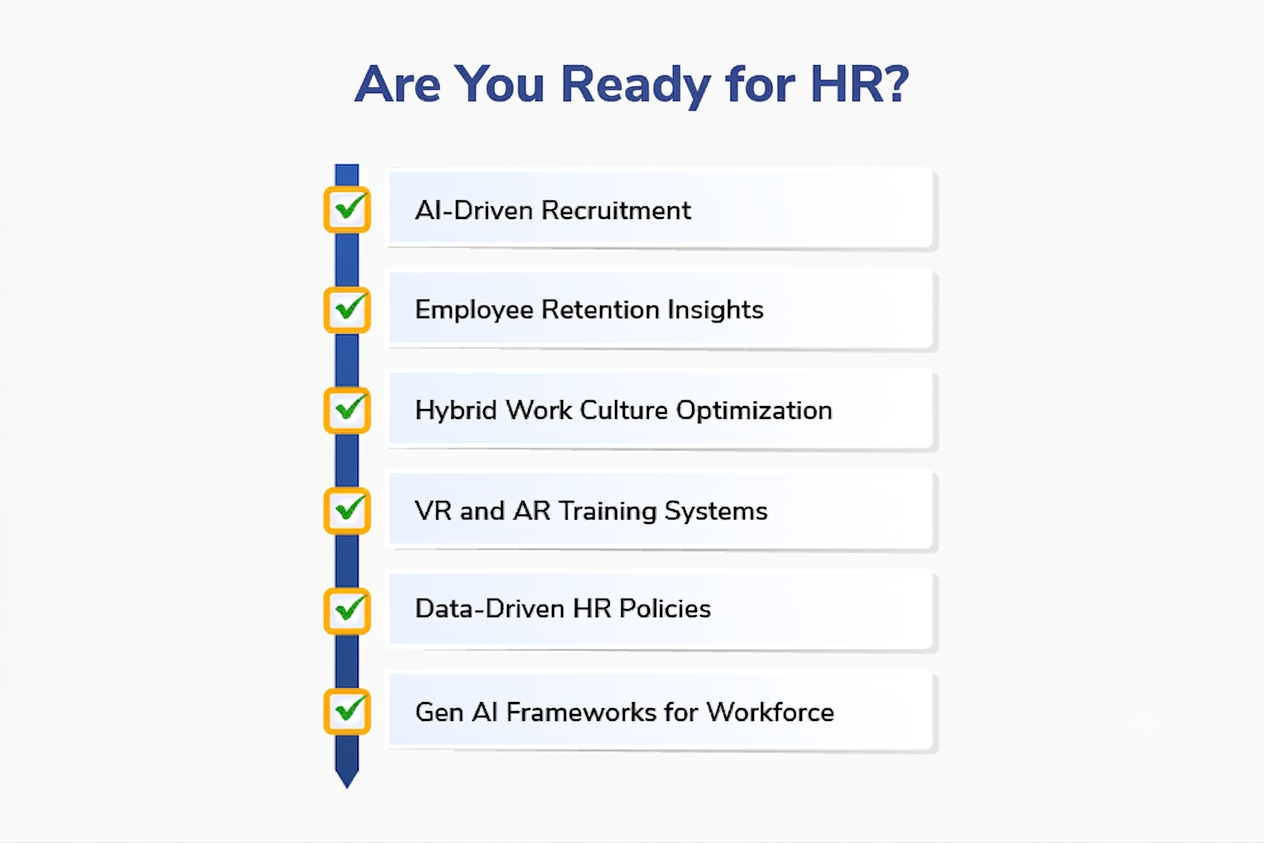
Virtual reality and augmented reality have become the focus in employee training. As per the Gallup survey, 51% of employees disengaged in the workplace. Disengagement can occur due to several reasons and growth opportunity is one among them. Innovative training methods such as VR and AR can increase staff engagement and improve retention. These technologies provide employees with realistic and interactive learning experiences for high-risk tasks or complex processes.
VR and AR trainings allow workers to attain the skills, expertise and confidence they need to perform well in the job. Above all, there are no constraints in traditional training. VR and AR technologies are cost-effective and allow firms to simultaneously train large group of employees.
4. Flexible Work Models Shaping the Future
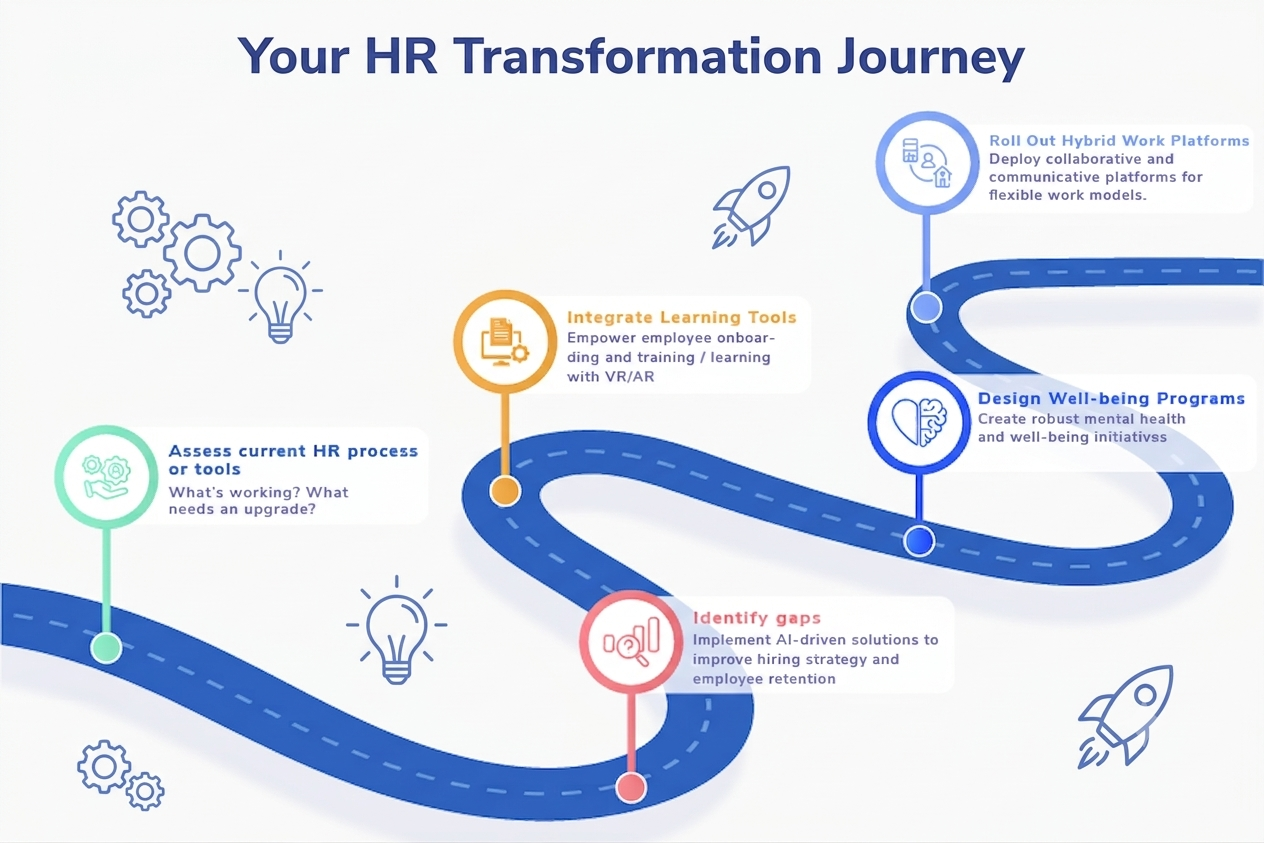
The rise of remote and hybrid work models is transforming how organizations view employee productivity and engagement. Offering flexible work options—such as hybrid models, remote work, and flexible schedules—has proven to enhance employee satisfaction, boost engagement, and improve retention.
Organizations must invest in technology tools that support collaboration and communication among teams. Additionally, offering a flexible work environment can give your organization a competitive edge in talent acquisition, allowing you to expand your talent pool and foster a diverse, engaged workforce.
5. Diversity and Inclusion as a Core Commitment
Diversity, equity, and inclusion (DEI) initiatives are quickly becoming a critical component of organisational success. Firms promoting DEI initiative see tangible advantages like employee satisfaction, better business performance and more.
Talent management teams can go beyond the usual diversity and think out-of-the box initiatives to implement an inclusive culture. From impartial recruiting practices to mentorships and equality in growth opportunities, DEI should be included in every aspect of HR strategies.
6. Generative AI in HR
Gen AI has already revolutionised the way organisations perform HR tasks. Whether it is recruitment or performance analysis, AI tools in the market are streamlining several HR operations. It may be helpful and accelerate the productivity in HR departments now. However, identifying the potential AI issues such inaccuracy and data security is a huge responsibility for talent management teams.
Once the risks are address, HR teams can initiate the integration of Gen AI in the workforce management process. A precise framework must have roadmap to train employees for effective AI usage and evaluating AI responses for the prompts. AI adoption in HR will increase productivity, but only if it is used thoughtfully and ethically.
Learn more about : How AI is helping in HR Departments?
7. AI and Data-Driven HR Decisions
AI’s role in HR will continue to expand when it comes to data-driven decision-making. Lately, HR departments rely on data analytics to make informed decisions about recruitment, performance evaluation, and employee retention. By leveraging AI, HR can identify trends and patterns that may not be immediately visible to managers.
8. HR Automation
Automation is useful in repetitive, time-consuming tasks such as payroll processing, recruitment, and employee onboarding. It’s going to become an even bigger part of the HR toolkit. Automating these processes not only saves time but also reduces errors and creates a smoother experience for employees. With the right tools, organisations can ensure their HR processes are consistent and efficient while allowing HR teams to focus on more meaningful work.
9. Employee Well-being and Mental Health Programs
Employee well-being is picking up even more importance this year, and companies really need to put real mental health support in place — not just as a checkbox, but something that actually supports their people. When employees feel mentally supported, you naturally see a more positive workplace — people show up more, take fewer sick days, and get more done.
Going forward, HR teams need to build mental health into the overall employee experience, not treat it as a separate thing. That means actual counselling support, stress management sessions, and flexible work options — these aren’t nice-to-haves anymore, they genuinely move the needle on well-being.
10. Resilient HR Policies for Crisis Management
The last few years have shown us why HR policies need to be built to handle a crisis, not just day-to-day work. Whether it’s an economic slowdown, political instability, or another health scare, companies need to be ready. Your HR policies should be flexible enough to bend when circumstances change, while still keeping your employees’ well-being at the center of every decision. If you prepare for this now, you’ll be able to handle whatever comes your way — and your people will know you’ve got their back when it actually matters.
Wrapping Up
Keeping up with HR technology trends is no longer optional if you want to stay competitive. From employee experience and retention to AI and immersive tech, these shifts are going to define how workforces are managed going forward. Get ahead of these trends now, and you’ll build a stronger culture, better engagement, and a team that’s actually ready for what’s next. So maybe it’s time to take a hard look at your current strategy and start making these changes before you’re forced to.
Contact us for a free consultation to discuss your needs.
HR Technology Frequently Asked Questions
What are the latest HR technology trends?
AI in HR, HR automation, employee self-service, data-driven decision-making, and digital employee experience are some of the key HR technology trends.
Why is HR technology important for modern businesses?
HR technology helps businesses handle changing workforce needs, improve HR processes, and give employees easier access to HR services.
What are the challenges of adopting HR technology?
Common challenges include implementation costs, employee adoption, data security, system integration, and choosing technology that fits business needs
How does HR technology affect HR professionals?
It can reduce repetitive administrative work and give HR teams more time to focus on employees, workforce planning, and business needs.
