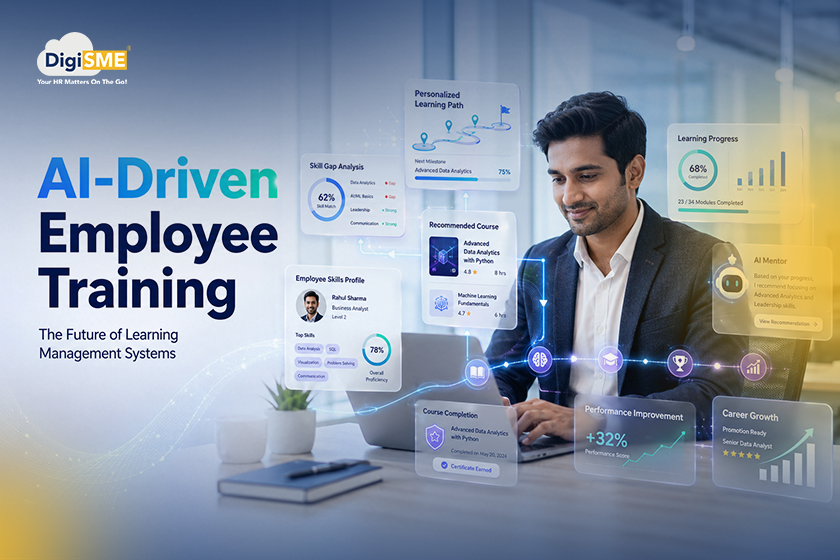
Artificial Intelligence (AI) is transforming employee training by making learning smarter, faster, and more personalized. Unlike traditional training, an AI-powered Learning Management System (LMS) identifies skill gaps, recommends relevant courses, and delivers personalised learning experiences that improve training effectiveness.
According to the World Economic Forum, 39% of workers’ core skills are expected to change by 2030, making continuous learning a business priority. Additionally, McKinsey highlights that organizations investing in digital learning are better prepared for changing workforce demands.
Whether you’re an SME or a large enterprise, an AI Learning Management System helps employees build the right skills, enables data-driven learning decisions, and creates a future-ready workforce. In this guide, we explore how AI is transforming employee training, its key features and benefits, and why businesses are adopting AI-powered learning platforms.
What Is AI-Driven Employee Training and Development?
AI-driven employee training and development is the use of artificial intelligence to deliver smarter, faster, and more personalized learning experiences. Rather than providing identical training programs to all employees, AI evaluates factors such as individual capabilities, job responsibilities, learning patterns, and performance insights to suggest the most suitable learning journey for each person.
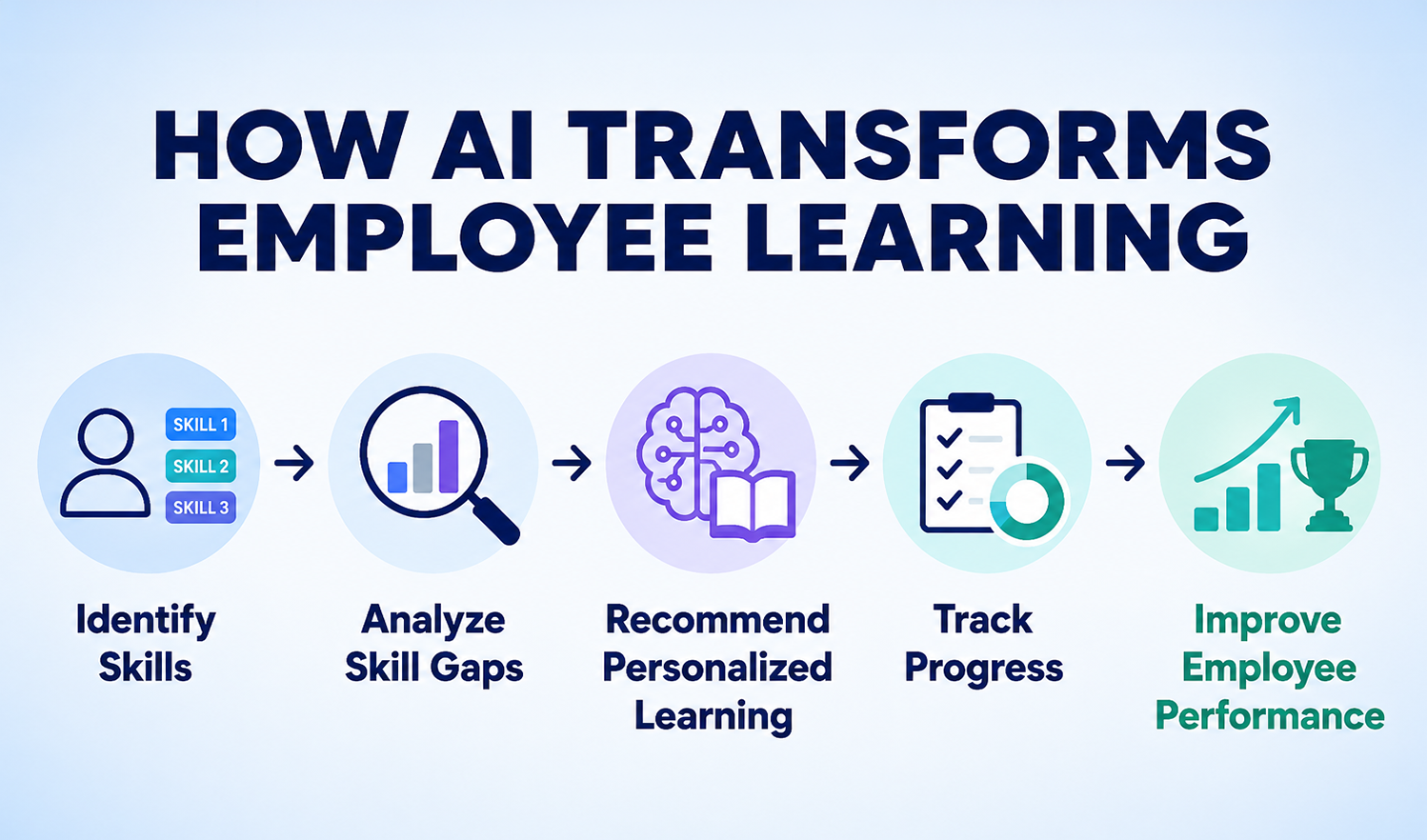
Unlike traditional corporate training, where employees often spend time on courses they may not need, AI focuses on what matters most. It identifies knowledge gaps, suggests personalized content, tracks learning progress, and continuously improves recommendations based on employee performance.
Furthermore, an AI Learning Management System combines automation, data analytics, and machine learning to create an engaging learning environment where every employee receives training tailored to their needs. As a result, this approach helps organizations improve employee performance while reducing training time and costs.
How Does AI Improve Employee Training?
Personalized Learning
Every employee learns differently. Therefore, AI studies learning patterns, assessment scores, job responsibilities, and career goals to recommend courses that match each employee’s needs. For example, a sales executive may receive training on negotiation and customer communication, while an HR manager is guided toward compliance, leadership, and employee engagement programs. As a result, the learning experience feels relevant rather than repetitive.
Adaptive Learning Paths
AI continuously adjusts learning based on employee progress. For instance, if an employee struggles with a topic, the system automatically recommends additional resources, quizzes, or simpler learning modules. On the other hand, employees who perform well can skip basic lessons and move directly to advanced topics. Consequently, this adaptive learning approach keeps employees engaged while reducing unnecessary training time.
Skill Gap Analysis
One of the biggest challenges for HR and Learning & Development teams is identifying which skills employees actually need. To address this challenge, an AI-powered Learning Management System compares current employee competencies with required job skills. It then highlights missing skills and recommends targeted training programs to close those gaps.
For example:
| Employee Role | Current Skill | Required Skill | AI Recommendation |
| Sales Executive | Product Knowledge | Advanced Negotiation | Sales Masterclass |
| HR Executive | Recruitment | HR Analytics | HR Analytics Certification |
| Software Developer | Python | AI Development | Machine Learning Fundamentals |
This enables HR teams to create data-driven learning strategies instead of relying on assumptions.
Intelligent Course Recommendations
Just as streaming platforms recommend movies based on viewing history, AI recommends learning content based on employee interests, previous courses, role changes, and career aspirations. Consequently, employees spend less time searching for courses and more time learning.
Learning Analytics
One of the most valuable capabilities of an AI Learning Management System is its ability to transform learning data into actionable insights. For example, managers can track:
- Course completion rates
- Employee engagement
- Learning progress
- Assessment performance
- Certification status
- Skill development trends
- Training effectiveness
Instead of simply knowing who completed training, businesses can understand how learning impacts employee performance and productivity.
Automated Assessments and Feedback
AI simplifies evaluations by automatically grading quizzes, generating reports, and providing instant feedback. As a result, employees receive immediate suggestions for improvement, while managers gain visibility into overall learning outcomes without spending hours reviewing assessments manually.
Continuous Learning
Learning is no longer limited to annual training sessions. Instead, AI encourages continuous learning by recommending new courses whenever employees take on new responsibilities, receive promotions, or require additional certifications. Ultimately, this creates a culture of ongoing employee development and ensures the workforce remains prepared for evolving business needs.
Why Businesses Need an AI Learning Management System?
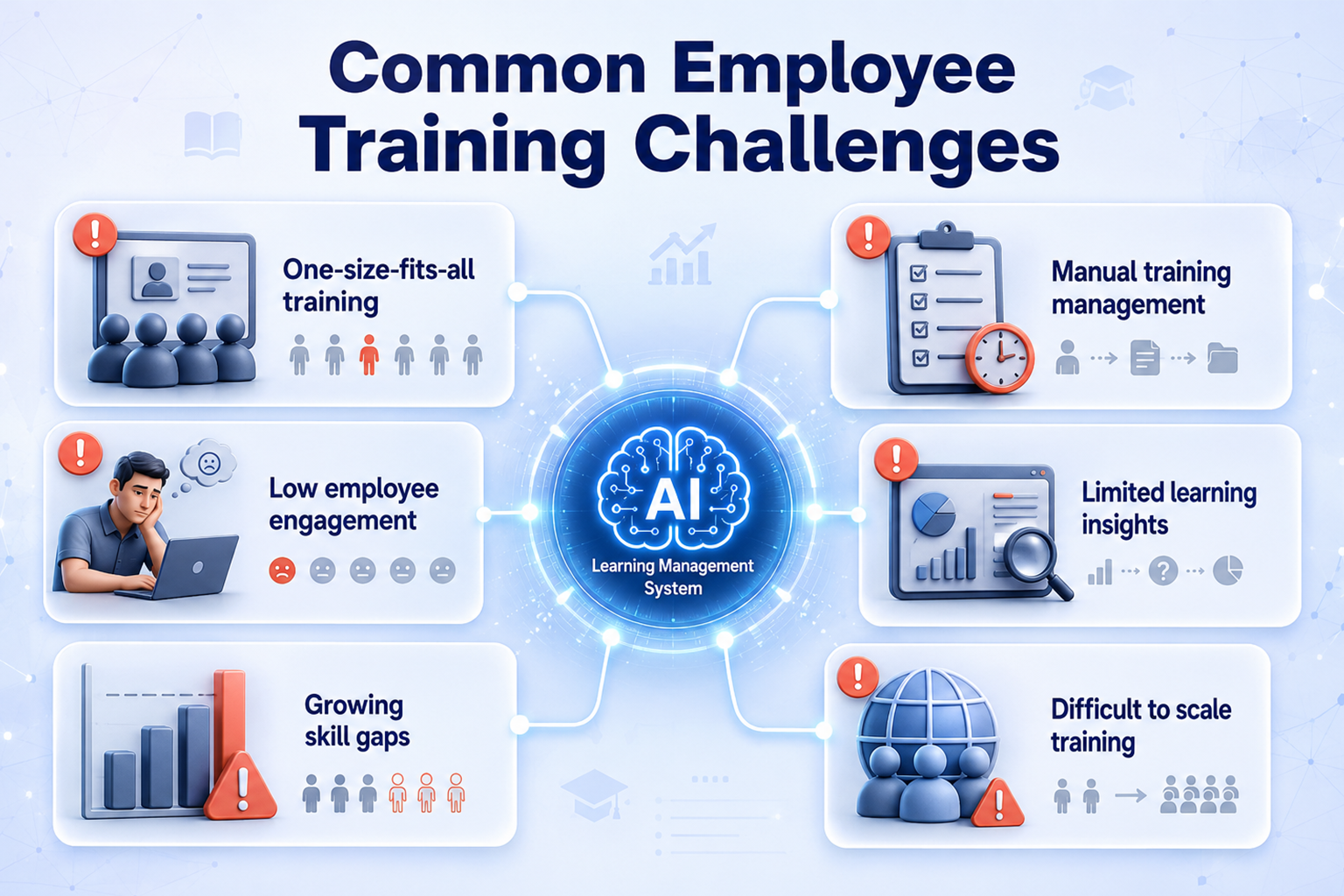
Many businesses struggle with outdated training methods, low course completion rates, limited visibility into employee progress, and increasing skill gaps. As technology and business needs evolve, traditional training is no longer enough. Therefore, organizations need a smarter way to develop employees continuously and at scale.
An AI Learning Management System helps businesses deliver personalized learning, identify skill gaps, and measure training effectiveness. Instead of assigning the same training to everyone, AI ensures employees receive the right learning at the right time. Whether you’re an SME, a growing business, or a large enterprise, AI-powered learning helps build a skilled, engaged, and future-ready workforce.
Accelerate Employee Upskilling and Reskilling
As technologies, roles, and business demands change, employees need to continuously learn new skills. However, manual training plans often fail to keep pace with these changes. An AI Learning Management System analyzes employee competencies and recommends targeted learning paths for upskilling and reskilling. As a result, this helps businesses prepare employees for future roles instead of reacting to skill shortages after they occur. Furthermore, with solutions like DigiSME’s AI Learning Management System, organizations can deliver role-based learning that supports both employee growth and long-term business goals.
Improve Employee Engagement
One of the biggest challenges for HR and Learning & Development teams is identifying the skills employees need to succeed. Moreover, as businesses adopt new technologies, closing skill gaps has become a top priority.
IBM’s research on the AI skills gap highlights the growing need for organizations to build AI-ready skills across their workforce. To address this challenge, an AI-powered Learning Management System identifies skill gaps and recommends relevant learning paths. Consequently, employees spend less time searching for courses and more time developing the skills they need, leading to better engagement, higher course completion rates, and improved knowledge retention.
Reduce Training Costs and Administrative Work
Managing employee training manually can be time-consuming for HR and L&D teams. For example, assigning courses, tracking progress, sending reminders, and generating reports often require significant effort. Fortunately, an AI Learning Management System automates tasks such as:
- Course enrollment
- Learning assignments
- Progress tracking
- Assessment management
- Certification renewals
- Compliance reminders
- Report generation
As a result, this reduces administrative workload while lowering classroom, travel, and training material costs.
Support Data-Driven Learning Decisions
Without clear insights, it’s difficult to know whether training programs are delivering results. Fortunately, AI-powered Learning Analytics provide real-time visibility into employee learning and training performance.
For example, businesses can understand:
- Course completion rates
- Employee engagement
- Skill gaps across teams
- Certification status
- Training effectiveness
As a result, these insights help HR teams make informed learning decisions and continuously improve their corporate training strategy.
Build a Future-Ready Workforce
Businesses need employees who can adapt to changing technologies and market demands. However, traditional training often focuses only on current requirements, leaving organizations unprepared for future challenges.
An AI Learning Management System helps businesses:
- Identify emerging skill gaps
- Recommend relevant training
- Encourage continuous learning
- Support internal career growth
- Prepare future leaders
According to the Microsoft Work Trend Index, AI is changing how organizations operate and creating a growing need for employees to develop new digital skills. Therefore, by investing in continuous learning, businesses can build a workforce that is ready for tomorrow’s challenges.
Enhance Employee Performance
Training should lead to measurable business outcomes, not just completed courses. Therefore, AI-powered Employee Development Software connects learning with performance by tracking employee progress and recommending the next best learning opportunities.
For example:
- A sales executive completes negotiation training and improves conversion rates.
- Similarly, a customer support executive strengthens communication skills and increases customer satisfaction.
- Likewise, a team leader develops leadership capabilities to manage teams more effectively.
As a result, with DigiSME, businesses can combine employee learning with HR processes, making it easier to track development and create a culture of continuous improvement.
Scale Learning Across the Organization
As organizations grow, managing training across multiple teams, locations, and departments becomes more challenging. However, an AI Learning Management System makes it easy to deliver consistent, high-quality training to every employee.
Whether it’s onboarding new hires, compliance training, or product education, businesses can scale learning without increasing administrative effort. Consequently, this allows organizations to maintain consistent learning standards while supporting business growth.
Conclusion
As businesses embrace digital transformation, employee learning can no longer rely on traditional, one-size-fits-all training methods. Modern organizations require smarter learning solutions that can adjust to evolving business needs, deliver relevant training experiences, and help measure the impact of employee development initiatives.
An AI-powered Learning Management System enables organizations to deliver smarter training through adaptive learning, skill gap analysis, personalized learning paths, and real-time learning analytics. The result is a more engaged workforce, improved employee performance, and a stronger foundation for long-term business growth.
If you’re looking for a scalable, intelligent, and user-friendly Learning Management System, DigiSME can help you transform the way your employees learn and grow.
Frequently Asked Questions
How does AI help identify employee skill gaps?
AI compares employee competencies with job requirements and highlights areas where additional training is needed, helping businesses plan targeted learning programs.
How do you choose the right Learning Management System for your business?
Choose a Learning Management System that offers AI-powered personalization, learning analytics, mobile accessibility, seamless HR integration, automation, and scalability to support your business as it grows.
How does AI personalize employee training?
AI analyzes an employee’s role, skills, learning history, and performance to recommend training that matches their individual learning needs and career goals.
What are the key benefits of using an AI Learning Management System?
An AI Learning Management System helps businesses personalize learning, identify skill gaps, automate training tasks, improve employee engagement, and make better learning decisions through real-time analytics.
