
Sales today isn’t just about calling prospects and sending out proposals anymore. It’s about actually understanding how customers behave, juggling a pile of leads, and reaching out at the right moment. That’s exactly why knowing how AI helps in sales matters so much for businesses that want to stay ahead.
McKinsey found that AI-powered sales workflows can deliver 40% higher conversion rates and 30% faster lead execution in real-world B2B setups. That’s not a small jump. AI tools for sales teams look at customer data, track how engaged people are, and point out which leads are most likely to actually convert. So instead of guessing who to call next, sales teams get real insights that guide what they do and help them sell more effectively.
So, let’s get into it—how AI actually helps in sales, what AI-powered CRMs bring to the table, and how businesses can get the most revenue out of these tools.

Table of Contents
Challenges Sales Teams Face Without AI
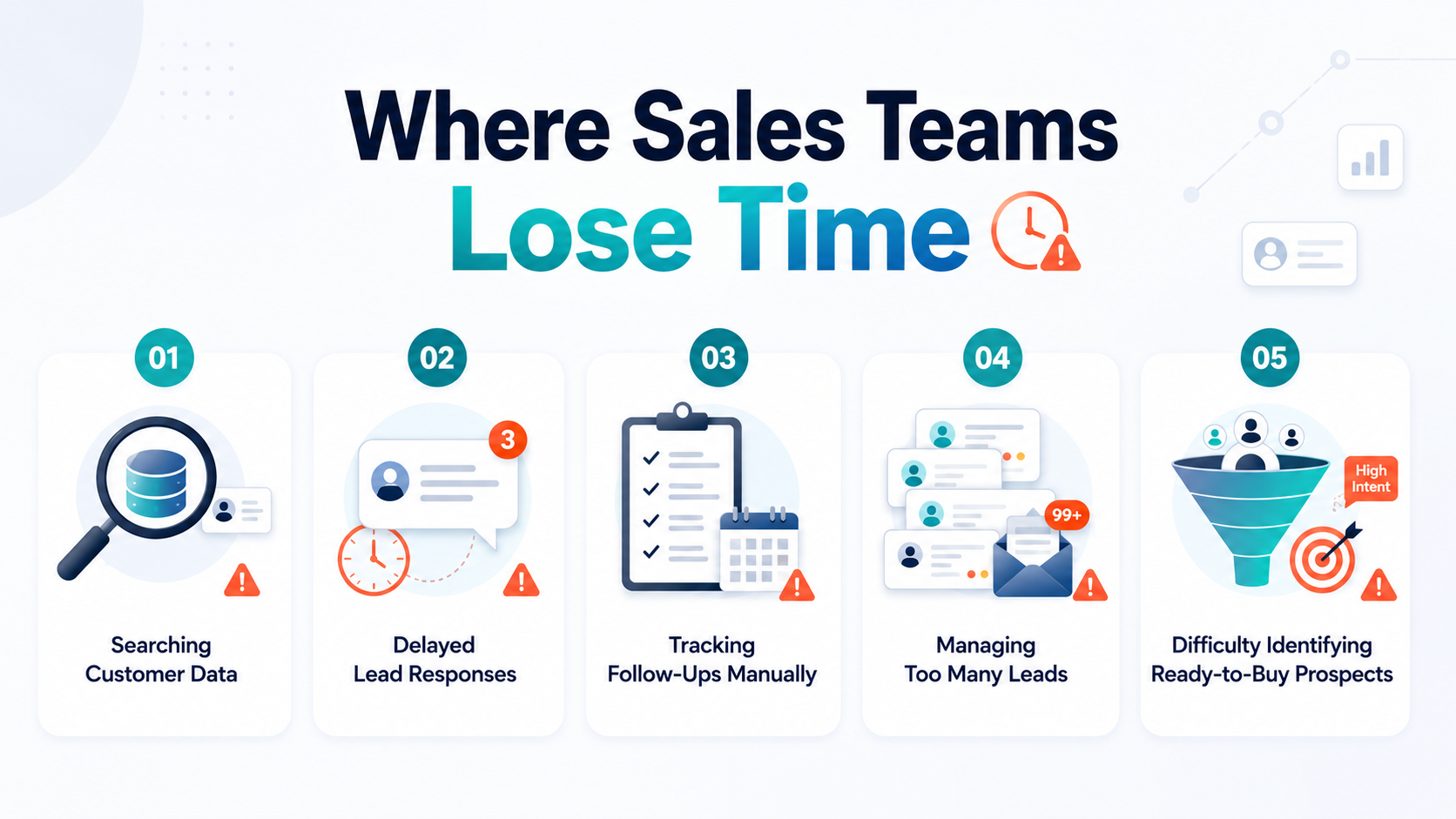
A lot of sales teams are still doing things the old way—manually managing leads, tracking conversations, and following up one by one. That’s fine when you’ve got a handful of leads. But the moment you’re dealing with hundreds, it gets overwhelming fast. Sales reps end up spending most of their day just updating CRM records, digging for information, and figuring out who to contact next. All of this slows the whole process down, and sometimes the best opportunities slip through simply because nobody got to them in time.
There’s another problem too—figuring out who’s actually ready to buy. Without real-time insight into customer intent, sales teams often chase the wrong leads and waste effort. AI fixes this by looking at customer behaviour, engagement history, and buying patterns, so teams know exactly who to prioritise and how to manage the pipeline better.
How AI Helps in Sales with AI CRM?
Running a sales operation today means juggling hundreds of leads, emails, and follow-ups all at once. Doing this by hand eats up time and kills your team’s productivity fast. That’s where AI CRM platforms come in—they take that load off by automating the routine stuff and handing your team insights they can actually act on.
Here’s how it actually works: these AI-powered CRMs collect and study customer data on their own, flag the leads worth chasing, and predict who’s likely to actually convert. According to Salesforce, sales teams using AI tools see a 29% increase in sales and a 34% improvement in productivity.
Let’s break down what this looks like day to day.
Smarter Lead Management
Take lead management, for instance. AI CRMs score leads based on how engaged they are, how much buying intent they’re showing, and what they’ve done before. So instead of your team wasting time chasing cold leads, they’re spending it on the ones that actually matter. Platforms like Digisme CRM take this further with AI assistance that gives real-time insights, so reps always know exactly what to do next.
Automated Follow-Ups
Then there’s follow-ups. Timing matters a lot in sales, but try keeping track of when to follow up with dozens of leads manually — it’s nearly impossible. AI CRMs handle this part for you instead. They send reminders, suggest the best time to reach out again, and even recommend personalized messages based on what the customer’s been doing. Nothing slips through the cracks, responses go out faster, and your team stays a step ahead.
Real-Time Customer Insights
AI also keeps an eye on customer behavior constantly—across emails, website visits, chats, all of it. That means your team can personalise how they talk to people, catch buying intent early, and plan conversations more strategically. Predictive lead scoring, behavioural analytics, automated recommendations — all working quietly in the background while your team focuses on actually selling.
Sales Pipeline Visibility and Forecasting
And at the pipeline level, AI CRM dashboards show exactly where every lead stands, how conversions are tracking, and where things are getting stuck. With predictive analytics built in, managers can forecast sales more accurately and make quicker, smarter calls on strategy.
Increased Sales Productivity
Once AI takes over the repetitive stuff—data entry, follow-up tracking, scheduling—your team actually gets time back to have real conversations. More leads handled, faster responses, and more deals closed.
Key Benefits of AI in Sales
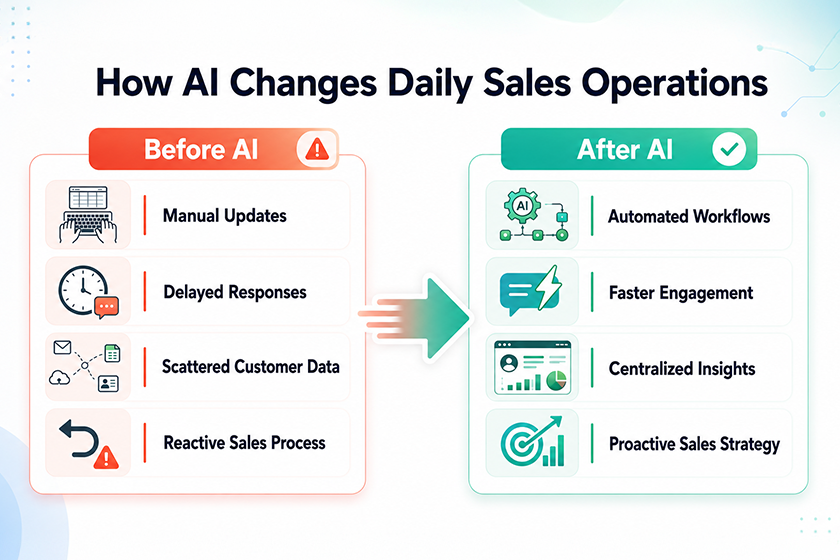
AI transforms the way sales teams operate, enabling smarter workflows and better decision-making.
Better Lead Generation: AI identifies the most promising prospects by analyzing engagement patterns, website activity, and past interactions. This allows sales teams to focus on leads likely to convert, improving sales productivity.
Smarter Follow-Ups: AI tools schedule reminders, recommend the best times to contact leads, and suggest personalized messaging. This keeps prospects engaged and prevents leads from going cold.
Real-Time Customer Insights: AI provides insights into customer preferences, interactions, and behavior across channels. Sales teams can tailor conversations, predict buying intent, and increase conversion rates.
Accurate Sales Forecasting: AI CRMs offer predictive analytics that improve pipeline visibility and revenue forecasts. Managers can detect bottlenecks and plan resources effectively, making sales strategy proactive.
Increased Productivity: Automation reduces time spent on manual tasks, allowing teams to focus on relationship building and deal closure. McKinsey reports that more than 30% of sales activities can be automated, allowing sales teams to spend more time selling and less time on administrative work.
In short, AI CRMs like Digisme combine predictive insights, automation, and intelligent recommendations to help sales teams work smarter, engage customers effectively, and boost revenue.
Conclusion
Relying on manual sales processes can lead to missed opportunities and reduced revenue. AI in sales automates tasks, provides predictive insights, and identifies high-potential leads, transforming how teams operate.
Platforms like Digisme CRM make implementing AI seamless. With built-in AI assistance, it analyzes customer interactions, prioritizes leads, and recommends next steps, helping sales teams stay organized, proactive, and productive. Businesses using AI-powered CRMs like Digisme see faster responses, higher conversions, and improved efficiency.
For any business aiming to boost sales, streamline workflows, and enhance customer engagement, integrating AI through tools like Digisme CRM is essential.
AI in Sales FAQs
What is AI in sales?
AI in sales refers to the use of artificial intelligence to automate sales processes, analyze customer data, and provide insights that help teams improve productivity and close more deals.
How does AI help sales teams?
AI helps sales teams prioritize leads, predict buying behavior, automate follow-ups, and track customer engagement, making the sales process faster and more efficient.
Can AI increase sales productivity?
Yes. By automating manual tasks and providing actionable insights, AI reduces workload and allows sales teams to focus on high-value activities, improving overall productivity.
What AI tools are used in sales?
AI CRM platforms like Digisme CRM, Salesforce Einstein, HubSpot AI, and Zoho AI automate lead management, follow-ups, and predictive analytics to improve sales performance.
Is AI replacing salespeople?
No. AI enhances sales performance by supporting teams with data, automation, and insights. Human decision-making and relationship-building remain crucial.
