India’s tech sector is set to reach $300 billion by 2026, therefore driving rapid growth in HR technology as businesses embrace digitization and hybrid work models. Specifically, for SMEs and scaling companies, HR solutions now go beyond payroll—in addition, they ensure compliance with labor laws, enhance employee satisfaction, and support seamless business growth.
Moreover, modern HR software is shifting from simple employee record-keeping to strategic workforce management tools that streamline processes, improve accuracy, and elevate the overall employee experience.
Consequently, this 2026 guide highlights the top 5 software platforms in India, evaluated on features, user experience, AI capabilities, compliance readiness, and scalability. The goal is to help Indian businesses choose an HRMS that delivers real value, not just features.
Why Indian Businesses Need HR Software in 2026
Currently, businesses are managing hybrid and remote teams, freelancers, multiple office locations, and constantly evolving labor regulations. As a result, manual processes and spreadsheets are no longer efficient or reliable.
Fortunately, modern HRMS platforms streamline payroll and compliance, ensure accurate attendance tracking, improve performance management, boost employee engagement, and reduce administrative workload. In fact, studies show that companies using HR software can cut HR operational time by up to 50%, significantly reduce payroll errors, and improve employee retention. Therefore, in 2026, HR software is not just a cost — it’s a strategic growth tool.
Top 5 HR Software in India (2026 Rankings)
1. DigiSME
DigiSME has emerged as a strong HRMS choice for Indian SMEs and digital/content agencies, effectively combining core HR automation with workflows designed for marketing and creative teams—a gap often ignored by enterprise-focused HR tools.
Key Features
- Payroll automation with PF, ESI, PT compliance
- Mobile & biometric attendance with GPS fencing
- Shift & roster scheduling
- Claims reimbursements with receipt scanning
- Performance appraisal with 360° and KPI tracking
- Grievance management
- Self-service portal for employees & managers
- Role-based access & audit trails
- Detailed custom reports & dashboards
- Cloud-hosted with ISO & SOC2 security certifications
Pros
- Easy onboarding for SMEs
- Cost-effective INR pricing
- Built for digital & agency workflows
- Strong compliance automation
Cons
- Smaller ecosystem than enterprise HRMS
- Advanced analytics still evolving
Best For: SMEs, digital agencies, content & marketing firms
User Rating: 4.5/5 (India-based reviews)
2. greytHR
greytHR is one of India’s most trusted payroll-centric HRMS platforms, used by 25,000+ businesses across industries. In particular, it is especially popular among SMEs for its accuracy, statutory compliance depth, and reliability.
Key Features
- Payroll automation with statutory compliance
- PF, ESI, PT, and TDS calculations
- Leave & attendance management
- Employee self-service portal
- HR reports and audit-ready documentation
Pros
- Excellent payroll accuracy
- Strong compliance engine
- Easy adoption for HR teams
- Cost-effective for Indian SMEs
Cons
- Limited recruitment and engagement tools
- UI prioritizes function over experience
Best For: Payroll-heavy SMEs
User Rating: 4.6/5
3. Zoho People
Zoho People is part of the Zoho business ecosystem and therefore works best for companies already using Zoho CRM, Books, or Projects. It offers flexible HR automation with strong integrations and affordability.
Key Features
- Attendance & leave management
- Timesheets and project tracking
- Performance appraisals
- AI-powered workforce insights
- Multi-language employee interface
- Strong APIs and integrations
Pros
- Affordable pricing
- Strong ecosystem integrations
- Scalable and cloud-first
- Reliable uptime
Cons
- Payroll requires Zoho Payroll add-on
- Customization needs setup time
Best For: Zoho ecosystem users
User Rating: 4.5/5
4. Darwinbox
Darwinbox is a leading AI-powered HRMS based in India, moreover widely adopted by large enterprises and fast-growing organizations across Asia-Pacific, the Middle East, and the US. It offers advanced HR automation, analytics, and employee experience tools, serving over 1,000 enterprises and 3 million employees globally, including major Indian conglomerates, IT services firms, and BFSI organizations.
Key Features
- AI-powered recruitment & talent management
- End-to-end employee lifecycle management
- Performance management with OKRs
- Learning & development (LMS)
- Employee engagement surveys & pulse feedback
- Payroll and statutory compliance (India)
- Leave & attendance management
- Mobile-first employee experience app
- Integrations with ERP, finance, and identity systems
Pros
- Enterprise-grade scalability
- AI and analytics capabilities
- Strong performance & talent modules
- Suitable for global workforces
Cons
- Not cost-effective for small SMEs
- Implementation requires onboarding support
- Over-featured for basic payroll needs
Best suited for: Large enterprises and globally distributed organizations
User Rating: 4.6/5
5. Keka
Keka is a modern HRMS focused on employee experience, additionally widely used by Indian startups and tech-led companies.
Key Features
- Payroll & tax automation
- Attendance and shift management
- Performance reviews
- Employee engagement tools
- Mobile-first design
Pros
- Clean and intuitive UI
- Strong employee experience focus
- Reliable payroll engine
Cons
- Pricing higher for small teams
- Limited flexibility for micro-businesses
Best For: Experience-driven organizations
User Rating: 4.6/5 (G2)
Comparison Table
| Software | Best For | Starting Price (₹/month) | Payroll & Compliance | AI Capabilities | G2 Rating |
|---|---|---|---|---|---|
| Darwinbox | Large enterprises | no public pricing | Yes | Advanced | 4.6 |
| greytHR | Payroll-heavy SMEs | 3495 | Yes | Limited | 4.6 |
| Zoho People | Zoho ecosystem users | 48/per employee | Partial | Moderate | 4.5 |
| DigiSME | SMEs & digital agencies | 1000 | Yes | Practical AI | 4.5 |
| Keka | Experience-led teams | 9999 | Yes | Moderate | 4.6 |
How to Choose the Right HR Software in India?
Selecting the right HR software is a long-term business decision, because it is not just a software purchase. In India, this decision becomes even more critical due to complex labor laws, diverse workforce types, and cost sensitivity, especially for SMEs and fast-growing companies. Therefore, below is a detailed, practical framework to help businesses choose the right HRMS in 2026.
1. Assess Your Internal HR Needs Clearly
Before comparing vendors, businesses must understand what problems they are trying to solve. Payroll-heavy organizations (manufacturing units, service firms, agencies) should prioritize accurate salary processing, statutory compliance (PF, ESI, PT), and error-free filings.
Meanwhile, engagement-driven organizations (startups, IT companies, creative agencies) may need performance management, OKRs (Objectives and Key Results), employee feedback tools, and learning modules.
In fact, according to industry surveys, over 40% of failed HRMS implementations in India occur due to poor requirement mapping. Clearly documenting current pain points—manual payroll errors, delayed attendance reports, or lack of performance visibility—helps avoid overpaying unused features.
2. Shortlist 3–5 HR Software Tools and Request Live Demos
Once requirements are defined, shortlist 3 to 5 HRMS platforms that match your business size and industry. Avoiding too many comparisons is important, because it often leads to confusion rather than clarity.
Next, request live demos instead of recorded walkthroughs and involve key stakeholders—HR, finance, and team managers. For instance, for SMEs and digital agencies, including platforms like DigiSME in the demo list is essential, as it is designed specifically around Indian SME workflows rather than enterprise-heavy processes.
During demos, observe:
- Ease of payroll processing
- Simplicity of employee onboarding
- Manager-level dashboards and reporting
- Time taken to perform routine HR tasks
3. Check Depth of India Compliance, Not Just Feature Claims
Although many HR software providers list “India compliance” as a feature, the depth of compliance varies significantly. Hence, businesses should verify whether the system truly supports:
- Automatic PF, ESI, PT calculations and filings
- Updates aligned with Labor Codes 2020
- State-wise statutory variations
- Audit-ready compliance reports
In addition, a compliant HRMS can reduce compliance-related risks by up to 70%, according to HR consulting firms. Therefore, always ask vendors how frequently their compliance rules are updated and whether changes are automated or manual.
4. Evaluate Mobile Experience for Employees and Managers
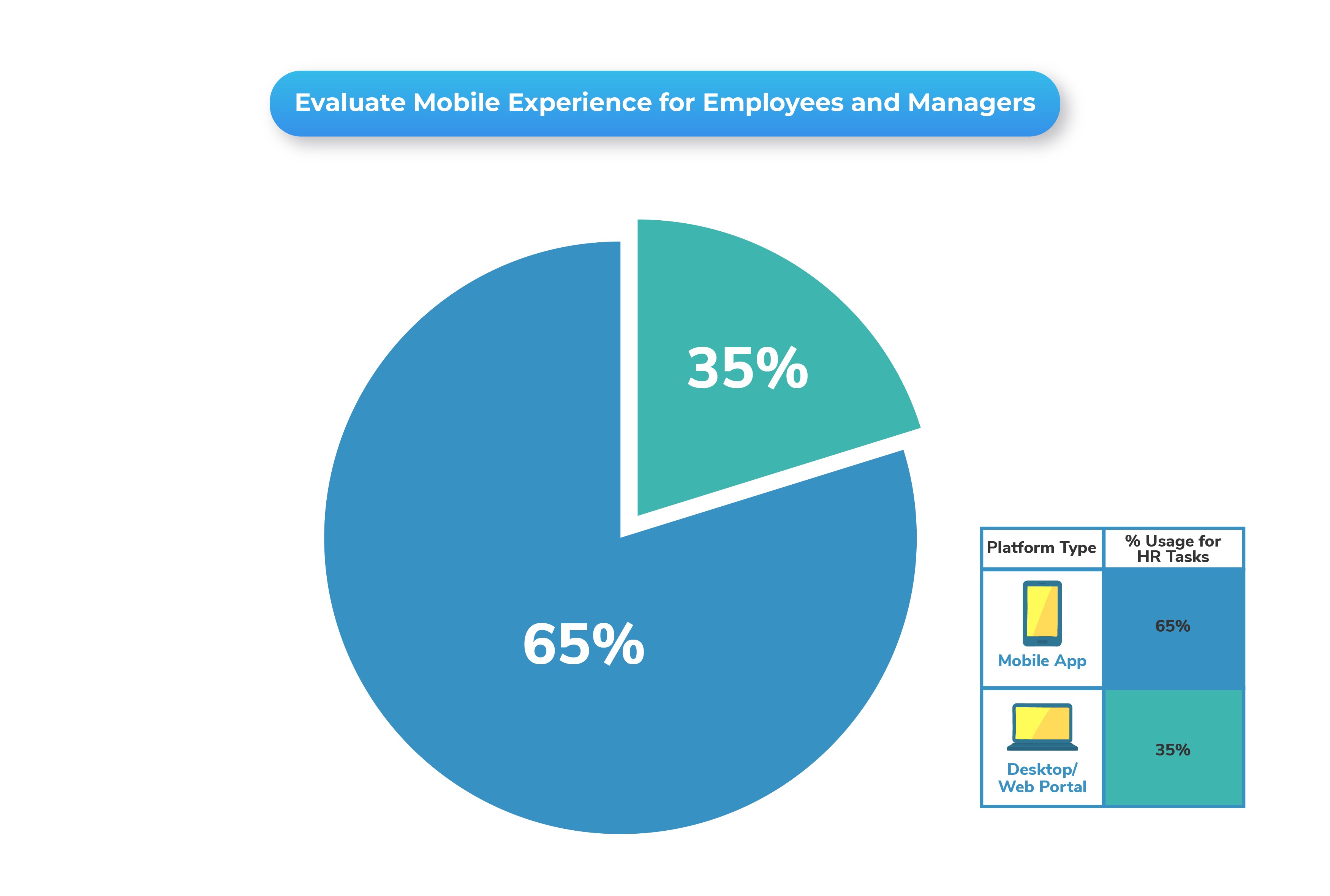
With India’s workforce becoming increasingly mobile and hybrid, HR software must be mobile-first—not just mobile-compatible. Specifically, evaluate whether employees can:
- Apply for leave and mark attendance
- Access payslips and tax documents
- Update personal information
Meanwhile, managers should be able to approve requests, view team attendance, and access performance data seamlessly on mobile. Otherwise, for businesses with field staff, blue-collar workers, or remote teams, a weak mobile experience often results in low adoption rates and manual workarounds, defeating the purpose of HR automation.
5. Watch for Red Flags Before Finalizing
Furthermore, several warning signs indicate that an HRMS may cause problems later:
- Hidden costs for payroll runs, compliance filings, or additional users
- Poor or delayed customer support, especially during payroll cycles
- Weak or outdated mobile user interface
- Overdependence on spreadsheets or manual uploads
- No local implementation or India-based support team
Importantly, industry data shows that support quality directly impacts HRMS success, with businesses reporting 2× higher satisfaction when vendors offer local support.
6. Negotiate Annual Pricing to Reduce Per-Employee Costs
Typically, most HR software providers in India offer better pricing on annual contracts, often reducing per- employee costs by 10–20%. When negotiating:
- Ask for bundled modules instead of add-ons
- Negotiate implementation or onboarding fees
- Request extended free trials or pilot runs
For example, cost-effective platforms like DigiSME are particularly attractive for SMEs aiming to stay under ₹50 per employee per month while still accessing core HR and compliance features.
7. Prioritize Data Security and Compliance Readiness
Since HR software handles sensitive employee data, data security is non-negotiable. Thus, businesses should ensure that the HRMS offers:
- Role-based access controls
- Data encryption and secure cloud hosting
- Regular backups and disaster recovery
- Compliance with data protection standards such as GDPR or ISO certifications
Consequently, with increasing regulatory scrutiny, choosing a security-ready HRMS protects both employees and the organization from data breaches and legal exposure.
Conclusion
Ultimately, as Indian businesses move toward AI-enabled, compliance-ready HR operations, choosing the right HRMS is a strategic decision. While platforms like greytHR and Zoho People lead in scale and features, DigiSME stands out for SMEs and digital-first companies that need an affordable, easy-to-use solution tailored to Indian workflows.
In addition, with its focus on simplified payroll, local compliance, and tools designed for marketing and content teams, DigiSME addresses a gap often overlooked by larger HR platforms. Therefore, for growing businesses looking to modernize HR without overcomplicating processes, DigiSME offers a practical and future-ready choice.
Finally, explore demos, compare features, and adopt the HR software that aligns with your business goals in 2026.
Frequently Asked Questions
What is the best HR software for Indian SMEs in 2026?
The best HR software for Indian SMEs combines payroll automation, compliance, and employee engagement. Platforms like DigiSME, greytHR, and Zoho People offer affordable pricing, cloud access, and AI tools tailored to Indian labor laws.
How does HR software improve employee performance in India?
HRMS tools streamline attendance, leave, and performance management. Features like 360° feedback and KPI tracking help managers monitor teams efficiently and boost overall employee satisfaction.
Why is payroll automation important for Indian businesses?
Payroll automation reduces errors, ensures PF, ESI, PT, and TDS compliance, and saves HR time. Systems like DigiSME and greytHR make salary processing accurate, fast, and legally compliant.
How to choose HR software for hybrid and remote teams in India?
Prioritize mobile-first, cloud-based platforms with GPS attendance and real-time reporting. This ensures smooth operations and engagement for teams across locations.
