Did you know employees typically leave 5–10 days of paid leave unused each year? With deadlines, meetings, and projects filling your calendar, it’s easy for well-earned leave to go unused. This can mean missed opportunities to recharge, take short trips, or simply enjoy a break from work.
This is where year-end leave management comes in. It helps employees plan, track, and make the most of their remaining leave before the year ends, ensuring every earned day is used effectively.
In this guide, we’ll cover everything you need to know about leave planning, from understanding leave rules and deadlines to planning strategies and real-life examples. By the end, you’ll have the tools to make the most of your earned leave before the year ends.

Table of Contents
What Is Year-End Leave Planning?
Year-end leave planning is the process of reviewing an employee’s remaining leave, checking company rules, and deciding how to use, carry forward, or encash unused leave before the leave year ends.
Why Is Year-End Leave Planning Important?
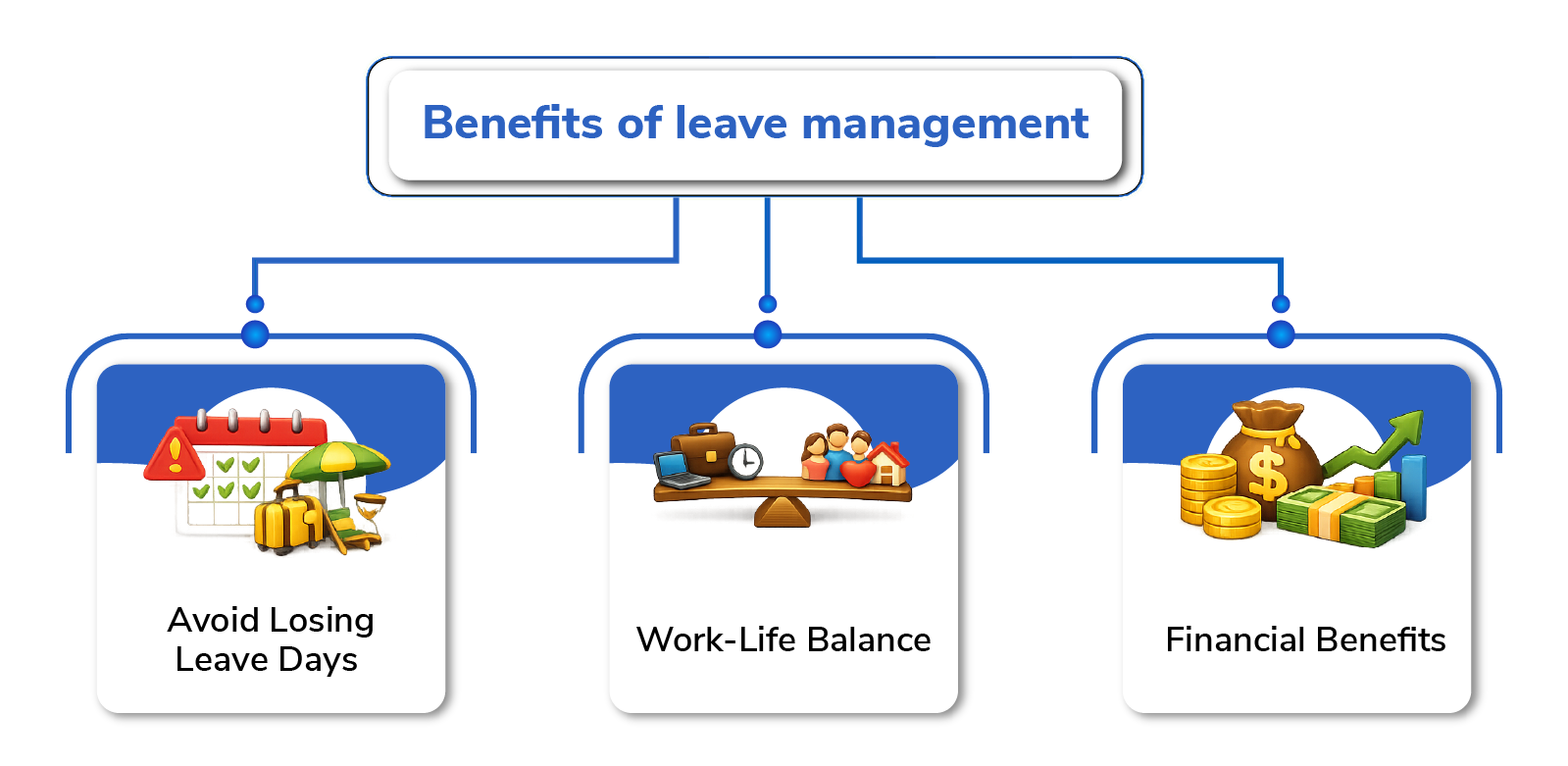
To better understand its importance, consider how effective leave planning impacts employees in multiple ways:
Avoid losing leave days
To begin with, most organizations have policies that determine how unused leave is treated at year-end. Without proper awareness, employees risk forfeiting leave they’ve already earned.
Work-life balance
At the same time, taking leave is crucial for preventing burnout and maintaining productivity. According to top HR executives globally, effective leave management plays a key role in employee engagement and retention.
Financial benefits
In addition, some companies offer leave encashment, converting unused leave into monetary compensation. With proper planning, employees can ensure they don’t miss out on these financial benefits.
What Year-End Leave Rules Should Employees Know?
Many employees find themselves confused about leave rules because they vary by company, HR policy, and local employment laws. However, understanding these rules in advance allows you to plan wisely and avoid losing valuable benefits.
Read Also: HR Leave Policy in India: Must-Know Rules & Legal Acts
1. Carry Forward Rules
Some companies allow a portion of unused leave to be carried forward to the next calendar year. That said, not all leave is transferable, and limits often apply.
Example:
If your company allows carrying forward up to 5 days and you have 10 unused leave days, only 5 will roll over to the next year—the remaining 5 may expire. It’s like preparing for a feast, taking more than you can eat, and then leaving half of it untouched.
Always check your HRMS leave module or employee handbook to understand the exact carry-forward limits applicable to you.
2. Leave Encashment
Leave encashment allows employees to convert unused leave into cash. This option can be especially valuable for employees who cannot take leave due to workload or personal circumstances.
In most cases:
- Many companies encash unused leave at year-end or upon employee exit
- Certain policies may only apply to specific leave types, such as privilege leave
- Taxation rules may apply, so it’s important to check payroll policies
Stat:
Studies indicate that employees in India lose ₹5,000–₹10,000 worth of unused leave annually due to poor planning. Fortunately, using HR software leave management tools can help avoid such losses.
Read Also: A Complete Guide to Leave Types in India
3. Leave Deadlines
Unused leave often comes with a deadline. In fact, many organizations follow “use it or lose it” policies, meaning leave not applied for by a set date (commonly December 31) may be forfeited. In some cases, companies allow a short grace period into January or February—but relying on it is risky.
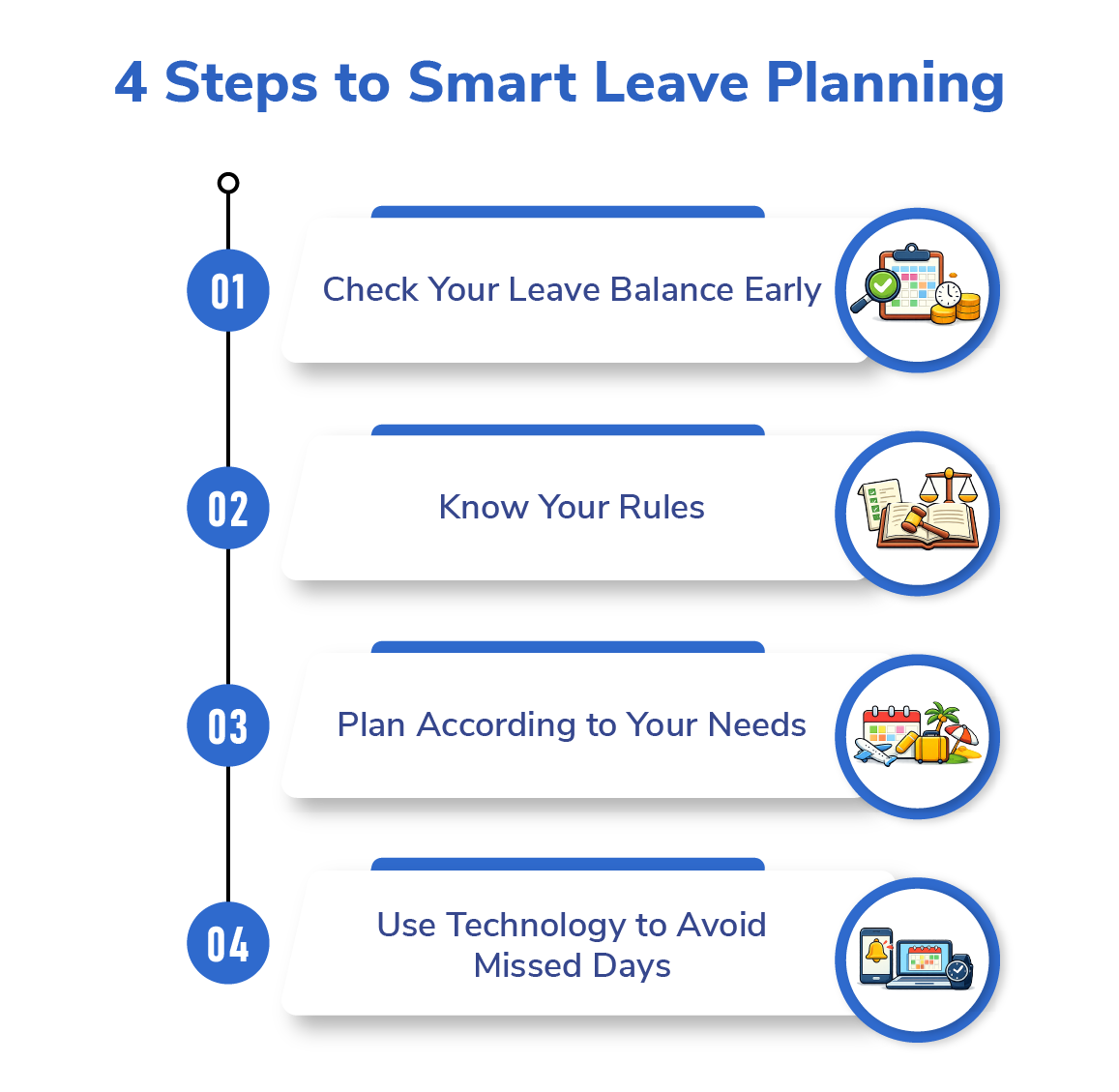
How Employees Can Plan and Use Their Year-End Leave Wisely?
Effective planning ensures that employees can make the most of their leave without unnecessary stress. Here’s a structured approach to follow:
1. Check Your Leave Balance Early
Don’t wait until December to check your leave balance. Ideally, review it in October or November. Modern leave management software allows employees to see up-to-date balances, upcoming holidays, and pending approvals instantly. Think of it like checking your bank account before going on a shopping spree.
2. Understand Your Rules (Carry Forward + Encashment)
Every company has its own leave rules. Therefore, employees should clearly confirm:
- How many days can be carried forward?
- Whether encashment is automatic or request-based?
- What the final deadline is to apply for leave?
Quickly confirming these details through HRMS leave online portals or direct HR communication helps avoid confusion later and ensures smoother planning.
3. Plan According to Your Needs
Before the year-end rush begins, decide how you want to use your leave:
- Long vacations with family to recharge
- Random long weekends for short getaways
- Upskilling or a mental reset to boost productivity
With leave management software, employees can check team calendars, avoid overlaps, and plan leave approvals in advance. As a result, early planning provides flexibility, reduces conflicts, and ensures everyone in the team is on the same page.
4. Leverage Technology to Avoid Missed Days
Manual tracking using Excel sheets, sticky notes, or personal reminders is error-prone. Instead, modern automated leave management systems:
- Auto-update leave balances
- Send timely reminders before expiry
- Simplify leave application and approval processes
- Allow employees to plan better without burdening HR
By adopting technology, employees can focus more on enjoying their leave rather than tracking it manually.
Wrap-Up:
Year-end leave management doesn’t need to feel stressful or confusing. When employees understand leave rules, plan proactively, and leverage the right technology, their leave becomes exactly what it is meant to be—time to recharge, relax, and return to work rejuvenated.
Organizations that use modern HR tools, such as DigiSME, ensure fairness, transparency, and efficiency in leave management. This, in turn, allows employees to focus less on policy navigation and more on truly enjoying their well-earned breaks.
Take charge of your year-end leave today—plan smartly and enjoy stress-free time off with DigiSME’s advanced leave management solutions.
Leave Planning Frequently Asked Questions
Can employees carry forward their year-end leave to the next year?
Yes, many companies allow a certain number of leave days to carry forward. Limits and conditions vary, so employees should check with HR or their hrms leave module.
Is leave encashment mandatory at year-end?
No, leave encashment is optional and depends on company policy as well as applicable labor laws.
What happens to unused leave at the end of the year?
Unused leave may be carried forward, encashed, or expire, depending on company policy. Employees should review deadlines to avoid losing their eligible leave.
How can employees plan their year-end leave better?
Employees should review their leave balance early, understand company rules, plan according to personal and professional needs, and coordinate with their team to ensure smooth approvals., all data can be accessed at anytime, anywhere.
