

Table of Contents
- 1. What Is the Latest EPFO Update in 2026?
- 2. What Is the New EPFO Wage Ceiling for 2026?
- 3. How Will the New EPFO Rule Affect Employees?
- 4. What Should HR Teams and Employers Do After the EPFO Update?
- 5. How Is PF Calculated Under the New Wage Ceiling?
- 6. Other EPFO Updates to Know in 2026
- 7. EPFO New Update FAQs
If you’re an employee or part of an HR or payroll team, the latest EPFO update 2026 could affect how PF coverage is handled from September 2026.
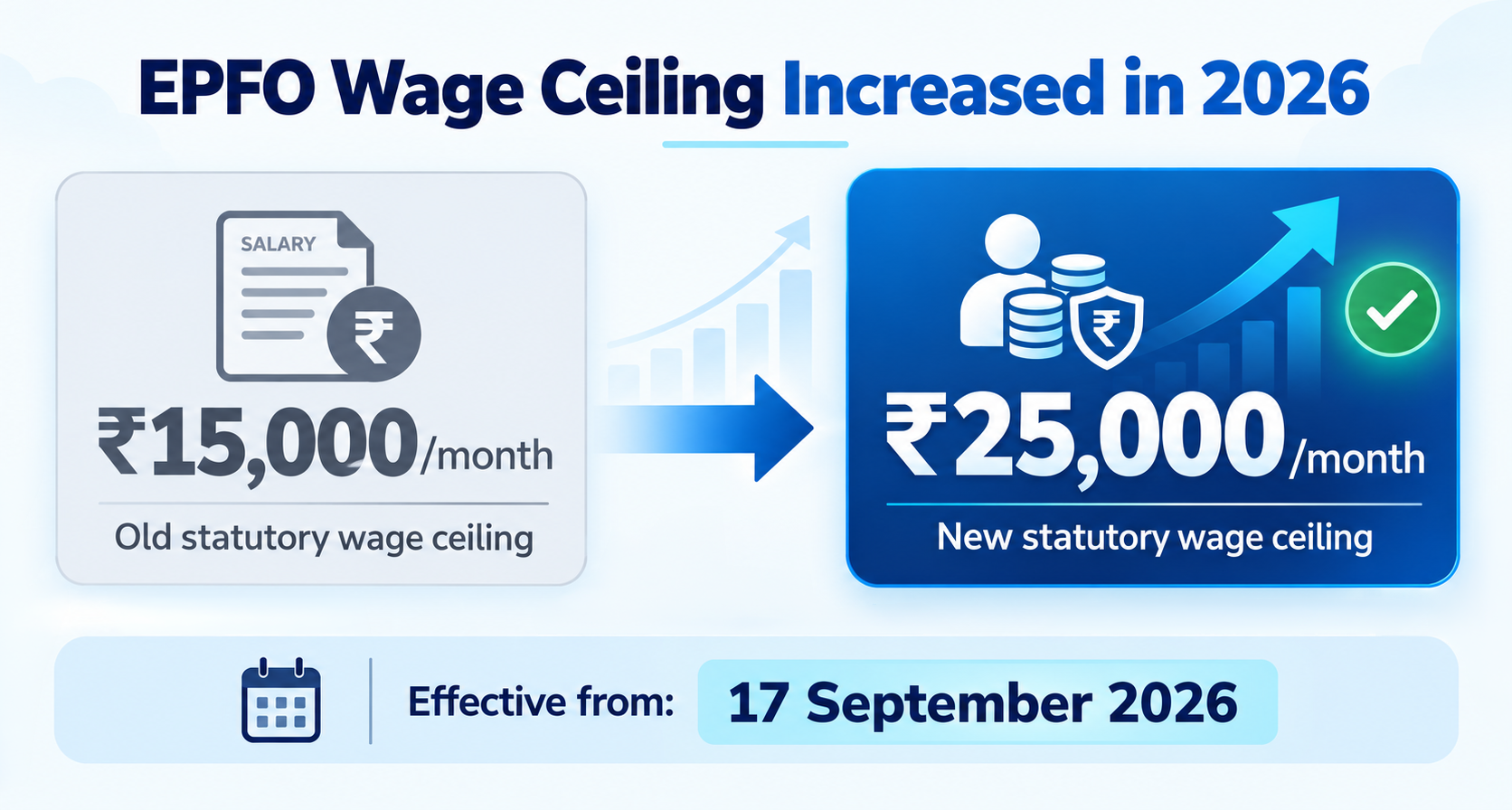
The government has increased the EPFO wage ceiling from ₹15,000 to ₹25,000 per month, effective September 17, 2026. This brings employees earning between ₹15,000 and ₹25,000 who were previously outside mandatory EPF coverage within the statutory framework, subject to applicable rules.
So, what does this EPFO new rules 2026 change mean for employees? And what should employers update in their payroll process?
In this guide, we’ll explain the new wage ceiling, who it applies to, how it can affect PF contributions, and what HR and payroll teams should check after the EPFO latest update 2026.
Key EPFO New Rules 2026
- EPFO wage ceiling increased from ₹15,000 to ₹25,000, effective September 17, 2026
- The revised ceiling can affect PF deductions and take-home salary
- Employers need to review employee eligibility, payroll calculations, UAN/KYC details, and ECR filings
- The EPF Scheme, 2026 replaces the earlier EPF Scheme, 1952
What Is the Latest EPFO Update in 2026?
The biggest EPF new update right now is the wage ceiling going up for mandatory EPFO coverage.
Till now, the ceiling was ₹15,000 a month. From 17 September 2026, it’s ₹25,000. This was notified by the Ministry of Labour and Employment through notification S.O. 5109(E), and it’s actually the first time this ceiling has moved in almost 12 years. Because of this, the government expects over 51 lakh additional employees to come under mandatory EPFO coverage.
This change applies to the whole social security setup under EPFO—EPF, EPS, and EDLI—as per the applicable scheme provisions.
If you already earn more than ₹25,000 and are an EPFO member, you will continue to be covered. The new rule does not remove existing members. The main change is the increase in the wage ceiling used to determine mandatory EPF coverage and applicable contributions.
What Is the New EPFO Wage Ceiling for 2026?
The EPFO wage limit 2026 has increased from ₹15,000 to ₹25,000 per month. In simple terms, the wage limit has gone up by ₹10,000, which is a 66.67% increase.
Here’s a simple comparison:
| Particular | Old Limit | New Limit | Change |
|---|---|---|---|
| EPFO wage limit per month | ₹15,000 | ₹25,000 | ₹10,000 more |
| Employee PF contribution at 12% | ₹1,800 | ₹3,000 | ₹1,200 more |
| Employer PF contribution at 12% | ₹1,800 | ₹3,000 | ₹1,200 more |
| Total monthly contribution | ₹3,600 | ₹6,000 | ₹2,400 more |
How Will the New EPFO Rule Affect Employees?
This new EPF update mainly affects employees whose applicable PF wages fall between ₹15,000 and ₹25,000 a month — people who were earlier outside the mandatory EPF coverage.
For these employees, PF could now start showing up as a deduction in their salary, depending on their eligibility and the rules that apply to them.
Let’s take a quick example. Say an employee has PF wages of ₹25,000. A 12% employee contribution would work out to ₹3,000 a month. That amount gets deducted from their salary and goes straight into their EPF account.
This means the employee’s take-home salary may be lower after PF deductions start. However, the employee is also building retirement savings through EPF, while the employer makes its own contribution as required.
If you earn more than ₹25,000, don’t assume that your entire salary will automatically be used to calculate PF. The actual PF calculation depends on your applicable PF wages, EPF membership and the rules that apply to you.
So, if your salary is between ₹15,000 and ₹25,000, it’s worth checking your salary slip and asking your HR or payroll team how the new EPFO wage ceiling 2026 applies to you.
What Should HR Teams and Employers Do After the EPFO Update?
This is where payroll teams need to pay attention. First, review employees who fall in the ₹15,000–₹25,000 wage range and check whether they now need to be enrolled under the revised rules.
Next, review your payroll configuration. The revised ceiling is effective from 17 September 2026, so payroll systems should reflect the applicable contribution rules from the effective date. EPFO regional guidance has also asked establishments to update payroll and compliance systems and file ECRs on time.
Also check:
- Employee EPF eligibility
- EPF and EPS contribution calculations
- UAN and KYC details
- Payroll salary structures
- ECR filing and remittance
- Employee payslips after the change
This is especially important if your payroll is still using the old ₹15,000 ceiling.
Read also: Top Payroll Mistakes Companies Make and How to Avoid Them (2026 Guide)
How Is PF Calculated Under the New Wage Ceiling?
The basic calculation is straightforward. If the applicable EPF wage is ₹25,000:
Employee PF = 12% × ₹25,000 = ₹3,000
For HR and payroll teams, payroll software can help apply the applicable PF rules and contribution calculations when processing employee salaries.
The employer’s contribution is also 12%, with the applicable share divided between EPF and EPS.
But don’t simply use gross salary in the calculation. EPF is based on the applicable definition of wages, which includes components such as basic pay, dearness allowance, and retaining allowance, along with the relevant rules on excluded components.
For employees earning above ₹25,000, the treatment can depend on whether contributions are capped at the statutory ceiling or are being made on higher wages under the applicable rules or existing arrangement.
Other EPFO Updates to Know in 2026
The wage ceiling isn’t the only EPFO development this year. The Employees’ Enrolment Campaign (EEC) 2026 gives eligible employers a limited window to enrol certain employees who were previously left out of EPF coverage. So, this campaign runs until 31 October 2026 — that’s the deadline you’re working with.
Also, the EPF Scheme, 2026 has now replaced the older EPF Scheme, 1952. This is part of the bigger shift happening under the Code on Social Security, 2020.
For HR teams, what this really means is simple: your employee records and payroll calculations need to stay in sync with the latest EPFO requirements. No room for outdated numbers here.
Final Takeaway
The EPFO new rules 2026 are mainly about bringing more employees under EPF coverage through the higher ₹25,000 wage ceiling. If you’re an employee, it’s worth checking how the change affects your PF contribution and take-home pay. For employers, the priority is to review employee records and payroll calculations.
As payroll rules change, having the right records and calculations in place makes things easier for HR teams. DigiSME payroll software can help businesses manage payroll and employee records in one place, making day-to-day payroll work simpler.
EPFO New Update FAQs
Will the new EPFO rules reduce take-home salary?
For some employees, yes. If PF deductions start or increase because of the new coverage rules, the amount credited to your bank account each month may be lower. The exact impact depends on your applicable PF wages and contribution rules.
Does the ₹25,000 limit apply to basic salary or gross salary?
The ₹25,000 figure is the EPFO wage ceiling, not a gross salary limit. PF eligibility and contributions are based on the applicable definition of wages and EPFO rules, so you shouldn’t simply use your total gross salary for the calculation.
When did the new EPFO wage limit come into effect?
The EPFO wage ceiling increased from ₹15,000 to ₹25,000 per month from September 17, 2026. The change mainly brings eligible employees earning between ₹15,000 and ₹25,000 within mandatory EPF coverage.
What should payroll teams update after the EPFO wage ceiling change?
HR and payroll teams should review employee eligibility, PF wage settings, contribution calculations, UAN and KYC details, and ECR processes. They should also check the latest EPFO instructions before making changes to payroll.
What is the deadline for the EPFO Employee Enrolment Campaign 2026?
The Employees’ Enrolment Campaign (EEC) 2026 is open until October 31, 2026. Eligible employers can use this one-time window to enrol employees who were left out of EPF coverage during the specified period, subject to the campaign conditions.
Who is eligible for EPF coverage under the new ₹25,000 wage limit?
Employees in covered establishments with applicable wages of up to ₹25,000 per month can come under mandatory EPF coverage under the revised limit, subject to the applicable EPFO rules. The change mainly affects employees in the ₹15,000 to ₹25,000 range who were previously outside mandatory coverage.
