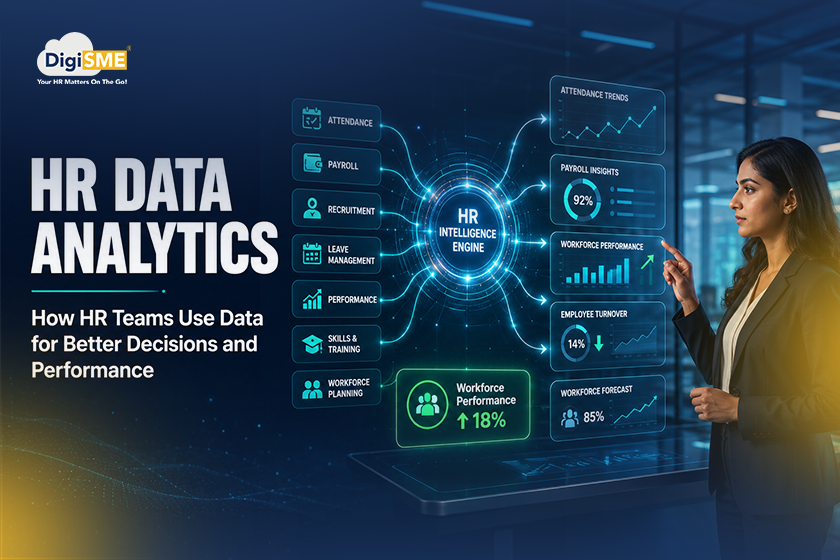
HR teams today aren’t just handling attendance, payroll, and recruitment anymore. They’re expected to make faster, smarter calls — the kind that actually improve employee performance, bring down attrition, and support the bigger business goals. So instead of going by gut feeling or digging through endless spreadsheets, companies now lean on HR analytics and HRMS software to understand what’s really going on across their workforce, in real time. From spotting hiring gaps to improving retention and productivity, this kind of data just helps HR teams work smarter.
And it’s not just a nice-to-have, either. Deloitte’s research actually shows that organizations using people analytics are far more likely to improve both recruiting efficiency and employee performance. On top of that, modern workforce analytics tools give you a much clearer view into attendance, engagement, payroll, and compliance — all through one dashboard, instead of five different reports you have to piece together yourself. So in this blog, let’s look at how HR data analytics helps organizations make better workforce decisions, improve performance, and run more efficiently, with a bit of help from smart HRMS platforms.

Table of Contents
- 1. What Is HR Analytics Software and Why Does It Matter?
- 2. Why HR Data Analytics Matters Today?
- 3. How HRMS Systems Enable HR Data Analytics and Real-Time Decision Making?
- 4. How HR Analytics Software Supports Real-Time HR Reporting?
- 5. Key HR Metrics Tracked by HR Analytics Software
- 6. The Future of HR Analytics Software: AI, Automation and Smart HRMS
- 7. HR Analytics Software FAQs
What Is HR Analytics System and Why Does It Matter?
HR analytics software helps you collect, analyze, and actually make sense of employee data, so your decisions are backed by facts instead of guesswork. Instead of assuming why something’s happening, you can just look at the real numbers: recruitment trends, attendance records, productivity levels, turnover, training effectiveness, engagement scores, all of it.
In other words, it helps you answer the questions HR teams keep asking anyway:
- Why are employees leaving?
- Which recruitment channels are actually bringing in good talent?
- Which departments have the highest absenteeism?
- How do you improve employee performance?
- What workforce trends are quietly affecting productivity?
As a result, this shift toward HR data-driven decision-making is transforming traditional HR into a strategic business function.
Why HR Data Analytics Matters Today?
Modern workplaces are more dynamic than ever. Hybrid work models, employee expectations, skill shortages, and performance pressures require HR teams to act quickly and accurately. Therefore, with the help of workforce analytics, organizations are able to:
- Reduce employee turnover
- Improve hiring quality
- Identify productivity gaps
- Increase employee engagement
- Enhance workforce planning
- Predict future staffing requirements
For example, if an HR analytics dashboard shows that a particular department has high absenteeism and low engagement, that’s an early warning sign. HR can step in and look into what’s actually going on before it starts hurting productivity across the board. Catch it early, and it never turns into a bigger problem.
Similarly, predictive workforce analytics can flag employees who might be thinking of leaving, way before they actually hand in their resignation. That gives HR teams a real chance to improve retention — not just react once someone’s already walked out the door.
In fact, according to Gartner HR Research, more organizations are using AI and analytics to improve employee experience, productivity, and workforce planning. Therefore, that’s exactly why so many businesses today are putting money into proper HR analytics tools and cloud-based HRMS software — the demand is only growing.
How HRMS Systems Enable HR Data Analytics and Real-Time Decision Making?
Honestly, HR data doesn’t do much good if you can’t see it all in one place. When attendance is in one spreadsheet, payroll is in some other tool, and performance reviews are stuck in someone’s inbox, that’s not analytics. That’s just a pile of numbers.
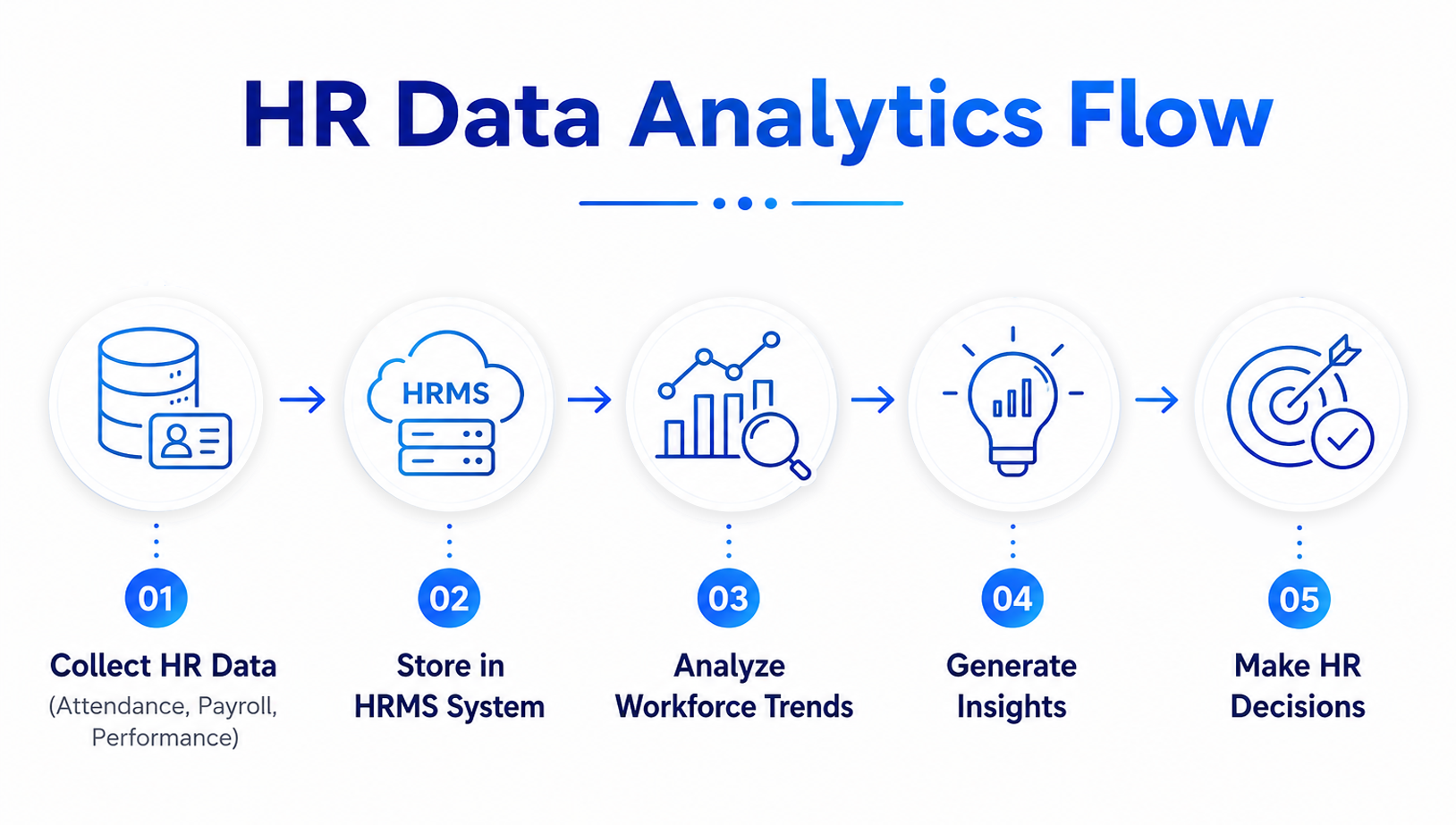
This is where a good HRMS makes a real difference. It pulls everything together: attendance, payroll, leave, recruitment, employee records, performance, all on one platform. So instead of bouncing between five different tools just to answer a simple question, the team can open one dashboard and find it right there.
And once it’s all connected, things speed up a lot. When attendance, payroll, and performance numbers live in the same system, nobody has to sit there matching them up by hand. Patterns show up on their own, and decisions can happen on the spot instead of days later.
How HR Analytics System Supports Real-Time HR Reporting?
Normally, pulling together a report means someone spending hours — sometimes a full day — just getting the numbers in order. But with a proper HR analytics tool, that reporting happens automatically, and the insights show up almost instantly. So a good HR reporting system can help your team keep track of:
- Employee attendance trends
- Payroll processing status
- Overtime and shift patterns
- Recruitment progress
- Employee performance analytics
- Leave and absenteeism reports
- Workforce productivity metrics
For instance:
- If absenteeism suddenly increases, managers can respond immediately.
- Similarly, if payroll discrepancies occur, HR teams can detect errors faster.
- Likewise, if a particular department shows a drop in employee performance, HR leaders can quickly check for issues related to workload or employee engagement and take corrective action early.
Overall, this improves HR data-driven decision-making across the organization.
Key HR Metrics Tracked by HR Analytics System
Tracking the right metrics tells you what’s actually working and what’s not. More importantly, it shows how your workforce decisions are affecting the business as a whole. With HR analytics and a decent HRMS, companies can keep track of employee trends, boost productivity, and make smarter calls based on real data instead of gut feeling. HR teams aren’t guessing anymore — they’re using dashboards to track performance, hiring efficiency, engagement, and retention, all in real time.
Employee Turnover Rate
This one’s pretty straightforward — it tells you how many employees are leaving the company over a certain period. And when that number keeps going up, it’s not just a stat you note down and move on. It usually means higher hiring costs, a drop in productivity, and often, lower morale in the team. With HR data analytics, you can actually get to the bottom of why people are leaving — spot the real patterns behind it, like:
- Poor work-life balance
- Limited career growth
- Low employee engagement
- Salary concerns
- Workplace culture issues
As a result, this helps HR teams improve retention strategies before turnover becomes a larger business challenge.
Time-to-Hire and Quality of Hire
Hiring the right employee at the right time directly affects business performance. To support this, HR analytics tools help recruitment teams track:
- Time-to-hire
- Cost-per-hire
- Source of hire
- Interview-to-selection ratio
- Candidate quality
By analyzing recruitment data, companies can identify which hiring channels bring the best candidates and which recruitment stages create delays. According to LinkedIn’s Global Talent Trends report, data-driven hiring helps businesses improve recruitment efficiency and candidate experience.
Employee Performance Analytics
Employee performance analytics helps organizations measure productivity, goal achievement, training effectiveness, and overall workforce contribution. Additionally, an employee performance HR dashboard allows managers to:
- Track employee progress
- Identify high performers
- Detect skill gaps
- Improve training programs
- Support employee development plans
As a result, this creates a more transparent and performance-focused work culture.
Absenteeism and Workforce Productivity
Frequent absenteeism can impact operational efficiency and increase workload pressure on teams. Therefore, through workforce analytics, HR teams can monitor attendance trends and identify departments with high absenteeism rates. Additionally, modern HRMS analytics systems help businesses:
- Track attendance patterns
- Monitor overtime trends
- Improve shift planning
- Reduce workforce inefficiencies
As a result, these insights support better workforce management and resource planning.
Employee Engagement and Retention
Employee engagement is closely connected to retention and productivity. Therefore, HR analytics dashboards help organizations measure engagement through surveys, feedback systems, and performance reviews. By analyzing engagement data, HR teams can:
- Identify employee concerns early
- Improve workplace experience
- Strengthen communication
- Build better retention strategies
According to Gallup, highly engaged teams show higher productivity and lower turnover compared to disengaged workplaces. Today, HR data-driven decision making is helping organizations create stronger hiring strategies, improve employee retention, and build a more productive workforce with the support of advanced HR analytics tools and HRMS software.
The Future of HR Analytics System: AI, Automation and Smart HRMS
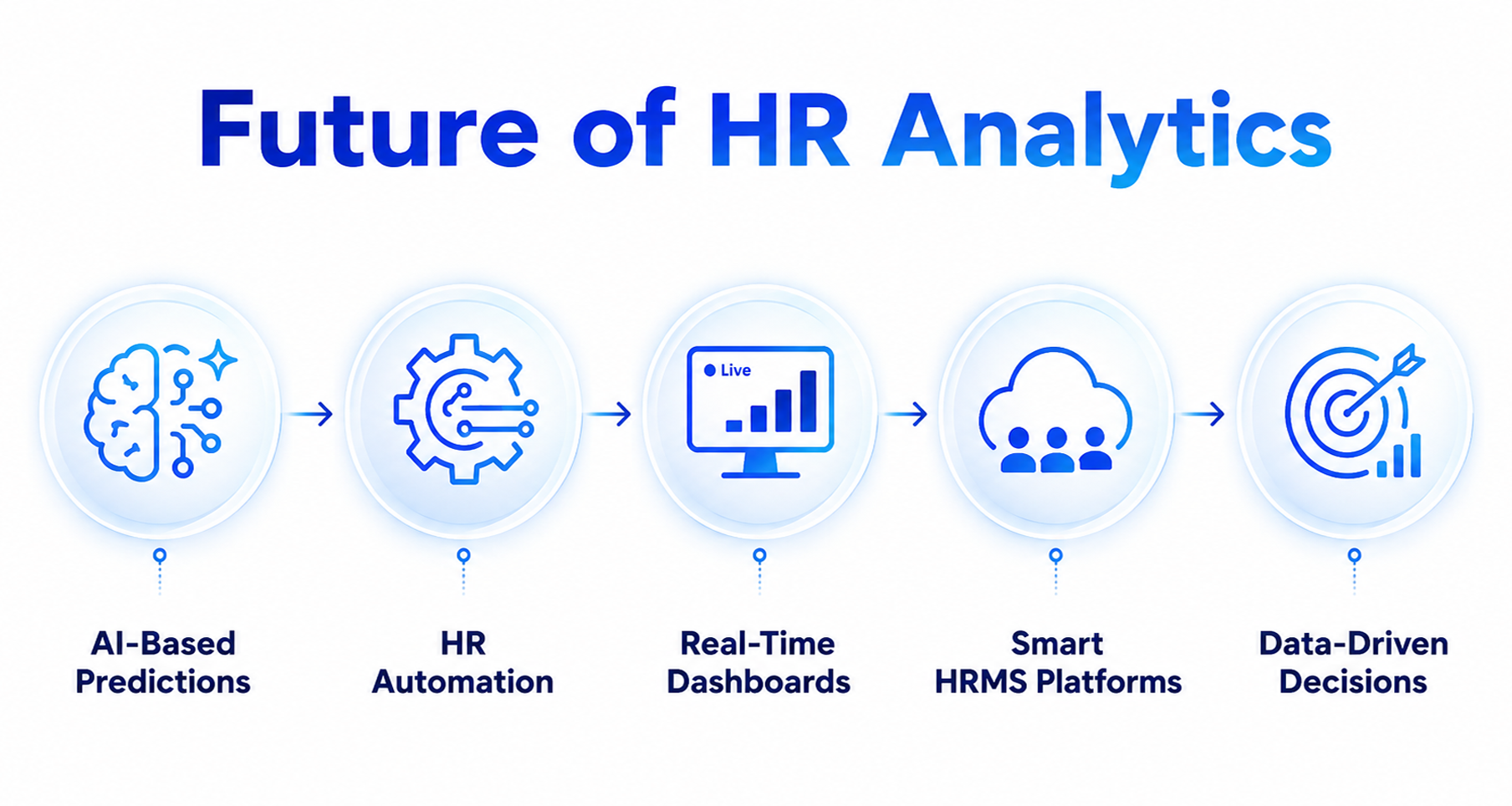
The future of HR analytics software is being shaped by artificial intelligence, automation, and advanced HRMS platforms that help organizations make faster and smarter workforce decisions. Modern businesses are moving beyond manual HR reporting and adopting intelligent systems that provide real-time insights into employee performance, engagement, and productivity.
AI-powered HR analytics tools can analyze large volumes of employee data to identify trends, predict workforce challenges , and support strategic decision-making. These technologies help HR teams reduce repetitive tasks and focus more on employee development and business growth. Some key trends driving the future of HR data analytics include:
- Predictive Analytics – Helps organizations forecast employee attrition, hiring needs, and workforce performance trends.
- AI-Based Recruitment – Uses automation to screen resumes, identify suitable candidates, and improve hiring efficiency.
- Real-Time HR Dashboards – Provides instant access to workforce metrics, attendance data, payroll insights, and employee performance reports.
- Automated HR Reporting – Reduces manual work by generating accurate reports for compliance, payroll, and workforce planning.
- Smart HRMS Integration – Connects payroll, attendance, recruitment, and performance management into one centralized platform.
As businesses continue to adopt digital HR transformation strategies, HR analytics will play a major role in improving employee experience, workforce planning, and organizational productivity. Companies using smart HRMS systems and workforce analytics tools will gain better visibility into employee performance and make more data-driven HR decisions in the future.
Conclusion
HR analytics software is helping organizations move from reactive decision-making to a more strategic, data-driven approach to managing people and performance. However, the real impact of analytics is achieved only when it is supported by a unified system that brings all HR data together in real time.
DigiSME provides exactly that. It is an all-in-one HRMS platform that integrates attendance, payroll, recruitment, and employee performance into a single, intelligent dashboard. With built-in automation and HR analytics, DigiSME helps HR teams reduce manual work, improve accuracy, and make faster, more confident workforce decisions.
If you are looking to modernize your HR operations and build a truly data-driven workforce strategy, DigiSME is the right choice to get started today.
HR Analytics System FAQs
What is the difference between HR analytics and workforce analytics?
HR analytics focuses on HR processes like hiring and retention, while workforce analytics analyzes overall employee productivity, performance, and workforce trends.
How does HRMS software help in HR data analytics?
HRMS software centralizes employee data, automates reporting, and provides real-time HR analytics dashboards for better decision making.
Why is employee performance analytics important?
Employee performance analytics helps organizations identify productivity trends, skill gaps, training needs, and high-performing employees.
Can small businesses use HR analytics tools?
Yes. Modern HR analytics tools and cloud-based HRMS systems are designed for businesses of all sizes, including startups and SMEs.
