For many employees, the end of the financial year brings more than just performance reviews; in fact, it often brings tax worries. Questions like “Did I declare my investments correctly?” or “Will I get a refund?” can suddenly make your salary feel more complicated than ever. Therefore, understanding the difference between tax declaration and ITR filing can save both time and money.
In India, for AY 2025–26, around 8.8 crore ITRs were filed, but over 24 lakh remained unprocessed and 15 lakh revised returns were submitted to correct errors. As a result, this highlights how small mistakes in tax declaration planning can directly impact your monthly take-home pay and future refunds.
In this guide, this guide will walk you through everything from making the right declarations and avoiding common pitfalls to completing your ITR filing for employees in India in 2026, thereby ensuring your salary and tax compliance work smoothly together.

Table of Contents
1. Understanding Tax Declaration and ITR Filing
For salaried employees, understanding the difference between tax declaration and ITR filing is crucial. Essentially, both affect your salary and tax compliance, but in different ways.
What is the Tax Declaration?
Tax declaration is what you submit to your employer before the financial year ends. Typically, it includes:
- Investments like PF, PPF, ELSS, or insurance premiums
- House Rent Allowance (HRA) details
- Other deductions you plan to claim under sections like 80C, 80D, etc.
As a result, this helps your employer calculate the correct TDS from your monthly salary. In turn, an Accurate declaration means less TDS deducted, giving you more money in hand each month.
What is ITR Filing?
ITR filing is submitting your Income Tax Return (ITR) to the Income Tax Department after the financial year ends. In simple terms, it confirms:
- Your actual income
- Taxes paid (TDS and other payments)
- Deductions claimed
- Any tax refund or additional tax payable
Even then, even if your employer deducted TDS correctly, filing your ITR finalizes your tax liability and ensures refunds are processed.
Tax Declaration vs ITR Filing: What’s the Difference?
| Aspect | Tax Declaration | ITR Filing |
| When | Before financial year ends | After financial year ends |
| Purpose | Helps employer calculate TDS | Reports actual income and taxes |
| Impact | Affects monthly salary | Determines refund or extra tax |
| Who Handles | Employer/Payroll | Income Tax Department |
2. How Does Tax Declaration Affect Your Salary?
1. Determines Monthly TDS From Your Salary
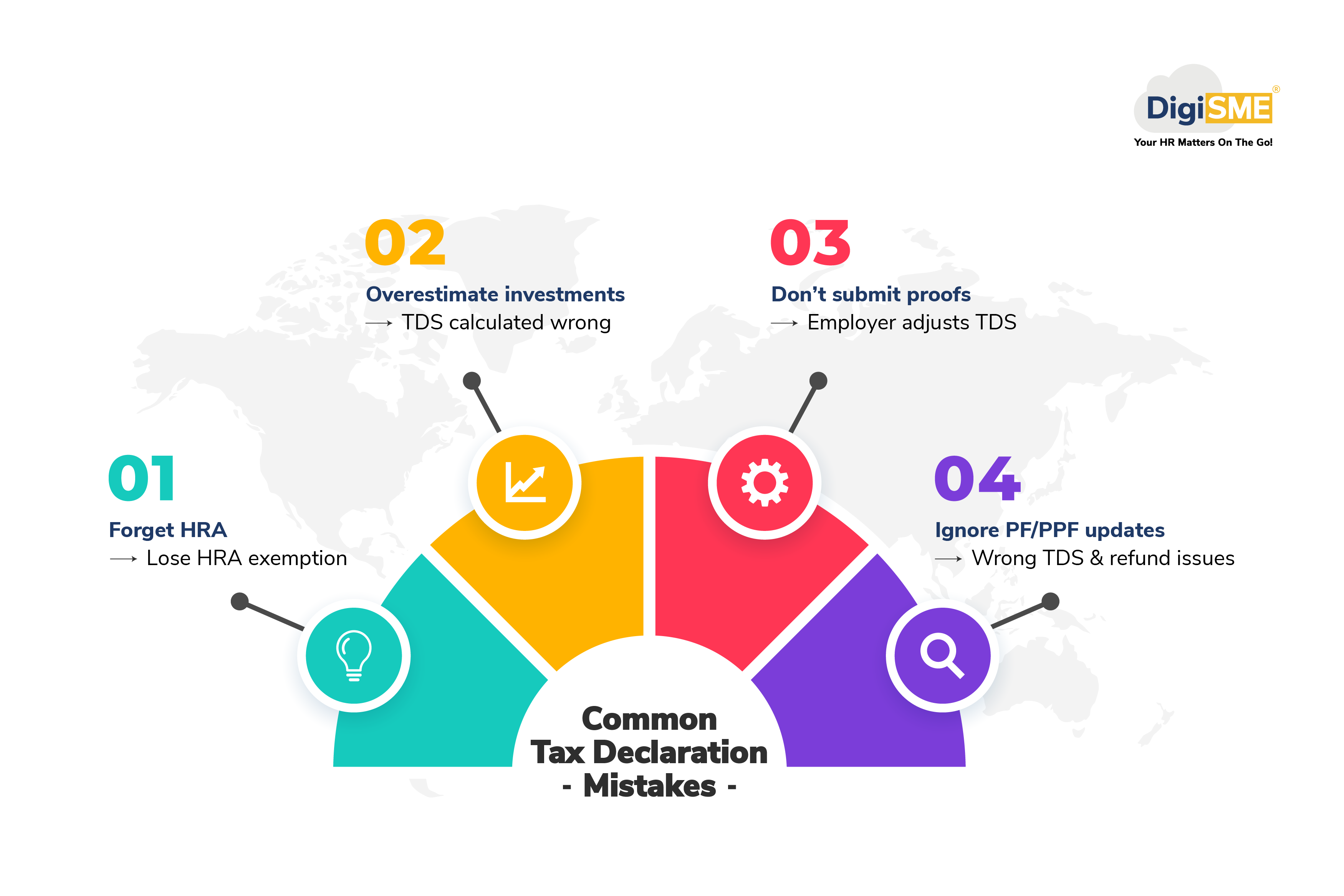
When you submit your tax declaration (usually using Form 12BB) to your employer, you provide details about your planned investments, deductions, exemptions, and HRA. Based on this, your employer calculates your income taxand deducts TDS (Tax Deducted at Source) from your salary each month. As a result, a well-prepared declaration can lower your monthly TDS, leaving you with a higher take-home salary.
- Clear Declarations Lead to Lower TDS and Higher Salary
If you correctly declare eligible deductions (like under Section 80C or HRA), your taxable income becomes lower. Consequently, this means your employer deducts less tax monthly, boosting your monthly salary balance.
- Mistakes or Missing Information Means Higher TDS
However, if you overestimate deductions or fail to submit proofs later, your employer may correct the TDS calculation and deduct more tax from your salary, sometimes suddenly in the last months of the year.
- Impact on ITR Filing and Refunds
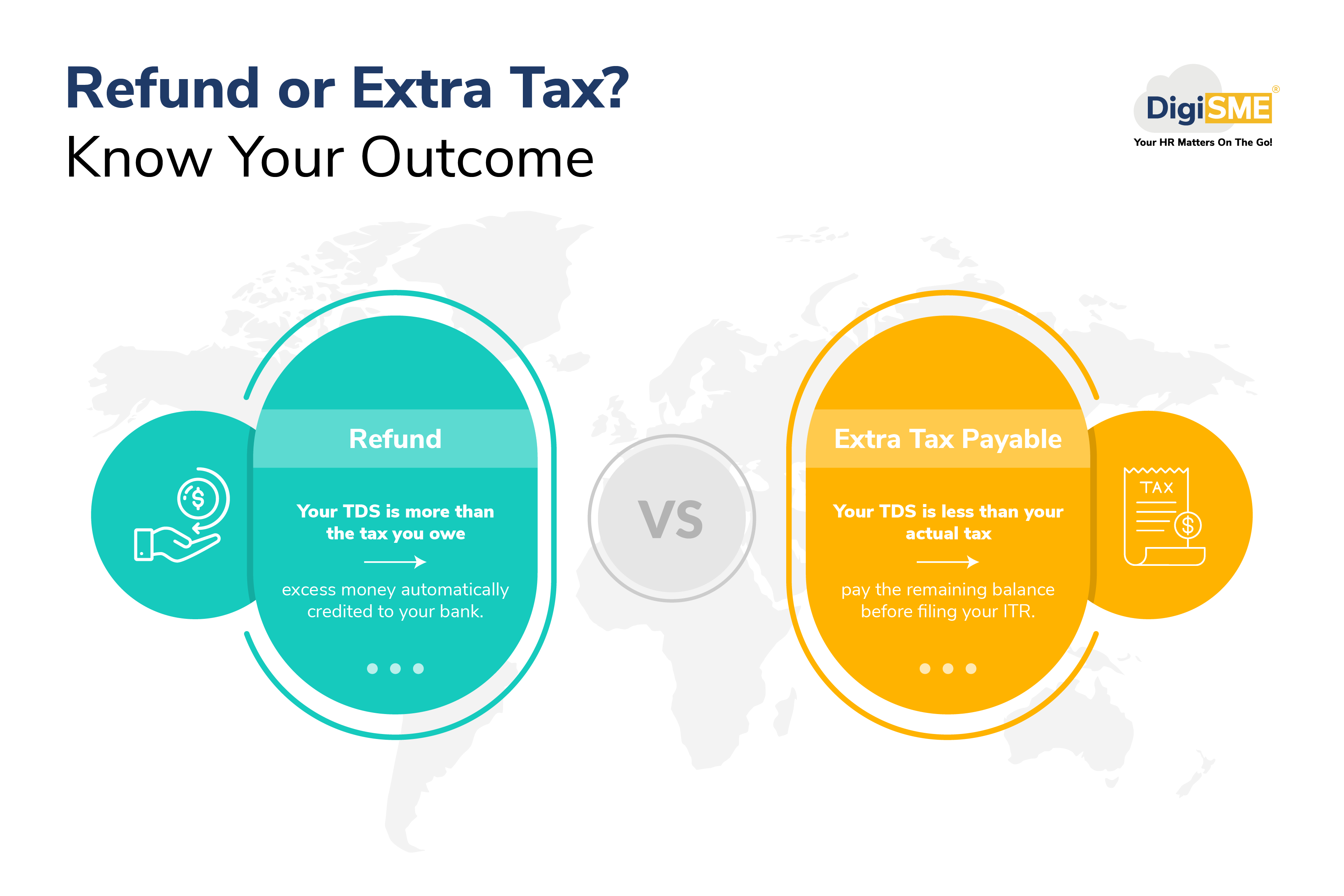
Even with that, even with correct TDS during the year, your ITR filing for eployees in India 2026 finalizes the actual tax liability. If your TDS was more than the tax you owe, you can get a refund after filing your ITR. On the other hand, if it were less, you may owe extra tax when filing.
Tip: Regularly update your tax declaration to match your actual investments and expenses. This way, you can avoid sudden tax deductions.
3. How to File ITR in 2026?
Filing your ITR doesn’t have to be intimidating. With a systematic approach, you can complete it quickly and avoid common mistakes. Here’s a clear guide to ITR filing for salaried employees in 2026.
Step 1: Gather All Required Documents
Before you start, make sure you have all the essential documents required for ITR filing. This includes:
- Form 16 from your employer
- Form 26 AS showing TDS and tax credits
- Salary slips and bank statements
- Proofs of deductions (like Section 80C, 80D, or HRA rent receipts)
- PAN and Aadhaar
Step 2: Access the Income Tax e-Filing Portal
Log in to the official Income Tax e-Filing portal using your PAN. Select Assessment Year 2026-27 for income earned in FY 2025-26. Ensure your personal details, bank account, and contact information are up-to-date to avoid verification issues.
Step 3: Select the Right ITR Form
Most employees with only salary income can file ITR 1 (SAHAJ). If you have additional income like capital gains or more than one house property, you may need ITR 2 or another suitable form. Choosing the wrong form is one of the most common reasons for return rejection.
Step 4: Enter Income Details Accurately
Fill in your salary income, other sources of income, and TDS details as per Form 16 and Form 26AS. Cross-check all numbers to prevent discrepancies. Accurate reporting ensures your tax liability is correct and avoids future notices from the Income Tax Department.
Step 5: Claim Eligible Deductions
Enter deductions under Section 80C, 80D, HRA exemptions, and other applicable sections. Claiming the right deductions can significantly reduce your taxable income and may increase your refund. Many employees overlook deductions, leading to higher tax payment than necessary.
Step 6: Verify Tax Paid and Calculate Refund
Check your TDS against your total tax liability. If TDS is higher, you are eligible for a refund. If it’s lower, pay the balance before submission. This step helps ensure your ITR filing for salaried employees is accurate.
Step 7: Submit and Verify the ITR
Submit your return and complete e-verification via Aadhaar OTP, net banking, or other available methods. Returns are processed only after verification. Most salaried employees complete e-verification within a week
Step 8: Save the Acknowledgement
Download the ITR acknowledgement after verification. Keep it safely for future reference; it is proof of filing and may be needed for loans, visa applications, or financial records.
4. What Should Employees Know Before Filing ITR?
Filing your ITR correctly is essential to avoid errors, delays, and unnecessary tax liability. Here’s what every salaried employee should know to make the process smooth and stress-free.
1. Required Documents
Before you begin filing, ensure you have all essential documents. These are critical to avoid mistakes and delays:
- Form 16: Issued by your employer, summarizing salary and TDS deductions.
- Form 26AS: Tax credit statement showing all TDS and taxes paid against your PAN.
- Salary slips & bank statements: Help reconcile income and TDS.
- Investment and deduction proofs: Section 80C, 80D, ELSS, PPF, and other eligible instruments.
- HRA rent receipts: Needed if claiming House Rent Allowance exemptions.
- PAN & Aadhaar: Mandatory for ITR filing and verification.
Organizing documents in advance saves time and reduces errors. Studies and expert insights show that many ITR filing mistakes occur due to missing or incomplete documents, which can lead to incorrect claims, penalties, or delayed refunds.
2. Common Mistakes in ITR Filing
Even small errors can create problems, including delayed tax refunds or notices from the Income Tax Department. Employees often make mistakes such as entering salary or other income incorrectly, mismatching TDS with Form 26AS, claiming deductions without proper proofs, forgetting to e-verify the return, or filing after the ITR filing deadlines 2026. Paying attention to these details ensures smoother processing of your ITR filing for employees India 2026.
3. Important Deadlines
Filing on time is essential to avoid penalties and delayed tax refunds. Here’s a quick reference table for ITR filing deadlines 2026:
| Filing Type | Deadline | Notes |
| Regular ITR filing | 31 July 2026 | For most salaried employees |
| Belated return | 31 December 2026 | Allows late filing but may include penalties |
| Revised return | 31 March 2027 | To correct mistakes in previously filed ITR |
Penalties for Late ITR Filing
Filing your ITR after the deadline can result in penalties and additional interest. Here’s what employees should be aware of:
- A late filing fee of up to ₹5,000 may be applicable under Section 234F (₹1,000 for lower income cases)
- Interest may be charged under Section 234A on any unpaid tax amount
- Delayed filing can also lead to slower refund processing
To avoid unnecessary costs and delays, it’s always best to complete your ITR filing before the deadline.
4. Tax Refund or Extra Tax
Once your ITR is filed, it determines whether you will receive a refund or owe additional tax. In other words, if your TDS exceeds your tax liability, the excess is credited to your bank account. On the other hand, if your actual tax is higher, you must pay the balance. Additionally, filing your ITR for employees also acts as proof of income, useful for loans, visas, or other financial purposes.
5. Annual Information Statement (AIS): Don’t Skip This Check
Before submitting your ITR, it’s important to review your Annual Information Statement (AIS) available on the Income Tax portal. Essentially, AIS provides a detailed summary of your financial activities, including:
- Interest income from savings accounts and fixed deposits
- Stock market and mutual fund transactions
- High-value transactions and other reported income
Therefore, checking AIS helps ensure that all your income is accurately reported in your ITR. Otherwise, any mismatch between your ITR and AIS can lead to notices or delays in processing your return. As a result, reviewing this in advance makes your ITR filing more accurate and stress-free.
5. How Payroll Helps with Tax Filing?
To begin with, your payroll or HR team plays a crucial role in simplifying ITR filing for employees India. Accurate TDS calculation, timely processing of salary components, and providing correct Form 16 are all essential for smooth tax filing. In fact, according to a recent survey, many employees face delays or errors in refunds due to incorrect or incomplete payroll data, which highlights the importance of coordinated payroll support.
Furthermore, many organizations now use HRMS platforms to make this process seamless. Employees can easily track their TDS, HRA claims, and investment declarations digitally, while HR can generate accurate Form 16 automatically. Moreover, this digital approach not only minimizes human errors but also speeds up the ITR filing process. Accordingly, studies indicate that companies using HRMS or payroll automation systems experience around 30% fewer payroll errors and up to 70% fewer compliance-related issues, compared to manual payroll processes, thereby making it a practical solution for both employees and HR/payroll teams.
Conclusion
To sum up, filing your ITR correctly starts with a clear tax declaration and ends with an accurate submission of your return. However, for salaried employees, missing documents, mistakes in deductions, or late filing can reduce your take-home salary or delay tax refunds. That said, having coordinated payroll support and tools like HRMS makes the process easier. Employees can track TDS, HRA, and investment declarations in real time, while HR teams can generate accurate Form 16 without errors.
Ultimately, with the right guidance and digital support, ITR filing for employees India 2026 becomes simple, accurate, and stress-free. For instance, platforms like DigiSME help HR and payroll teams manage tax declarations, calculate TDS, and prepare Form 16 efficiently. As a result, this ensures employees can file their ITR on time and receive tax refunds without hassle. In the long run, leveraging digital payroll tools today saves both time and money tomorrow.
Make ITR filing effortless with DigiSME!
Tax Declaration Frequently Asked Questions
Is ITR filing mandatory for salaried employees?
Yes, filing ITR is mandatory if your income exceeds the taxable limit, even if TDS is deducted by your employer.
Can I file ITR without Form 16?
Yes, you can file using salary slips, bank statements, and Form 26AS, but Form 16 makes the process easier.
What happens if I don’t file ITR?
You may face penalties, interest on unpaid tax, or delays in tax refunds.
Do I need to file ITR if TDS is deducted?
Yes, TDS deduction doesn’t replace filing. ITR finalizes your tax liability and ensures refunds if TDS is higher than tax payable.
How to get income tax refund?
File your ITR, verify it online, and ensure your bank account details are correct. Refunds are credited automatically after processing.
