
In this article
- 1. What Is Maternity Leave in India?
- 2. Who Is Eligible for Maternity Leave in India?
- 3. What Are the Maternity Leave Rules in India?
- 4. What Are the Maternity Leave Rules for Private Companies in India?
- 5. What Are the Benefits of Maternity Leave in India?
- 6. How Many Weeks of Maternity Leave Are Allowed?
- 7. What Challenges Do Women Face When Taking Maternity Leave?
- 8. Official Legal References for Maternity Leave Policy in India
- 9. Maternity Leave Frequently Asked Questions
Motherhood has to be a peaceful journey for every woman out there. It is not only about bringing new life into the world but also providing mothers with the space, time and dignity they deserve during the pregnancy phase. Creating a good maternity leave policy will be the fundamental aspect in supporting, respecting and protecting before and after delivery.
What Is Maternity Leave in India?
Maternity leave is a legally protected absence from work granted to female employees during pregnancy and after childbirth. It allows them to recover, bond with their newborn, and return to work without the fear of losing their job or income.
Maternity Leave Policy in India
In India, maternity leave is governed by the Maternity Benefit Act, which has undergone several amendments to stay relevant to evolving work cultures and societal needs. The policy not only protects a woman’s employment during maternity but also ensures she receives certain benefits during this period.
Who Is Eligible for Maternity Leave in India?
To apply for maternity leave in India, the female employee must meet the following criteria:
- She works in an establishment covered by the Maternity Benefit Act.
- She must have worked for at least 80 days in the 12 months preceding her expected delivery date.
-
- Eligibility applies to all women, including those on contract (as long as the minimum workdays are met).
- Applicable to private/public sector, factories, mines, shops, and other establishments.
-
- If she is covered by ESI, different maternity benefit rules may apply.
What Are the Maternity Leave Rules in India?
Both employers and employees should understand the rules of maternity leave to ensure a smooth process in the organisation.
Leave Timing
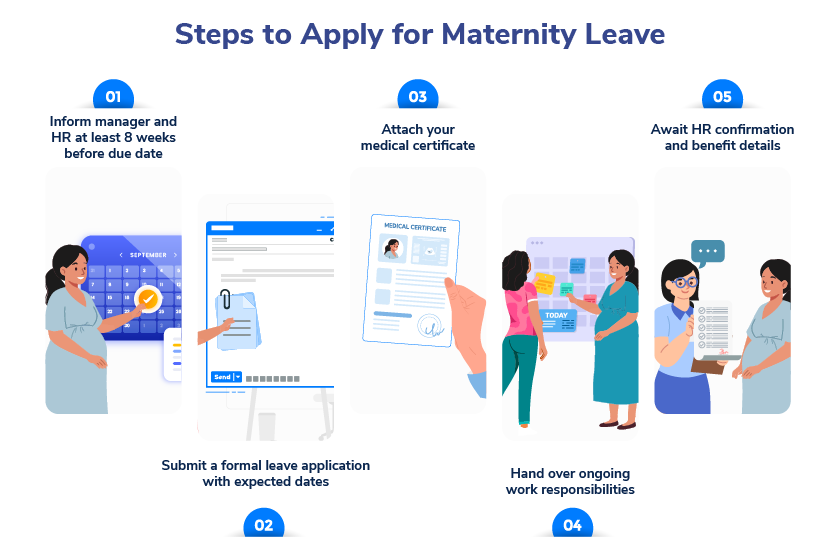
Staff can avail 8 weeks before the delivery date and remaining post-delivery date. The leave timing is flexible and it depends on the staff’s needs. If a female employee requires more leaves post-delivery, it can be adjusted accordingly.
Medical Certificate
-
- A doctor’s certificate confirming the pregnancy and expected delivery date is important to proceed with the maternity leave.
Documents Required
-
- Doctor’s certificate
-
- Maternity leave form
-
- Employee ID / Proof of Employment
Employee Compliance
-
- From the employee’s end, they should inform employers about the leave requirements in prior.
-
- The internal leave policy should be followed to stay compliant.
Priya Sharma, a Senior Marketing Executive at a IT firm, applied for maternity leave in her 7th month of pregnancy. She informed her HR department two months in advance, submitted her medical certificate, and opted for 8 weeks before and 18 weeks after delivery. The company not only approved her leave under the Maternity Benefit Act but also arranged flexible work-from-home options for her return phase. This helped her transition smoothly back into work without compromising on her health or bonding time with her baby.
What Are the Maternity Leave Rules for Private Companies in India?
If you work for a private company, the key thing to know is that your employer cannot simply set a shorter maternity leave period because it is a private organisation. If the establishment is covered by the maternity benefit provisions and you meet the eligibility conditions, you are entitled to the statutory maternity benefit.
For eligible employees, the entitlement is up to 26 weeks for the first two surviving children and 12 weeks where the woman has two or more surviving children. The employee generally must have worked for at least 80 days in the 12 months before the expected delivery date.
Your company’s maternity leave policy mainly needs to make the process clear—when to apply, how to notify HR, what records are needed, how the leave is recorded, and how the employee returns to work. A company can offer additional benefits, but its policy should not reduce the statutory entitlement.
What Are the Benefits of Maternity Leave in India?
Maternity leave is a fundamental right of every woman. Here are the benefits:
-
- Paid Leave: Eligible women receive maternity benefits for the approved leave period.
-
- Job Protection: Employers generally cannot dismiss a woman or make her working conditions worse because she is on maternity leave.
-
- Time to Recover: The leave gives women time to recover after childbirth and care for their newborn.
-
- Nursing Breaks: Women who return to work can take nursing breaks until their child reaches 15 months of age.
-
- Crèche Facility: Establishments with 50 or more employees must provide a crèche facility as required under the Act.
-
- Support for Other Situations: The law also provides specific leave for adoption, commissioning mothers, miscarriage, and tubectomy, subject to the applicable conditions.
How Long Is Maternity Leave in India?
| First Child | 26 weeks |
| Second Child | 26 weeks |
| Third Child Onwards | 12 weeks |
| Adoption (child <3 months) | 12 weeks (from adoption date) |
| Commissioning Mother (surrogacy) | 12 weeks |
| Miscarriage | 6 weeks |
| Tubectomy (after sterilisation surgery) | 2 weeks |
| Prenatal Leave | Limit Up to 8 weeks before delivery |
What Challenges Do Women Face When Taking Maternity Leave?
Though the maternity leave policy is provided, implementing it in the real world is still a hurdle.
-
- Lack of awareness about rights among women employees
-
- Workplace bias or fear of being replaced during the absence
-
- Lack of flexibility post-return (e.g., no WFH options)
-
- Crèche non-compliance by smaller organisations
-
- Cultural stigma, especially in male-dominated industries
Official Legal References for Maternity Leave Policy in India
-
- Definition of Maternity Leave : As per Section 5(2) of the Maternity Benefit Act, 1961 (Official Text), every woman shall be entitled to maternity benefit at the rate of the average daily wage for the period of her actual absence.
-
- Eligibility Criteria : Section 5(2) clearly states that to be eligible, a woman must have worked for at least 80 days in the 12 months immediately preceding her expected delivery date.
-
- Leave Duration : Under the Maternity Benefit (Amendment) Act, 2017, the leave entitlement was increased from 12 weeks to 26 weeks for the first two surviving children (Section 5(3), Official Gazette).
-
- Adoptive & Commissioning Mothers: As per Section 5(4), adoptive mothers (with a child below 3 months) and commissioning mothers are entitled to 12 weeks of leave from the date the child is handed over. In March 2026, the Supreme Court removed the three-month age limit for adoptive children, allowing eligible adoptive mothers to claim the 12-week maternity benefit regardless of the child’s age.
-
- Crèche Facility Requirement: Section 11A, inserted by the 2017 Amendment, mandates that every establishment with 50 or more employees must provide a crèche facility, with four visits per day allowed to the mother.
-
- Work From Home Option: Section 5(5) allows employers to permit work-from-home arrangements after maternity leave, depending on the nature of work and mutual agreement.
Wrapping Up
Maternity is a temporary pause in a woman’s career. It’s time employers not only comply with laws but also embrace the human side of HR. A respectful and smooth maternity experience isn’t just about ticking boxes but also honouring life, health, and motherhood.
Maternity Leave Frequently Asked Questions
Is Maternity Leave Paid in India?
Yes. Eligible employees are entitled to paid maternity benefit during their maternity leave. The payment is generally based on the employee’s average daily wage, as provided under the applicable law.
Do adoptive mothers receive maternity leave?
Yes, if the adopted child is less than 3 months old. They are entitled to 12 weeks of leave from the adoption date.
Is maternity leave 180 days or 182 days?
26 weeks of maternity leave equals 182 days. However, the law defines maternity leave in weeks, not days.
Are women eligible for maternity leave during probation?
Yes, provided she meets the 80-day rule within the 12 months preceding her expected delivery date.
