According to ADP Research’s HR Experience Survey, 59% of workers say they would prefer to be paid weekly or even more often. This finding highlights that many employees feel more financially secure and in control of their finances when they receive their pay more frequently, even if their total monthly income remains the same. When it comes to choosing between weekly vs monthly pay schedules, businesses must balance both operational efficiency and employee needs. This decision plays a prominent role in payroll management for small business owners, workforce morale, and even a company’s competitive edge in hiring. Let’s break down what these schedules really mean, how they differ, and how you can choose the best option for your workforce.

Table of Contents
What Is a Pay Schedule and Why It Matters for Your Business
A pay schedule is the recurring cycle in which an organization compensates its employees for the work they perform. It establishes not just the timing of payments but also affects cash flow management, employee satisfaction, and compliance with labor laws. Choosing the right pay schedule for your organization is a strategic decision, particularly for small and medium-sized businesses. Understanding weekly vs monthly pay schedules helps businesses select a payroll cycle that aligns with employee expectations, business cash flow, and operational efficiency.
For instance, paying employees weekly can help reduce financial stress for workers who rely on regular income to manage everyday expenses. Conversely, monthly pay schedules can simplify accounting, reduce administrative workload, and align with business cash flow patterns. Using payroll management software can help automate and manage either schedule efficiently, ensuring accurate calculations, deductions, and timely disbursements.
Ultimately, a pay schedule is more than just a calendar—it directly impacts your workforce’s morale, productivity, and retention rates. A well-chosen pay schedule can enhance employee loyalty and reduce turnover, especially in industries where hourly or field staff are common.

| Feature | Weekly Pay | Monthly Pay |
| Frequency | 52 paychecks/year | 12 paychecks/year |
| Employee cash flow | More frequently can ease financial stress | Less frequent—larger lump sum |
| Administrative burden | Higher—more frequent payroll runs | Lower—fewer payroll runs |
| Best for | Hourly, gig, seasonal workers | Salaried, office teams |
| Payroll cost | Generally higher due to processing volume | Lower overhead |
How to Choose the Right Pay Schedule for Your Workforce?
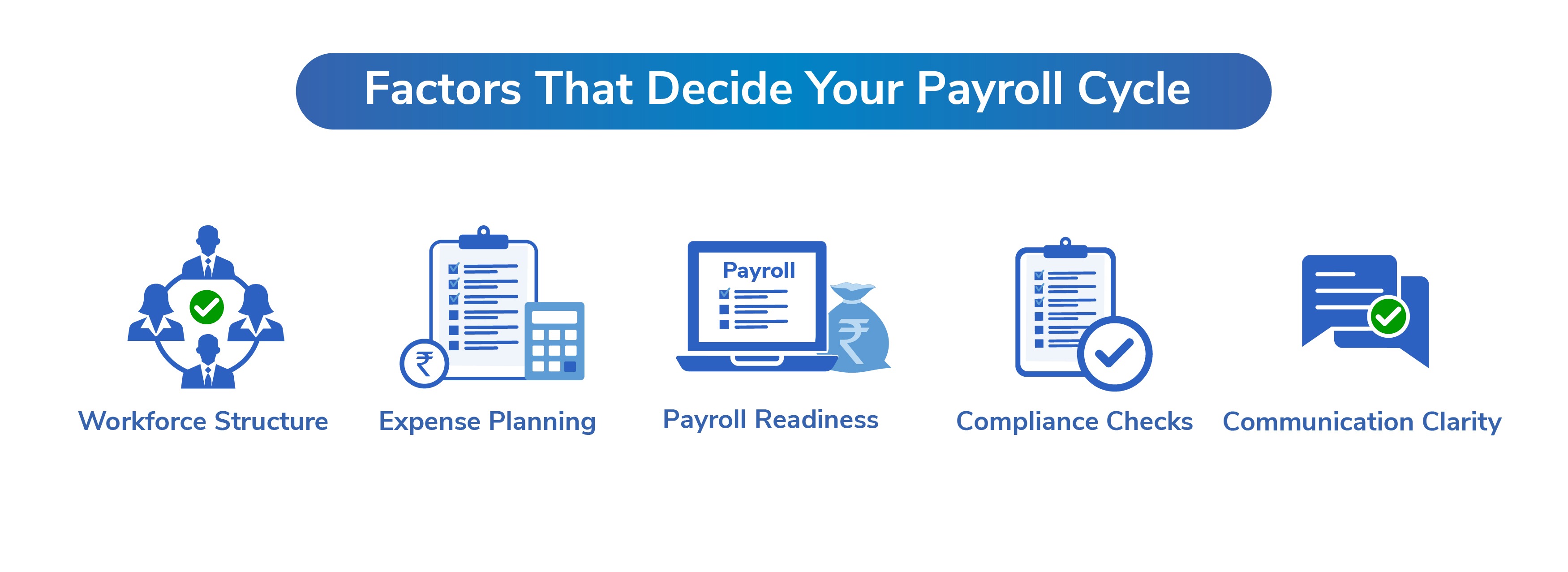
Choosing between weekly vs monthly pay schedules is more than just deciding how often employees get paid. It requires a careful evaluation of your workforce, business operations, and financial strategy. Here’s a step-by-step guide to help small businesses make the best decision:
1. Assess the Nature of Your Workforce
The type of employees you have plays a significant role in deciding a pay schedule. For instance:
• Hourly employees or field staff: These employees usually work variable hours each week, so a weekly pay schedule ensures they are compensated promptly for their labor. This approach improves morale and reduces financial stress.
• Salaried employees: Employees with a fixed monthly salary often prefer a monthly paycycle. It simplifies their budgeting and aligns with standard business practices.
• Mixed workforce: In some cases, businesses have both hourly and salaried employees. For such organizations, a hybrid approach—weekly for hourly staff and monthly for salaried staff—can work best.
By evaluating who your employees are and how they are paid, you can match your payroll schedule to their needs, which ultimately increases satisfaction and retention.
2. Understand Employee Financial Needs and Preferences
Financial well-being is a top factor affecting employee engagement. Businesses should consider:
• Do employees rely on frequent paychecks to manage living expenses, such as rent, groceries, and transportation?
• Are employees comfortable budgeting for a month-long period?
Gathering feedback through surveys or informal discussions can provide valuable insights. Employees who feel heard and supported in their financial needs are more likely to be engaged and loyal.
3. Evaluate Your Business Cash Flow
One of the biggest considerations for small businesses is whether the business can sustain frequent payroll disbursements.
• Weekly payroll requires more consistent cash availability, which can strain resources if not managed properly.
• Monthly payroll allows for better cash flow management, as fewer transactions need to be made.
Using payroll management software can help automate payroll, reduce errors, and predict cash flow needs, making it easier for businesses to offer either schedule without risking operational disruption.
4. Consider Administrative Capacity and Resources
Processing payroll involves calculating hours worked, deductions, taxes, and benefits. Weekly pay increases the number of calculations, which can lead to errors if handled manually.
• Businesses with limited staff may find monthly payroll easier to manage.
• Implementing payroll management software simplifies both weekly and monthly payroll by automating calculations, generating pay stubs, and managing compliance with labor laws.
Automation also ensures that payroll is consistent and reduces administrative stress for business owners and HR staff alike.
5. Ensure Compliance with Labor Laws
Different regions have regulations regarding minimum wage, overtime pay, and payment timelines. Before finalizing a pay schedule:
• Check applicable labour laws and wage regulations to ensure your chosen pay schedule remains compliant. The Ministry of Labour & Employment provides guidance on labour policies and employment regulations in India.
• Factor in mandatory deductions and contributions such as taxes, social security, and employee benefits.
Non-compliance can lead to fines, legal issues, and a loss of employee trust, making this step critical.
6. Test and Communicate Clearly
Once a schedule is chosen, communicate it clearly to all employees. Make sure they understand:
- When will they be paid?
- How will deductions and benefits be applied?
- Are there any special arrangements, such as holiday adjustments?
Some businesses may also pilot a new pay schedule with a small team to assess feasibility and employee satisfaction before rolling it out company-wide.
Conclusion
Choosing between weekly vs monthly pay schedules is more than just a numbers game—it directly impacts your employees’ financial well-being, morale, and loyalty while influencing your business’s operational efficiency. Whether you opt for weekly, monthly, or a hybrid approach, the key is understanding your workforce, evaluating cash flow, and leveraging tools that simplify payroll management.
At DigiSME, we provide intuitive payroll solutions that help small and medium businesses implement the ideal pay schedule with ease, accuracy, and compliance, so you can focus on growing your team and your business.
Ready to streamline your payroll and boost employee satisfaction? Explore DigiSME today.
Pay Schedules Frequently Asked Questions
Which pay schedule is better for small business employees—weekly or monthly?
For hourly or gig workers, weekly payroll advantages include regular cash flow and reduced financial stress. Monthly pay suits salaried staff and simplifies payroll management for small business.
How can small businesses manage weekly payroll without extra workload?
Using payroll management software automates calculations, deductions, and payments, making weekly schedules manageable and accurate.
Can I mix weekly and monthly pay schedules in one company?
Yes. Many small businesses use weekly pay for hourly staff and monthly pay for salaried employees, balancing employee needs and operational efficiency.
Are there hidden costs in weekly payroll for small businesses?
Without automation, weekly payroll can increase administrative tasks and bank transaction fees. Payroll management software minimizes these hidden costs and ensures compliance.
