Appraisal season isn’t just about checklists—it’s a strategic moment to elevate employee performance and align organizational objectives. However, many workplaces still struggle with outdated methods. According to recent research, 60% of employees report they don’t receive enough feedback, which clearly highlights the need for more frequent and structured employee feedback.
At its core, the performance appraisal process offers an opportunity not just to evaluate but to inspire, engage, and grow talent. Companies that adopt modern tools like performance appraisal software unlock insights that drive productivity, retention, and career development.

Table of Contents
What Is Appraisal Season?
Appraisal season marks the period when organizations formally assess employee performance against goals. Traditionally, this process was annual. Today, however, it is rapidly evolving toward continuous performance management — where feedback, coaching, and alignment happen throughout the year.
This shift reflects a broader trend in modern HR practices. The Society for Human Resource Management (SHRM) also emphasizes the importance of continuous performance management in creating ongoing employee development, regular feedback, and stronger business outcomes.
Why Does Appraisal Season Matter?
Appraisal season plays a critical role in strengthening performance culture because it supports:
· Goal Alignment: Ensures personal objectives support company direction.
· Career Growth: Identifies development opportunities and future potential.
· Engagement Boost: Frequent check-ins improve motivation and reduce turnover.
· Clarity & Communication: Structured dialogue ensures expectations are understood.
As a result, appraisal season is no longer “just once a year.” Instead, it has become a key opportunity to build trust and strengthen performance culture through data-enabled performance appraisal software and frequent feedback loops.
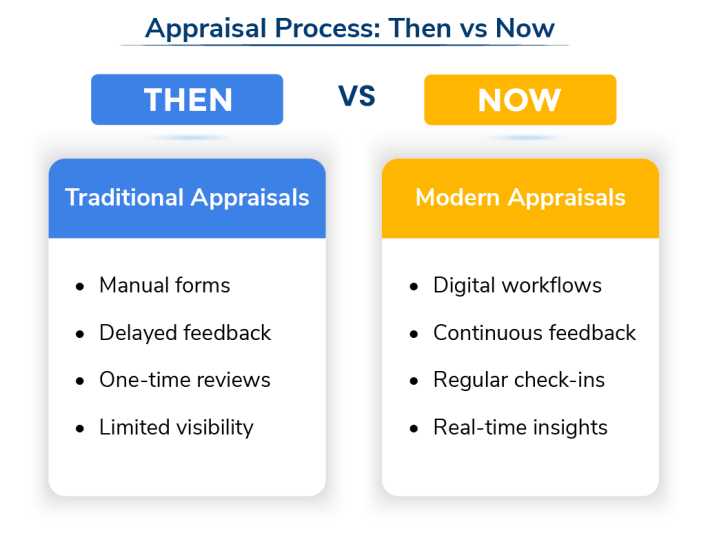
What Are the Challenges in the Traditional Performance Appraisal Process?
Despite its importance, the traditional performance appraisal process often fails to deliver value. In many cases, this happens due to the following challenges:
1. Infrequent and Delayed Feedback
Annual reviews don’t offer timely insights. Consequently, many employees feel they lack sufficient employee feedback, which lowers morale and slows professional growth.
2. Subjectivity and Bias
Without objective data, evaluations become inconsistent. As a result, managers struggle to justify ratings, and employees often question fairness.
3. Low Engagement
According to Gallup, only 14% of employees strongly agree that their performance reviews inspire them to improve. As a result, the process often feels like a formality rather than a meaningful opportunity for growth and development.
4. Administrative Burden
Manual reviews consume hours of HR and manager time — time that could otherwise be spent coaching and developing talent.
5. Misalignment with Modern Work Styles
Remote and Hybrid teams demand more flexibility and continuous dialogue. Unfortunately, traditional annual processes struggle to provide this level of support. Together, these limitations make it harder for companies to achieve strategic goals through effective performance management — unless they adopt modern systems.
How Does Appraisal Software Improve the Performance Appraisal Process?
Modern performance appraisal software fundamentally changes how organizations run performance reviews. Instead of static evaluations, they turn appraisals into growth-focused conversations powered by data and real-time insights.
1. Continuous Feedback & Frequent Check-Ins
Rather than yearly conversations, employees receive feedback throughout the year. This approach cultivates accountability, clarity, and measurable improvement in employee performance.
2. Data-Driven Evaluations
Dashboards display performance trends over time, enabling fairer and more objective appraisals. Additionally, metrics help managers identify high performers as well as areas for development.
3. 360-Degree Feedback Integration
With 360-degree feedback, organisations gather insights from peers, managers, and even customers. As a result, they gain a well-rounded and balanced performance picture.
4. Performance Goal Tracking
Modern tools connect individual goals to company priorities. Employees can track progress, adjust behaviours, and remain aligned with organisational success.
5. Automation and Accessibility
Mobile and Web-based systems significantly reduce manual tasks, improve participation, and make performance data easily accessible to both employees and leadership.
Conclusion
Appraisal season is no longer just a formality — instead, it is a powerful opportunity to drive growth, boost employee engagement, and align team efforts with organisational goals. By moving away from outdated annual reviews and adopting modern performance appraisal software, companies can provide timely feedback, objective evaluations, and clear development paths for every employee.
Ultimately, this approach not only enhances productivity and retention but also fosters a performance-driven culture that supports long-term success.
With Digisme’s performance appraisal software, teams can streamline the appraisal process, save time, enhance employee engagement, and turn performance management into a true driver of organisational success.
Make appraisal season easier with DigiSME — start today!
Appraisal Season FAQs
Why should SMEs consider performance appraisal software for appraisal season?
SMEs can save time, reduce administrative tasks, and enhance engagement by adopting Digisme’s intuitive performance appraisal software. It supports continuous feedback cycles, goal tracking, and data-driven evaluations, turning appraisal season into a growth-focused process.
How can modern performance appraisal software improve traditional appraisal processes?
Modern performance appraisal software replaces outdated annual reviews with continuous feedback, 360-degree evaluations, goal tracking, and data-driven insights. This ensures timely feedback, fair evaluations, higher engagement, and measurable employee growth.
What challenges do traditional performance appraisals face in today’s workplace?
Traditional performance appraisals often suffer from delayed feedback, subjectivity, low engagement, administrative burdens, and misalignment with hybrid work environments. These issues reduce their effectiveness in driving employee performance and organizational growth.
Can appraisal software track individual goals?
Yes, it links personal objectives to company goals, helping employees monitor progress and stay aligned with organisational priorities.
