Did you know that by 2026, more than 80% of enterprises are expected to use generative AI APIs or deploy AI-enabled applications — up from less than 5% in 2023, according to Gartner? Clearly, this shift shows how fast AI in HR is becoming part of everyday business operations. Today, HR teams are not just hiring and processing payroll. In fact, they are managing engagement, performance, compliance, and culture — all at once. Naturally, that’s a lot to handle manually.
So, how can HR teams keep up without feeling overwhelmed? The answer lies in the smart adoption of AI. With the rise of AI-powered HR, businesses can reduce repetitive tasks, improve accuracy, and make faster decisions. In this blog, therefore, we’ll break down how AI works in HR, the key ways it simplifies tasks, and the real benefits HR teams can expect.

Table of Contents
How Is AI Used in HR?
To begin with, let’s understand how AI in HR actually works. At its core, AI helps by automating repetitive tasks, analyzing large amounts of data, and providing actionable insights. Instead of replacing HR professionals, it supports them by handling time-consuming processes.
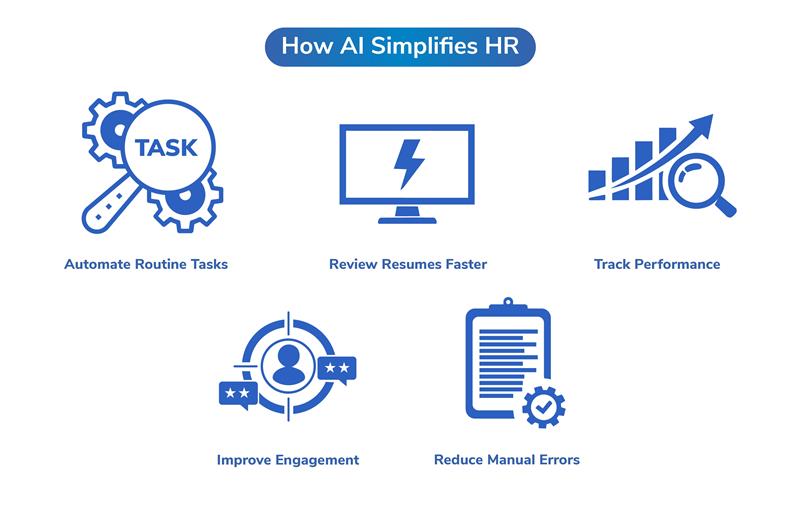
1. Automation of Routine Tasks
One of the biggest advantages of HR automation with AI is reducing manual work. Tasks like attendance tracking, payroll data verification, leave management, and document processing can be automated.
For example, automating HR tasks with AI technology allows the system to update employee records, send reminders, and generate reports without the need for constant manual input.
2. Smart Resume Screening
Recruitment, on the other hand, often involves going through hundreds of applications. AI recruitment tools can filter resumes based on skills, experience, and job relevance in minutes. This process, known as resume screening automation, helps HR teams shortlist the right candidates faster while reducing bias.
3. Data Insights and Analytics
AI doesn’t just collect data — it interprets it. Through HR analytics with AI, businesses can identify hiring trends, attrition risks, productivity patterns, and engagement levels. Instead of guessing, HRs can make data-backed decisions.
4. Content and Communication Support
AI can assist in drafting job descriptions, offer letters, onboarding emails, and policy documents. Additionally, it helps in analyzing employee surveys to identify concerns or satisfaction levels.
5. Chatbot Support for Employees
Many HR queries are repetitive:
- “How many leave days do I have?”
- “When will salary be credited?”
- “How do I apply for reimbursement?”
Fortunately, AI chatbots for HR queries can answer these instantly, 24/7. As a result, response time improves and dependency on manual follow-ups reduces. In simple words, AI for HR tasks works like a digital assistant that never sleeps.
Key Ways AI Simplifies HR Tasks
Now that we understand what AI does, let’s look at where it makes the biggest impact.
1. Recruitment Automation
Hiring is one of the most time-consuming HR responsibilities. Here, AI helps in:
- Screening resumes
- Ranking candidates
- Scheduling interviews
- Sending automated follow-ups
Consequently, AI recruitment tools reduce the hiring cycle and improve candidate quality. As a result, HR teams spend less time sorting and more time engaging.
2. Employee Engagement
Employee engagement is crucial for retention. AI employee engagement tools can analyze survey responses, track feedback trends, and even detect early signs of disengagement. For instance, AI can flag patterns such as reduced participation or increased absenteeism. This allows HR to take proactive action before issues escalate.
3. Performance Tracking
Traditional performance reviews are often manual and delayed. However, with performance tracking using AI, companies can monitor real-time performance metrics, goal completion rates, and productivity trends. Instead of relying solely on annual reviews, HR can encourage continuous feedback and data-driven evaluations.
4. Personalized Learning and Development
AI can recommend training programs based on employee roles, performance gaps, or career goals. Therefore, learning becomes personalized rather than generic. For SMEs, this is especially valuable because resources are limited. AI helps invest in the right skill development.
5. Workforce Planning and Analytics
HR workflow automation ensures that attendance, payroll, and compliance processes are streamlined. Meanwhile, dashboards powered by HR analytics with AI provide visual reports on workforce trends. Consequently, strategic planning becomes easier. HR can forecast hiring needs, manage costs, and monitor productivity in real-time. Overall, how AI helps HR teams work faster becomes clear when routine tasks are automated and insights are readily available.
What Are the Benefits of AI in HR?
Adopting AI in HR is not just about technology. Importantly, it’s about improving how HR functions operate daily. Let’s look at the real benefits:
1. Better Efficiency
AI reduces repetitive tasks like data entry, document verification, and follow-ups. As a result, hours are freed up every week. Instead of focusing on paperwork, HR can focus on people.
2. Faster Decision-Making
With real-time analytics and reports, HR can make quicker and more accurate decisions. Whether it’s hiring, promotions, or engagement strategies, decisions are backed by data.
3. Reduced Manual Errors
Manual payroll entries or attendance calculations can lead to costly mistakes. Fortunately, AI minimizes these errors by automating calculations and cross-checking records.
4. Improved Employee Experience
When employees get instant responses through chatbots and faster HR support, satisfaction improves. Additionally, AI employee engagement tools help understand employee needs better, creating a more supportive workplace.
5. Strategic HR Focus
When routine tasks are automated, HR professionals can focus on strategic initiatives such as talent development, company culture, and workforce planning. In short, AI in HR transforms HR from a reactive department to a proactive growth partner.
Conclusion
The workplace is evolving rapidly, and HR teams are expected to do more than ever before. From hiring and payroll to engagement and compliance, responsibilities continue to grow. That’s why adopting AI-powered HR solutions is no longer optional — it’s becoming essential.
By implementing HR automation with AI, businesses can simplify processes, reduce workload, and improve overall efficiency. Whether it’s resume screening automation, performance tracking with AI, or HR workflow automation, the right tools can make a significant difference.
If you’re looking for a smarter way to manage attendance, payroll, and HR operations, platforms like DigiSME bring AI-driven capabilities into everyday HR processes naturally and seamlessly.
AI in HR FAQs
How can AI HR automation tools help small businesses save time?
AI HR automation tools help small businesses by automating repetitive tasks such as attendance tracking, payroll processing, and leave management. This allows HR teams to focus on employee engagement, training, and strategic planning, increasing overall productivity.
How do AI chatbots in HR improve employee satisfaction?
AI chatbots answer HR-related queries 24/7, such as leave balances, salary dates, and reimbursement procedures. Consequently, employees receive instant support, improving satisfaction and reducing HR workload.
Can AI tools in HR predict employee turnover and engagement issues?
Yes, AI employee engagement and analytics tools can detect patterns like decreased participation or absenteeism. By predicting potential turnover, HR can proactively take steps to retain employees and improve engagement.
What repetitive HR tasks can AI automation replace?
AI can automate repetitive HR tasks including payroll calculation, document verification, resume filtering, attendance tracking, and report generation. This streamlines HR workflows and reduces human errors.
