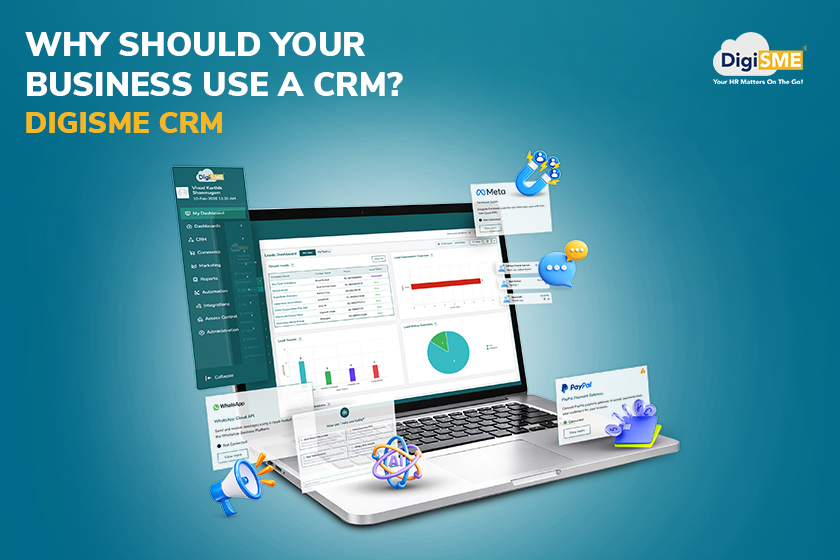
By 2026, the CRM software market is expected to cross $106 billion—basically because more and more businesses are leaning on tech to manage how they talk to customers. And honestly, over 91% of companies already use some kind of CRM to handle sales and customer interactions. That tells you something — managing customers well isn’t optional anymore, it’s just how businesses stay competitive.
So, if your sales team is still juggling spreadsheets, random tools, and manual follow-ups, you already know the problem — leads slipping through, follow-ups getting missed, customers getting frustrated. That’s exactly the gap CRM software was built to close. Which is why, for small business owners, a CRM isn’t a nice-to-have anymore — it’s pretty much necessary if you want to grow.
In this blog, we’ll break down exactly what CRM software is, why businesses need CRM, and how Digisme CRM delivers everything your business needs in one easy-to-use platform.

Table of Contents
What Is CRM Software and Why Do Businesses Use It?
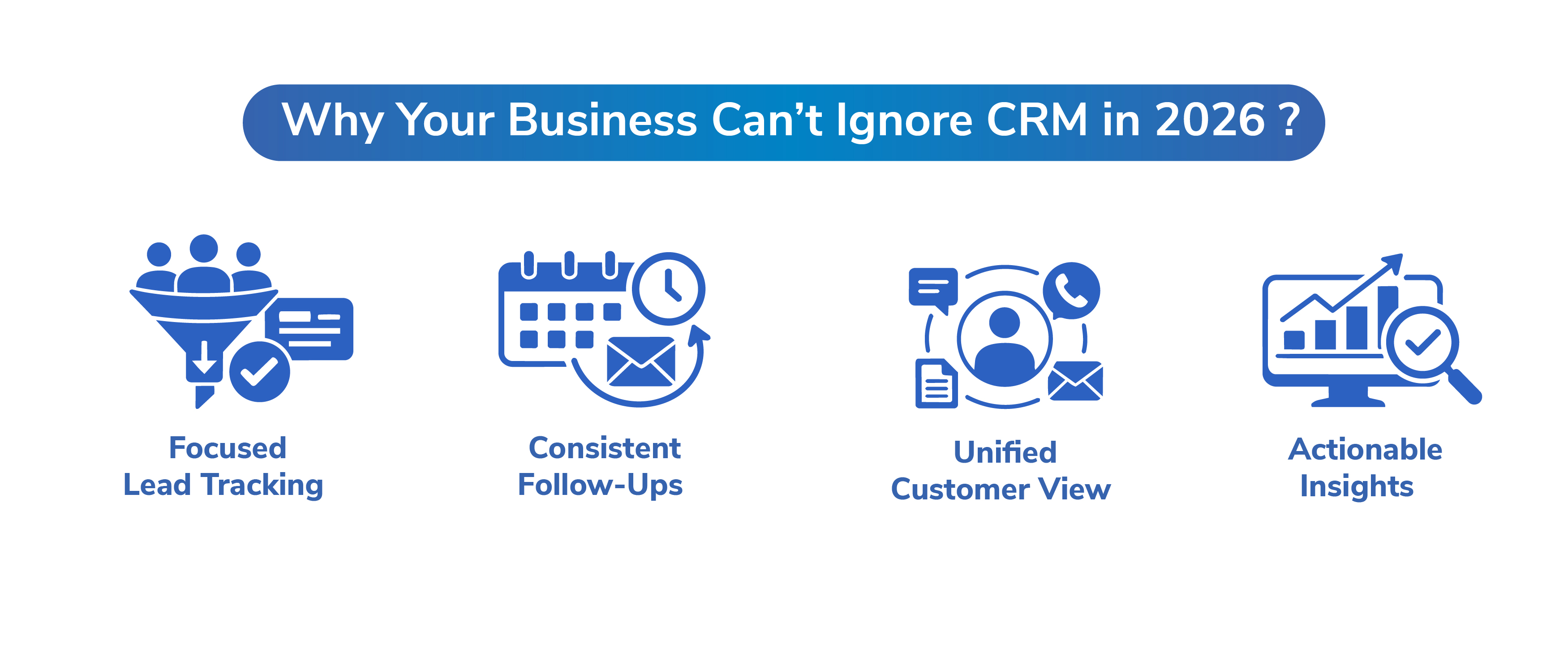
Simply put, a CRM (Customer Relationship Management system) is one central place where you track, manage, and build on your customer relationships and sales opportunities. It captures lead data, keeps a record of customer history, tracks every interaction across your team, and automates the daily sales grind — turning scattered information into something you can actually act on. That’s probably why 91% of companies with more than 10 employees already use a CRM — it helps them stay competitive and keep sales and marketing on the same page. So really, why do businesses need CRM? It comes down to a few things:
- Focused Lead Tracking — Every lead gets captured and tracked, whether it came from a form, an ad, or anywhere else.
- Consistent Follow-Ups — Automated follow-ups mean no lead goes cold, which saves time and brings in more conversions.
- Unified Customer View — Every email, call, or meeting shows up in one timeline, so interactions feel more personal.
- Better Decision-Making — With proper reports and insights, teams can actually forecast and plan ahead instead of guessing.
How Does CRM Software Improve Sales and Customer Relationships?
The truth is, the true power of a sales CRM lies in its ability to streamline workflows and empower teams. For example, here’s how CRM software supercharges sales and fosters stronger customer bonds:
Improved Lead & Opportunity Tracking
One of the biggest complaints in sales is losing track of leads, especially when manual follow-ups fall through the cracks. With a proper lead management CRM, all lead data is captured automatically — whether it comes from your website, digital ads, or chats — allowing sales reps to act quickly and effectively.
For instance:
If your business runs Google or Meta ads, leads can land directly inside the CRM — no manual data entry — so follow-ups begin instantly. Consequently, this level of automation cuts response times and increases conversions.
Boost Productivity with CRM Automation
Sales teams spend hours weekly on repetitive tasks like scheduling follow-ups, sending reminders, or updating status reports. Fortunately, a modern CRM system automates these chores — freeing your team to focus on conversations that matter.
Key benefits of automation include:
- Faster response times
- Fewer missed opportunities
- Higher productivity
- Shorter sales cycles
Therefore, businesses use CRM to boost productivity with CRM and improve overall efficiency.
Improving Customer Relationships
Moreover, CRM improves customer relationships by ensuring every team member can see customer history, preferences, and interactions. As a result, when sales or support teams aren’t guessing, they deliver faster, more personalized service — increasing trust and loyalty. Statistics show businesses using CRM software improve customer retention and sales performance, which is directly tied to consistent engagement and workflow transparency.
Actionable Insights with Dashboards
Understanding what’s working — and what’s not — is essential for growth. Hence, a CRM with analytics dashboard turns raw data into decision-ready intelligence. From sales pipeline CRM views to revenue forecasts and performance dashboards, teams can confidently plan next steps rather than relying on guesswork.
Why DigiSME CRM is the Right Choice for Your Business?
Now that you understand why companies need CRM, let’s talk about Digisme CRM — an all-in-one CRM system designed to support every part of your sales and customer journey.
Fast Setup & Easy Adoption
Unlike traditional systems that take weeks to configure, DigiSME CRM gets your team to live in days — no consultants required. This means CRM for small business teams who don’t have technical resources can adopt it quickly. Instead of long training sessions, your reps are up and running immediately.
Built-In Lead Capture & Sales Flow
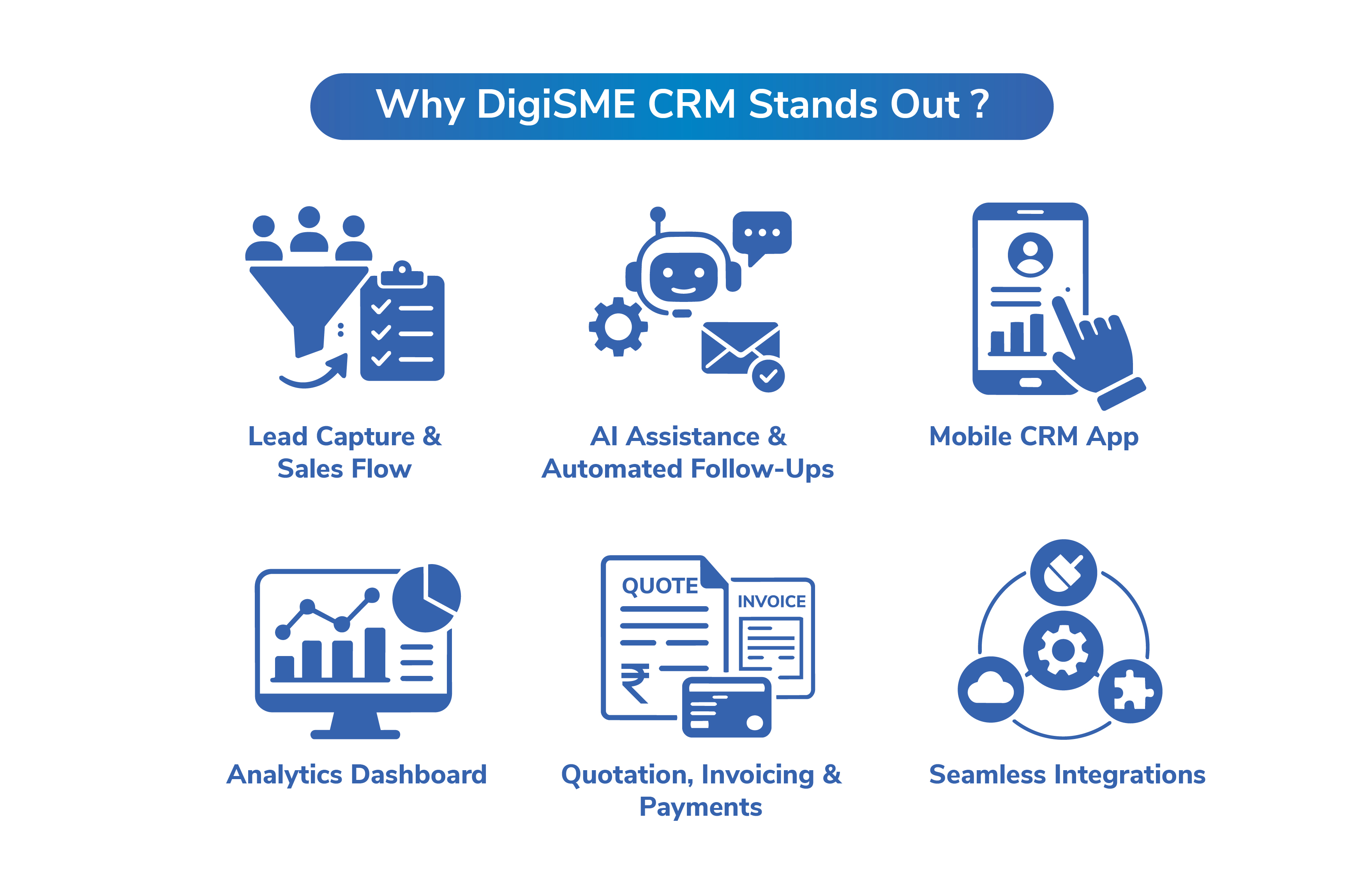
Additionally, the platform automatically captures leads from Google Ads, Meta Ads, landing pages, and web forms — placing them straight into the CRM. As a result, everything is tied into one connected workflow — from lead capture to follow-up, quote creation, invoicing, and even payment — eliminating tool swaps and data silos.
Automated Follow-Ups & AI Assistance
One of the key features is DigiSME CRM’s AI-powered sales assistance, which recommends next steps and drafts follow-up emails, saving hours of manual work daily. Automated nudges and task reminders ensure reps stay on top of opportunities, boosting productivity and improving close rates.
Mobile CRM With Smart Features
Since salespeople aren’t tied to desks, DigiSME CRM’s mobile CRM app with GPS and face recognition allows your team to update leads, add notes, and track tasks on the go. Thus, no opportunity is lost when your team is out meeting clients or traveling.
CRM with Analytics Dashboard
Furthermore, DigiSME CRM features dashboards showing:
- Sales forecasts
- Deal pipelines
- Conversion trends
- Performance metrics
Consequently, decision-makers get clarity, not just raw data, helping to boost productivity with CRM and strategic insights.
Email and Calendar Integration
By connecting DigiSME CRM with Gmail and Outlook, emails, meetings, and calls are automatically logged against the right contact or deal. Calendar reminders ensure timely touchpoints — thereby improving customer relationships and team efficiency.
Quotation, Invoicing & Payments
Moreover, generate professional quotations and invoices and accept payments using Stripe or PayPal. This reduces manual reconciliation, speeds up cash flow, and keeps your sales process seamless.
Seamless Integrations
Finally, the system integrates with QuickBooks, Xero, and MYOB—eliminating duplicate data and reducing reconciliation errors. Ultimately, work smarter, not harder.
Conclusion
In today’s competitive environment, relying on fragmented customer data or manual tracking is a recipe for missed opportunities. Therefore, CRM solutions aren’t just nice to have — they’re a strategic lever for growth, productivity, and stronger customer relationships.
If you want a CRM software for small business that’s affordable, fast to deploy, intuitive, and designed to boost productivity with CRM, DigiSME CRM delivers all that and more. With features like AI-assisted follow-ups, mobile CRM capabilities, analytics dashboards, and end-to-end sales support, it’s the best CRM software for businesses ready to scale.
👉 Get started with DigiSME CRM today and see how smart CRM moves your business forward.
CRM Software Frequently Asked Questions
Why do companies need CRM?
CRM centralizes all customer interactions, improving sales tracking and team collaboration. It strengthens customer relationships for long-term growth.
How does CRM improve sales?
CRM automates follow-ups, tracks opportunities, and provides actionable insights. This leads to faster deal closures and higher conversion rates.
Can small businesses benefit from CRM?
Yes, CRMs simplify daily tasks, improve team productivity, and support business growth. Small businesses can manage customers without juggling multiple tools.
How to choose the right CRM system?
Choose a CRM that’s easy to use, integrates with your tools, offers analytics, and support s mobile access. Scalability and automation are also key factors.
