Managing payroll manually is no longer sustainable for growing organisations dealing with complex salary structures, statutory deductions, and frequent compliance updates. Consequently, according to industry estimates, over 67% of Indian businesses have adopted payroll or HR automation tools, a figure that continues to rise as compliance requirements and workforce sizes expand. This trend indicates a broader transformation where payroll is no longer viewed as a clerical task, but as a strategic function that directly impacts compliance, employee trust, and financial accuracy.
Therefore, this buyer’s guide offers an in-depth, objective, and research-backed analysis of payroll software for Indian SMEs. Specifically, it covers the business need, core features, evaluation criteria, implementation considerations, and solution options—helping decision-makers make informed, future-ready choices.
1. The Evolving Payroll Landscape for Indian SMEs
Indian SMEs operate in a uniquely complex payroll environment. Salary calculations are intertwined with statutory obligations such as Provident Fund (PF), Employee State Insurance (ESI), Professional Tax (PT), and Income Tax (TDS). Moreover, labour law amendments, state-wise variations, and reporting mandates increase the administrative burden on HR and finance teams.
Historically, many SMEs relied on spreadsheets or outsourced accountants for payroll processing. Although cost-effective in the short term, these approaches often result in delays , data inconsistencies, compliance risks, and limited visibility into payroll expenses.
In contrast, modern payroll software addresses these challenges by offering centralised, automated, and compliant payroll management, enabling SMEs to operate with greater confidence and control.
2. Why Payroll Software Is Essential for Indian SMEs
2.1 Operational Efficiency and Accuracy
Payroll processing involves repetitive calculations that are prone to human error when handled manually. Therefore, Automation significantly reduces these risks. Research indicates that automated payroll systems can reduce HR administrative workload by up to 40%, allowing teams to focus on higher-value activities. Additionally, by standardising calculations and workflows, payroll software ensures consistency, accuracy, and timely salary disbursement —critical factors for employee satisfaction.
2.2 Statutory Compliance Management
Compliance failures can result in penalties, audits, and reputational damage. Hence, Payroll software designed for the Indian market automatically applies statutory rules, generates required forms, and supports timely filings. As a result, this reduces dependency on external consultants and lowers compliance risk.
2.3 Time Savings and Productivity Gains
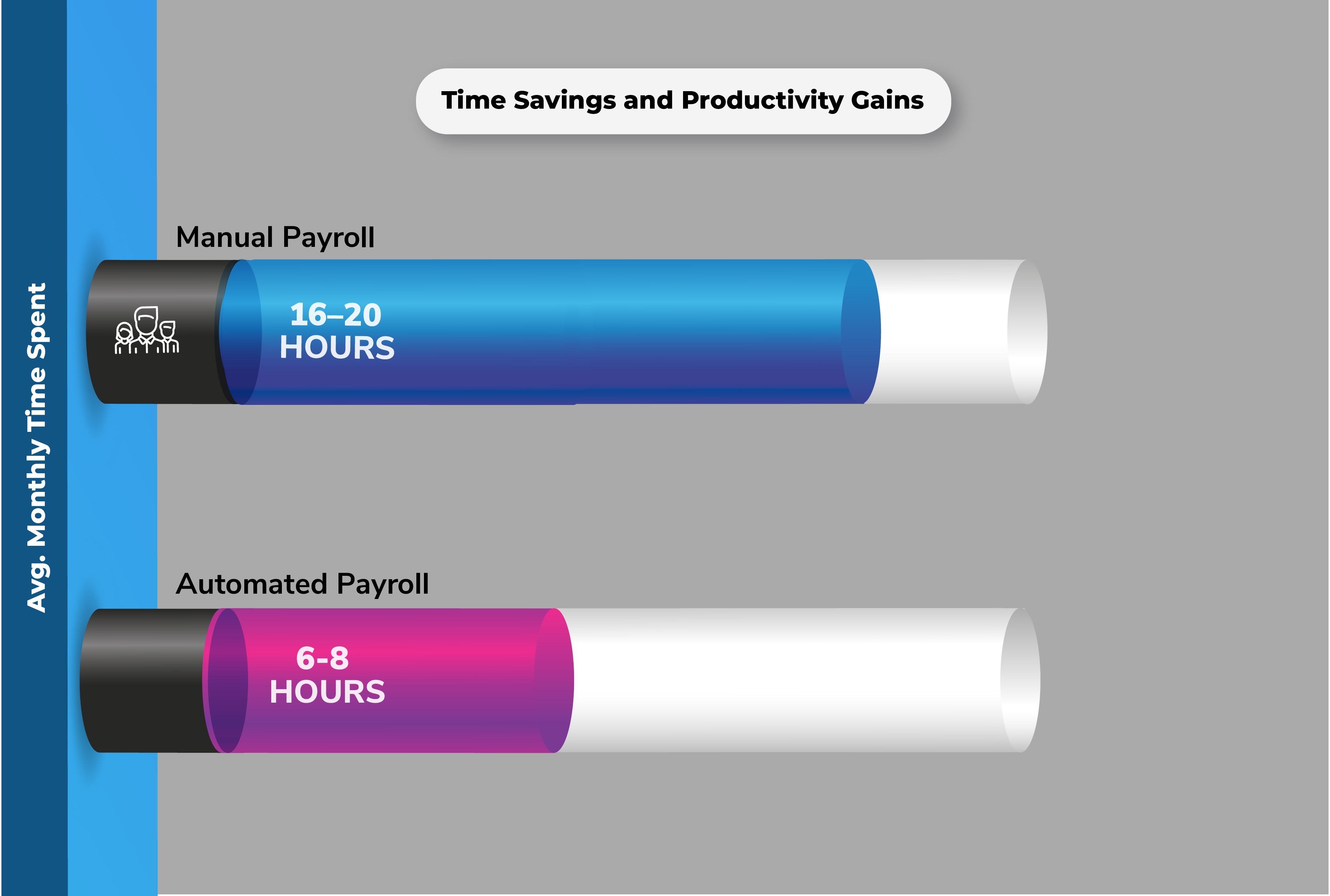
Manual payroll processing can consume 15–20 hours per month for SMEs, particularly during statutory filing periods. Consequently, Automated systems reduce this effort dramatically by consolidating payroll, attendance, and compliance processes into a single workflow.
2.4 Data Security and Confidentiality
Payroll data is highly sensitive. Therefore, cloud-based payroll platforms typically offer encryption, controlled access, and secure backups, providing stronger data protection than local spreadsheets or offline systems.
2.5 Scalability for Business Growth
As SMEs grow, payroll complexity increases. Thus, Payroll software scales effortlessly with workforce expansion, new locations , and evolving salary structures—without proportionally increasing administrative effort.
3. Core Features to Look for in Payroll Software
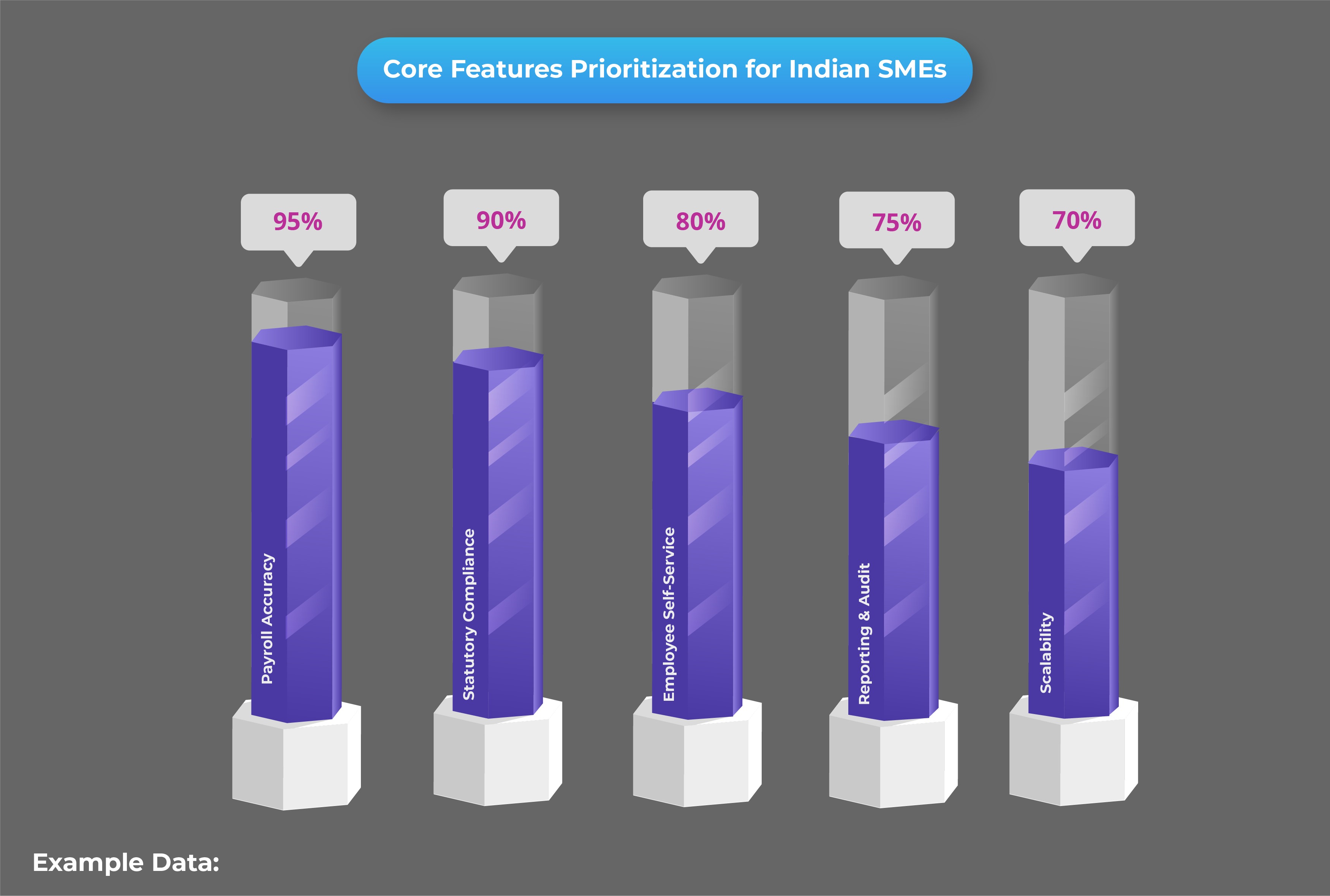
Selecting payroll software requires careful evaluation of functional depth, compliance readiness, and long-term suitability. Specifically, for Indian SMEs, the following features are essential to ensure accuracy, efficiency, and regulatory adherence.
3.1 Automated Salary Processing
Automated salary processing forms the foundation of any payroll system. Therefore, the software should accurately compute fixed and variable pay components, statutory deductions, incentives, reimbursements, arrears, and bonuses. Ultimately, automation ensures payroll cycles are completed on time, reduces manual dependency, and minimises calculation errors —particularly important for SMEs with lean HR teams.
3.2 India-Specific Statutory Compliance
Furthermore, a payroll solution must be built for the Indian regulatory environment. For instance, this includes support for Provident Fund (PF), Employee State Insurance (ESI), Professional Tax (PT), Income Tax (TDS), bonus and gratuity calculations, and statutory outputs such as Form 16, Form 24Q, and ECR files. Additionally, automatic updates aligned with regulatory changes help SMEs remain compliant without constant manual tracking.
Historically, many SMEs relied on spreadsheets or outsourced accountants for payroll processing. While cost-effective in the short term, these approaches often result in delays, data inconsistencies, compliance risks, and limited visibility into payroll expenses.
Modern payroll software addresses these challenges by offering centralised, automated, and compliant payroll management, enabling SMEs to operate with greater confidence and control.
3.3 Attendance and Leave Integration
Seamless integration with attendance and leave management systems ensures payroll accuracy based on actual working days, overtime, and approved leaves. This integration reduces salary disputes, improves transparency, and ensures consistent application of company policies across payroll cycles.
3.4 Employee Self-Service (ESS)
Employee self-service portals allow staff to access payslips, tax documents, leave balances, and personal information independently. ESS reduces routine HR queries, improves data accuracy, and enhances employee experience through transparency and accessibility.
3.5 Reporting and Audit Readiness
Comprehensive payroll reporting is critical for audits, financial planning, and decision -making. Key reports include salary registers, statutory compliance summaries, payroll cost analysis, and employee-wise earnings and deduction statements. Well-structured reports support internal audits and statutory inspections with minimal effort.
3.6 Customization and Flexibility
Indian SMEs often operate with varied salary structures, allowances, and policies. Payroll software should allow easy customization without complex configurations, enabling businesses to adapt the system as organisational needs evolve.
4. Selection Criteria — What Indian SMEs Should Consider
Choosing payroll software should be a structured decision based on operational needs, compliance requirements, and long-term value.
4.1 Alignment with Statutory Requirements in India
The software must consistently align with Indian labour laws, tax slabs, and compliance formats. Regular statutory updates are critical to avoid penalties and filing errors.
4.2 Implementation and Support
Strong vendor support, guided onboarding, and accessible training resources are especially important for SMEs with limited HR or IT capacity. Smooth implementation directly impacts adoption success.
4.3 Cost Structure and ROI
SMEs should evaluate the total cost of ownership, including subscription fees, setup costs, and optional modules. Entry-level cloud-based solutions often offer lower upfront investment, predictable pricing, and better scalability.
4.4 Integration Capabilities
Payroll systems should integrate with accounting software, HRMS platforms, and attendance tools. Effective integration reduces data silos, eliminates duplicate data entry, and improves overall operational efficiency.
4.5 Data Security and Compliance
Payroll data security is non-negotiable. Essential safeguards include data encryption, multi-factor authentication, role-based access controls, audit trails, and secure cloud hosting compliant with data protection standards.
5. Implementation Considerations
To ensure successful deployment of payroll software, SMEs should assess the following implementation factors:
5.1 Scalability
The selected software should scale effortlessly as the organization grows. Increasing headcount, additional locations, and more complex payroll structures should be supported without performance issues.
5.2 Integration with Existing Systems
Payroll software should integrate smoothly with existing HR, attendance, accounting, or ERP systems to maintain data consistency and enable streamlined workflows.
5.3 Vendor Support and Training
Dependable vendor support, clear documentation, and structured onboarding significantly improve implementation outcomes and user adoption.
5. 4 Total Cost of Ownership
Beyond subscription pricing, SMEs should account for setup charges, support costs, and optional add-ons. Pay-per-employee pricing models are often more cost-effective and predictable for growing businesses.
6. Implementation Best Practices for SMEs
Successful payroll software adoption depends as much on execution as on software selection.
6.1 Define Clear Objectives
SMEs should clearly define their goals—whether improving compliance accuracy, reducing payroll processing time, enabling scalability, or improving system integration —before implementation.
6.2 Prepare and Validate Data
Accurate and well-structured employee data is essential. Running parallel payroll cycles during initial months helps validate calculations and identify discrepancies early.
6.3 Train Stakeholders
HR and finance teams should receive adequate training to fully utilize system capabilities and reduce reliance on vendor support for routine operations.
6.4 Monitor and Optimize
Regular post-implementation reviews help identify process gaps, optimize configurations, and ensure ongoing statutory compliance as business needs change.
7. Leading Payroll Solutions for Indian SMEs
7.1 DigiSME
DigiSME offers payroll as part of an integrated SME-focused platform, aligning salary processing with statutory compliance and essential HR workflows. Its approach emphasises simplicity, regulatory readiness, and scalability for growing Indian businesses.
GreytHR is widely used for its robust payroll and HRMS capabilities, strong statutory compliance support, and integrated attendance and employee self-service features.
Zoho Payroll integrates well with in the Zoho ecosystem, providing automated payroll runs, compliance tools, ESS portals, and seamless connections with Zoho Books and Zoho People.
Keka delivers cloud-based payroll and HR management with attendance integration, analytics, and a modern interface suited to fast-growing SMEs.
8. Challenges and Considerations
Even with automation, SMEs may face challenges:
•Cost considerations can limit options for feature-rich solutions, necessitating careful evaluation of essential versus optional modules.
• Integrating payroll with legacy systems — accounting or attendance trackers — may require customisation or additional middleware.
• Transitioning from manual processes to automated systems demands thorough communication and training to address resistance among staff.
Despite these challenges, payroll software adoption yields long-term operational resilience and competitive advantage for SMEs.
Conclusion
Payroll software has become a foundational requirement for Indian SMEs navigating growth, compliance, and workforce complexity. Automation delivers measurable gains in accuracy, efficiency, and regulatory confidence—while improving employee trust and organisational transparency.
In this evolving landscape, solutions that combine payroll with broader operational capabilities are increasingly relevant. DigiSME exemplifies this shift by positioning payroll as part of an integrated SME-focused platform, helping businesses move beyond fragmented tools toward streamlined, compliant, and scalable operations.
Ultimately, the right payroll software empowers Indian SMEs to transform payroll from an administrative burden into a reliable, strategic function—supporting sustainable growth in a competitive and compliance-driven business environment.
Frequently Asked Questions
How can SMEs manage payroll costs effectively?
SMEs can manage payroll costs by choosing scalable payroll software with pay-per-employee pricing, evaluating essential vs optional modules, and minimizing upfront setup costs.
What are common issues when integrating payroll with existing systems?
Integration challenges often include syncing payroll with legacy accounting, HR, or attendance systems, which may require customisation or middleware to ensure smooth data flow.
Can payroll software adapt to growing business needs?
Yes, modern payroll systems like Digisme scale with workforce growth, new locations, and evolving salary structures without increasing administrative burden proportionally.
How can SMEs prevent errors when switching to payroll software?
SMEs can avoid mistakes by testing the payroll system first, double-checking all employee information, and keeping an eye on the first few runs to make sure everything works correctly.
